
Last updated October 15, 2026
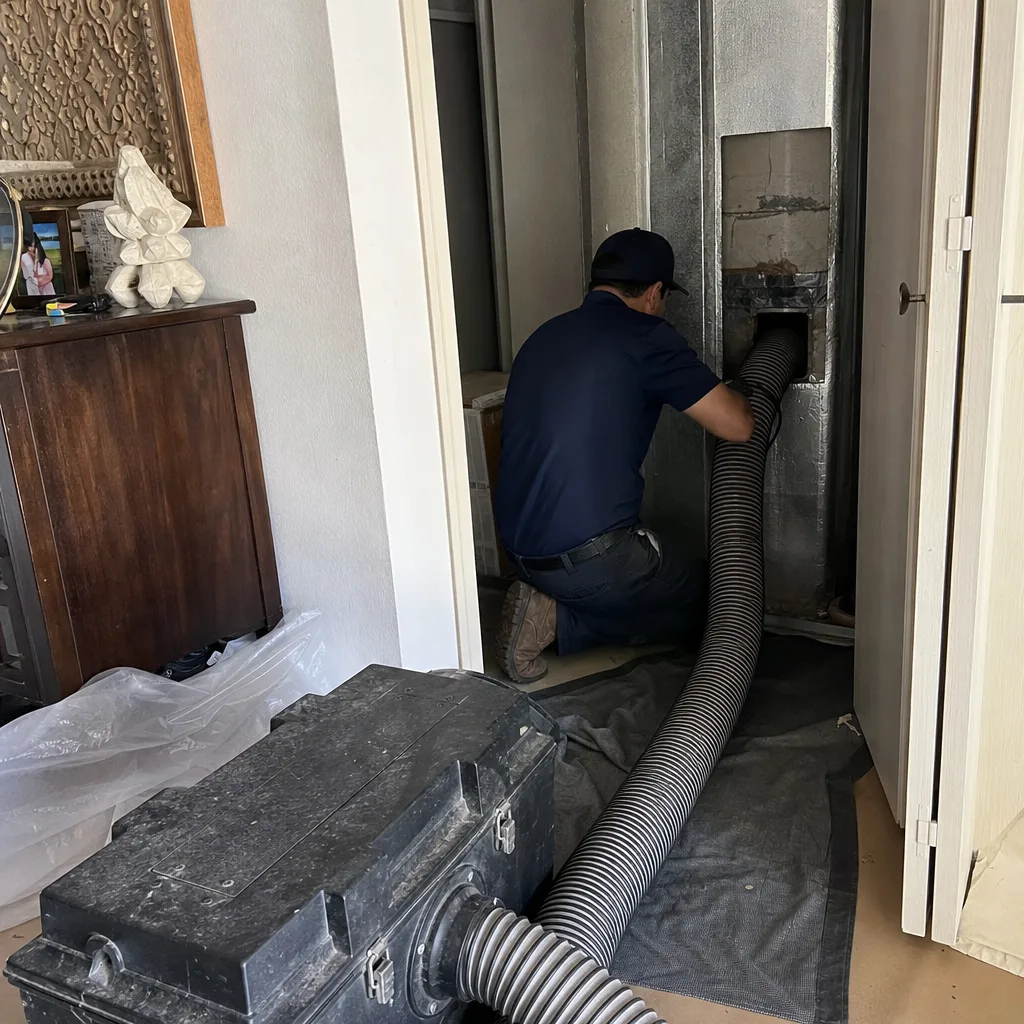
 Whole-home duct cleaning
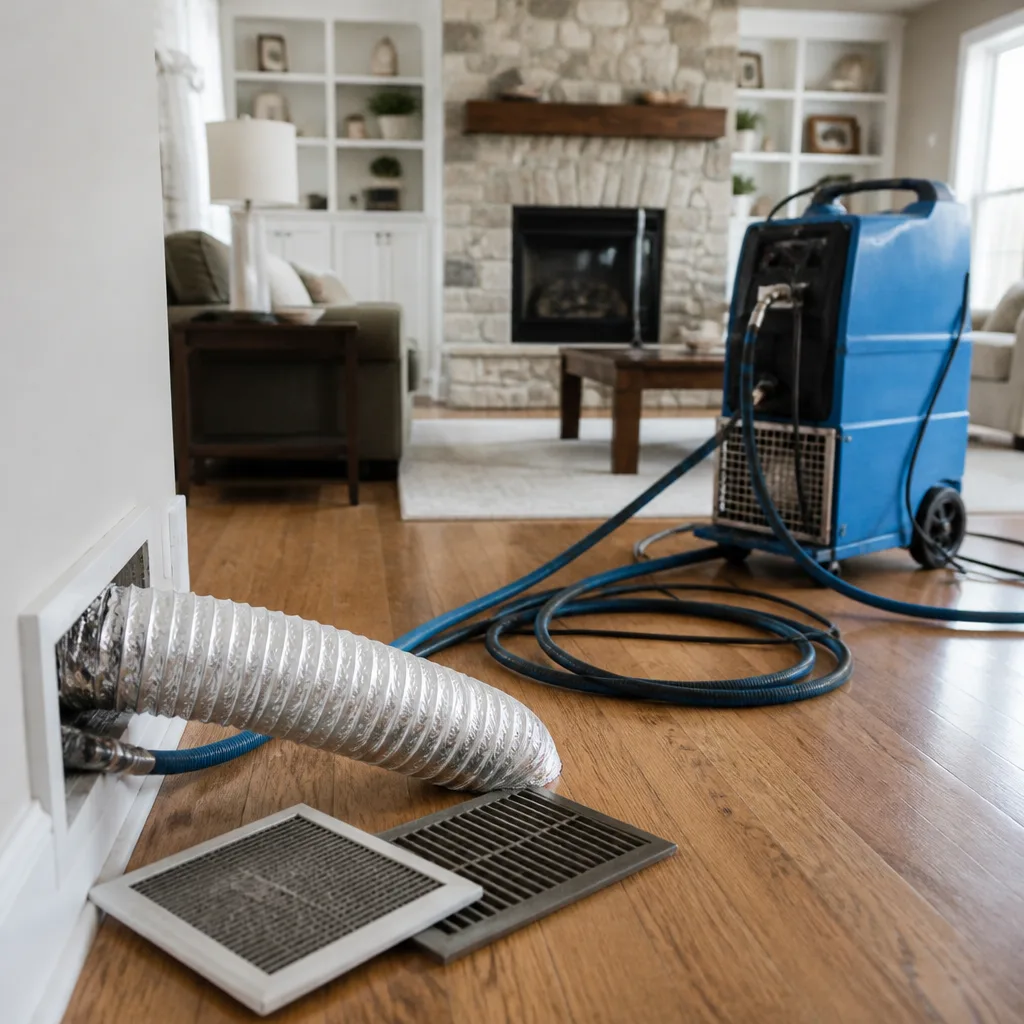
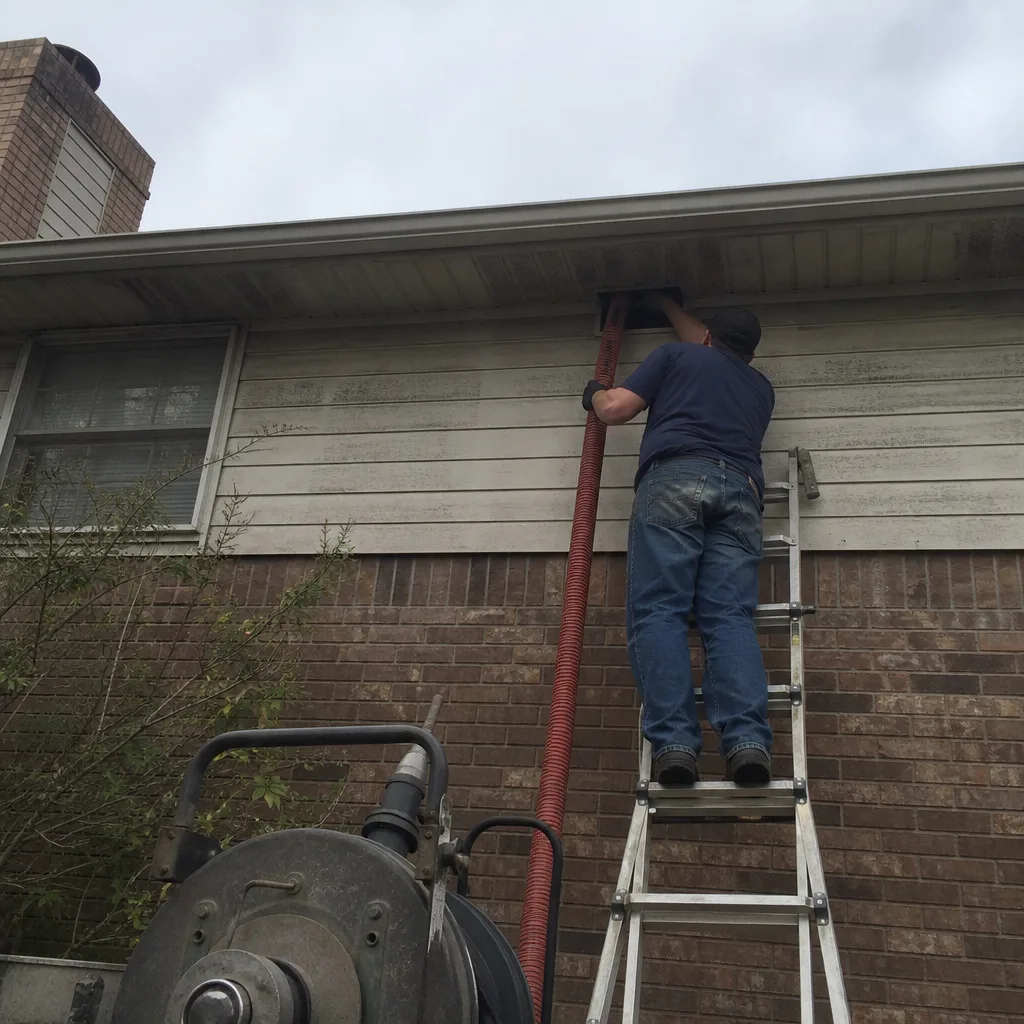
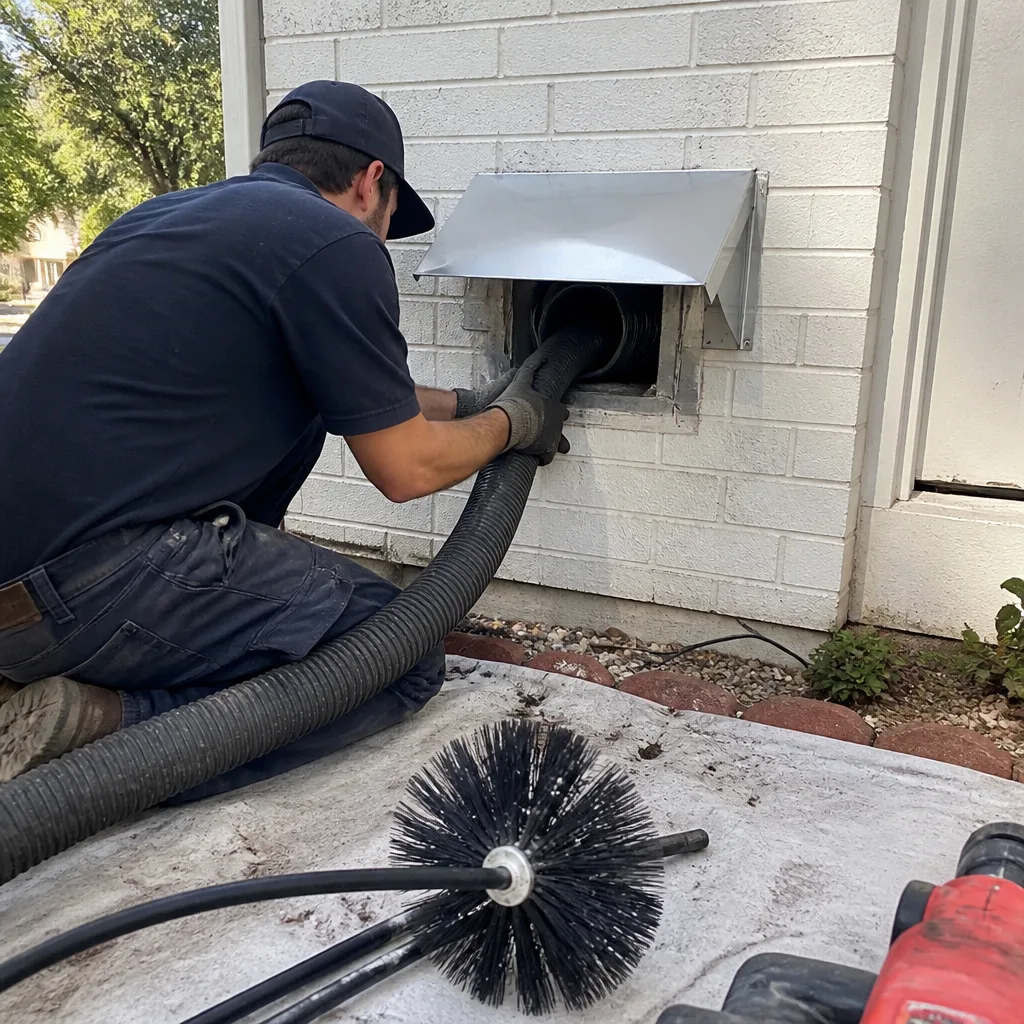
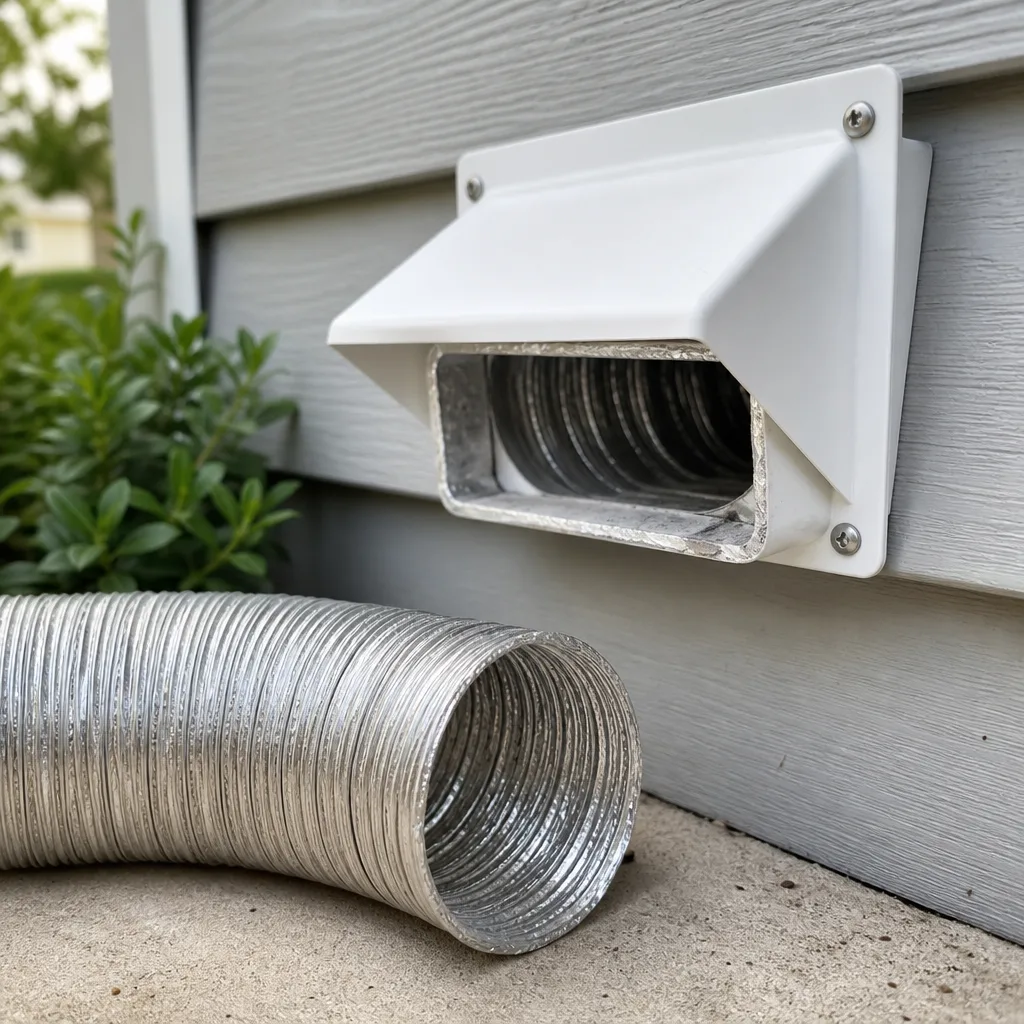 Dryer vent cleaning
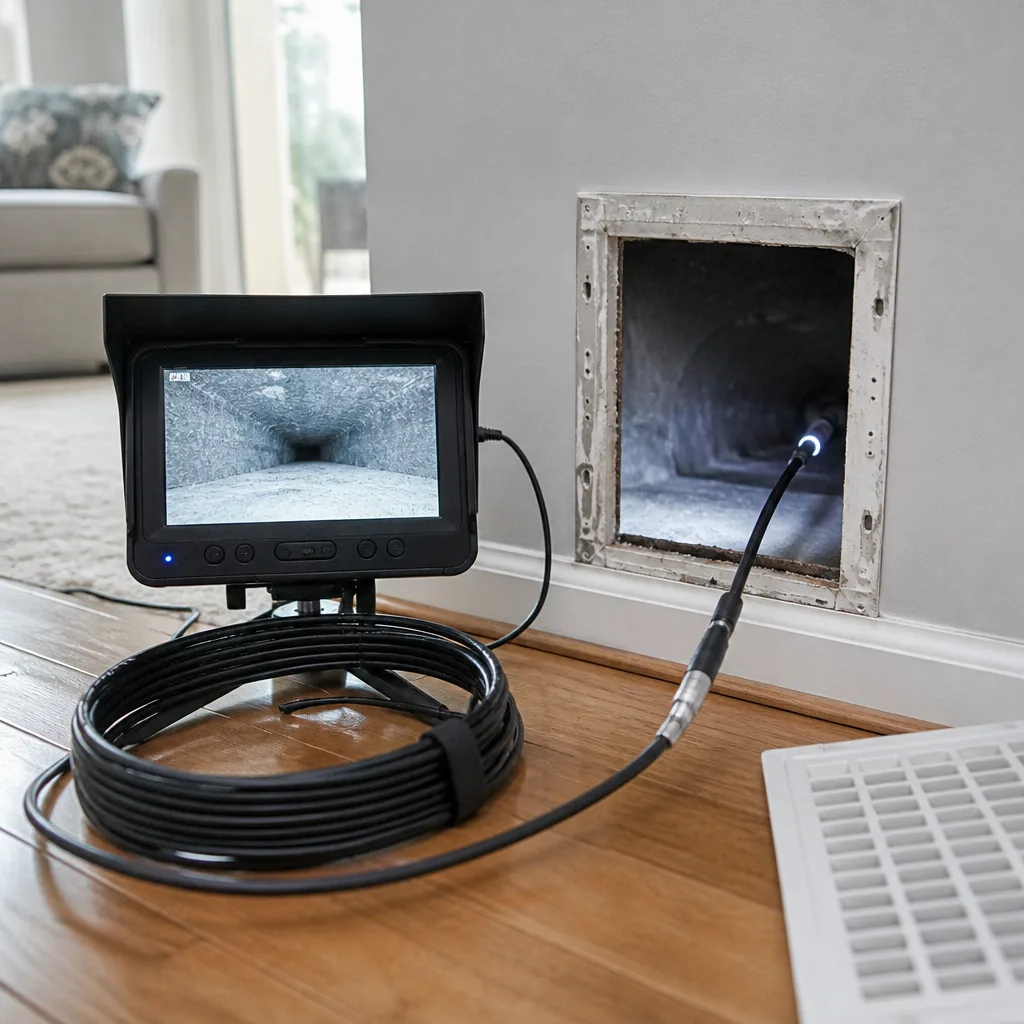 Camera inspection
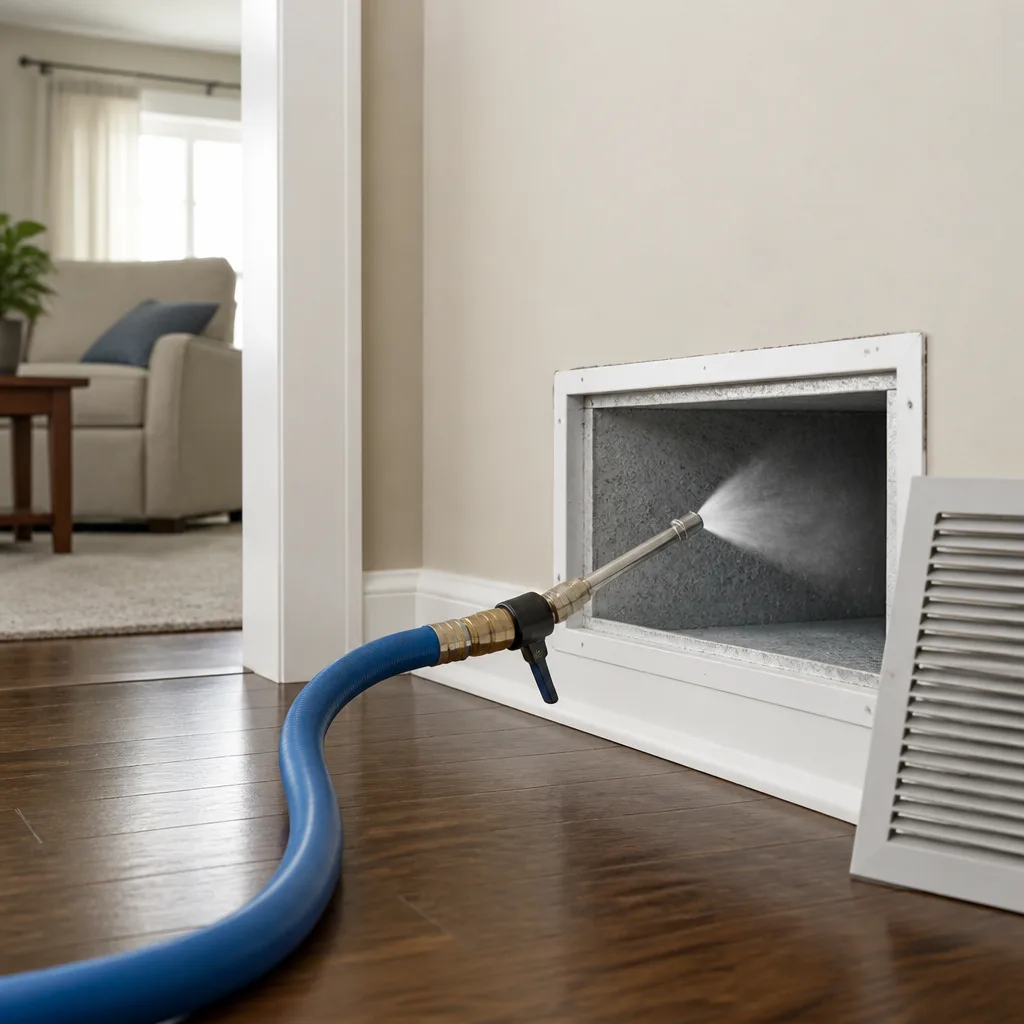 Sanitizing & deodorizing
Whole-system duct and dryer vent check with before-and-after photos - you see exactly what came out of your vents
That "$99 whole-house special" is a bait ad - the real number appears once they are in your hallway, or the "clean" is a shop-vac at the register. We photograph the inside of your ducts before and after instead.
Air Duct Cleaning Permits, Codes & Inspections in TX: What You Need to Know
Texas doesn’t license air duct cleaners. That single fact surprises most Fort Worth homeowners, and it explains why the quality range in this trade is wider than almost any other home service category. A crew with a shop vac and a web ad can legally charge you for duct cleaning tomorrow. But here’s the part almost nobody tells you: the moment a contractor recommends duct repair, sealing, or replacement alongside that cleaning, you’ve crossed into regulated territory. This guide-along with our The Complete Guide to Air Duct Cleaning in Fort Worth-walks the exact line between unregulated cleaning and permitted duct work, what Fort Worth’s municipal code actually requires, how to verify a contractor’s license before work begins, and what paperwork protects you when you sell the house.
Styles & brands we work with
Quick Answer
Air duct cleaning itself does not require a permit or a state license in Texas. However, any duct repair, sealing, modification, or replacement that alters the HVAC system requires either a licensed HVAC contractor under Texas Department of Licensing and Regulation (TDLR) rules, and depending on the scope, a City of Fort Worth mechanical permit. The distinction matters because unpermitted duct work can fail a home inspection at closing and leave you liable for code violations you didn’t know existed.
Table of Contents
- Cleaning vs. Modification: Where the Legal Line Sits in Texas
- What TDLR Actually Requires for Duct Work in Texas
- Fort Worth Municipal Code: When a Permit Is Required and When It Isn’t
- How to Verify a Contractor’s TDLR License Before Any Repair Work Begins
- The Insurance and Liability Gap: Unlicensed Duct Work and What It Costs You
- Documenting Duct Work for a Clean Closing: What Paperwork to Keep
- Why This Matters More in Fort Worth Than in Coastal Texas
- Common Mistakes to Avoid
- When to Call a Professional
- Frequently Asked Questions
- The Bottom Line
Cleaning vs. Modification: Where the Legal Line Sits in Texas
Here’s the regulatory reality: Texas has no state license category for air duct cleaners. None. The Texas Department of Licensing and Regulation, the agency that licenses HVAC technicians, electricians, and plumbers, does not issue a “duct cleaning license.” That’s why you’ll see everything from carpet cleaners who added a duct attachment to full-service HVAC companies advertising duct cleaning in Fort Worth. The state treats duct cleaning as a maintenance service, not a construction trade.
But the legal line moves the moment the work stops being cleaning and starts being modification. Here’s what that means in practice:
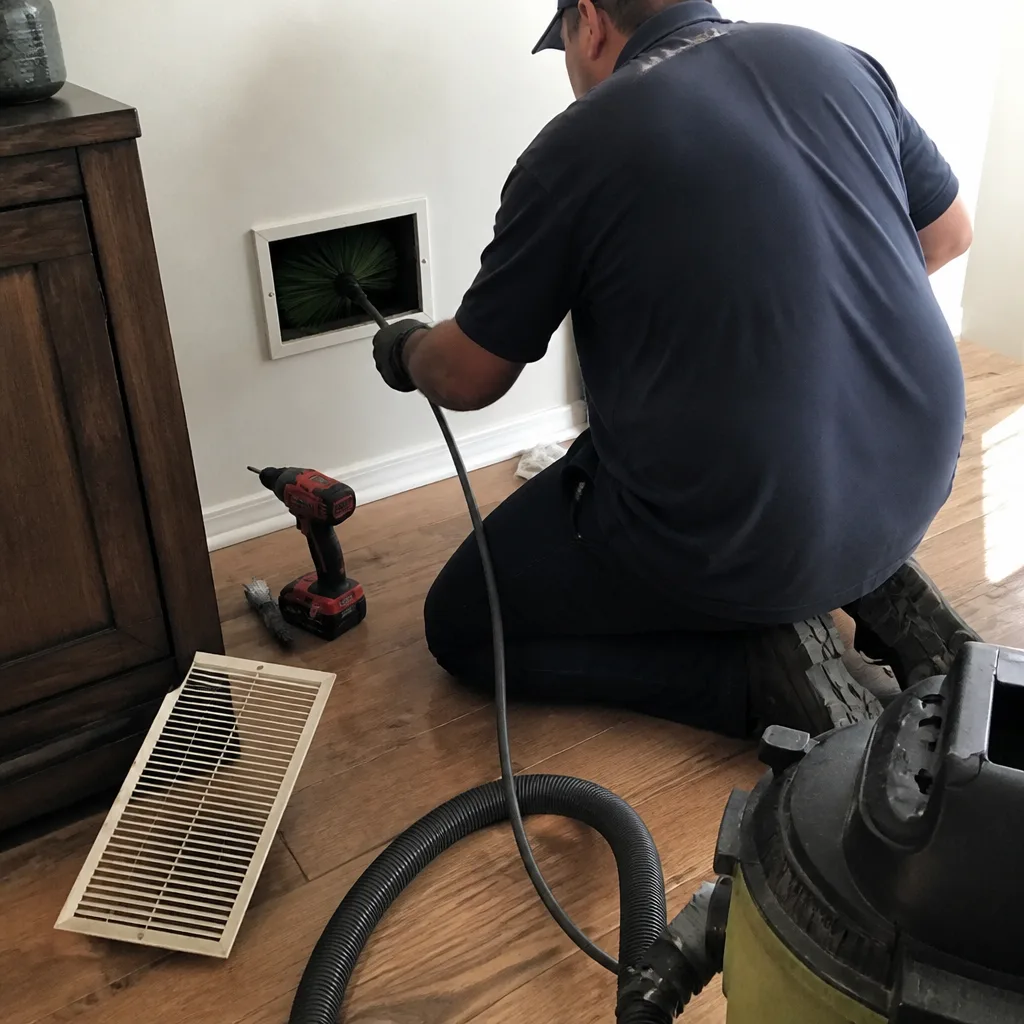
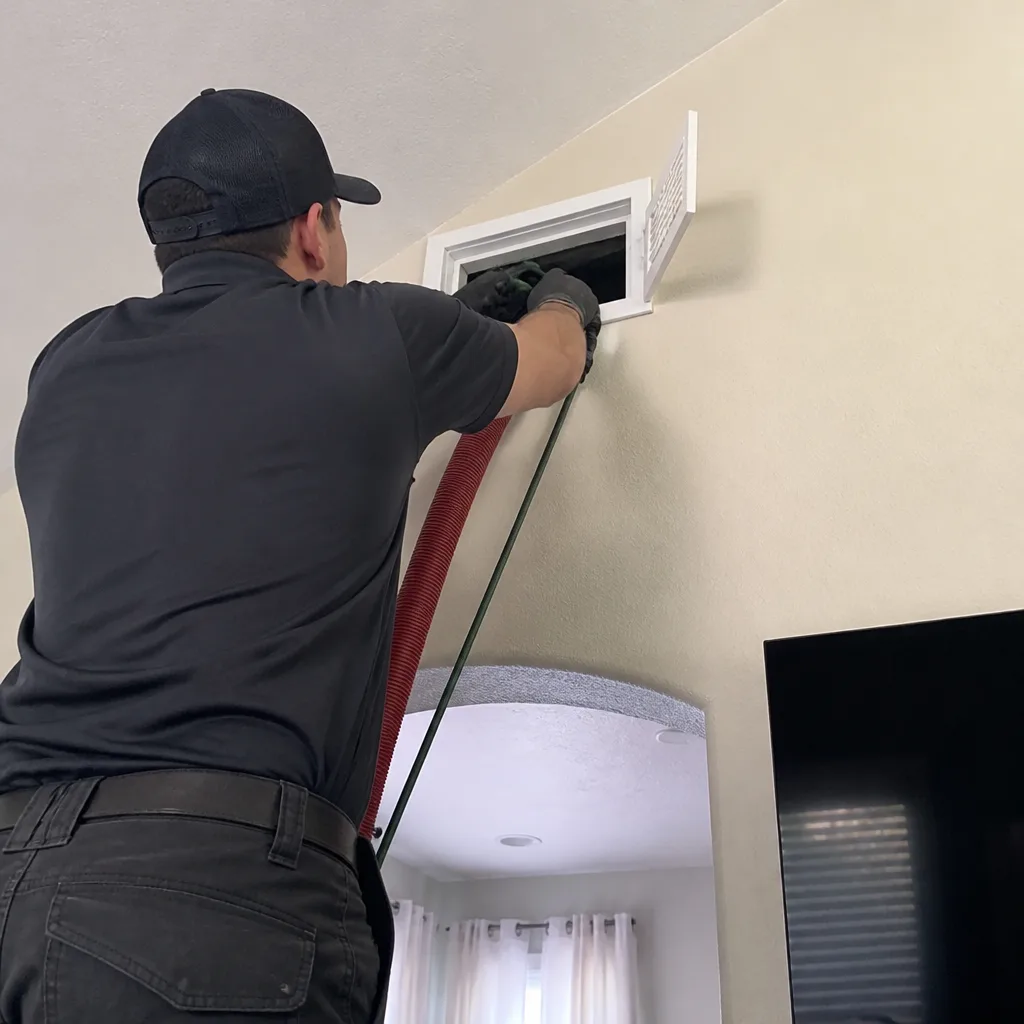
- Cleaning: Running a rotary brush system or negative-air machine through existing ducts, blowing out the supply and return lines, cleaning the blower motor and coil housing. No permit, no license, no inspection.
- Sealing: Applying mastic or tape to duct joints to stop air leaks. This is modification. TDLR considers sealing part of HVAC contracting because it alters system performance.
- Repair: Replacing a damaged duct section, reconnecting a separated joint, patching a crushed return. Modification. Requires a licensed contractor.
- Replacement: Replacing the main trunk line, rerouting ducts, installing new registers. Major modification. Requires a licensed contractor and, in Fort Worth, almost certainly a permit.
We’ve walked into Fort Worth homes where a cleaning-only quote turned into a recommended “repair” mid-job, and the homeowner had no idea they were crossing from unregulated maintenance into a regulated trade. If you’re unsure whether your ducts actually need work, read our Air Duct Cleaning Warning Signs: A Fort Worth Homeowner’s Reference Guide before calling anyone. That’s the line this guide exists to make clear before you’re standing in your hallway holding a clipboard.
What TDLR Actually Requires for Duct Work in Texas
The Texas Department of Licensing and Regulation issues HVAC contractor licenses under the Air Conditioning and Refrigeration program. If a company modifies, repairs, seals, or replaces duct work as part of a job, that company must hold a TDLR Air Conditioning and Refrigeration Contractor license. The individual performing the work must be registered or certified under that license. This is not a grey area. It’s state law.
Here’s the exact structure:
- TDLR Contractor License: Required for any business that contracts to perform air conditioning or refrigeration work, including duct repair and replacement. The license number is a 10-digit number displayed on all trucks, invoices, and advertisements.
- Certified or Registered Technician: The person doing the physical work must be either a Certified Technician (passed the state exam) or a Registered Technician (working under a licensed contractor’s supervision). TDLR rules require technicians to carry a pocket card with their registration number.
- Scope of Work: The license covers “the installation, repair, or alteration of air conditioning and heating systems and their component parts,” which includes duct work. Cleaning a duct is not on that list. Cutting into a duct to seal a joint is.
For a Fort Worth homeowner, the practical takeaway is simple: if the work being recommended involves anything beyond running a brush or vacuum through your existing ducts, ask to see the TDLR license number before the work begins. Not after. A legitimate contractor will have the number printed on the estimate, on the truck, and on the company web site. If the company hesitates or says licensing “isn’t required for this kind of work,” that’s your cue to stop the conversation.
At Hollis Air Duct Fort Worth home, we show you our credentials before the job, not after. The Garrison Standard requires it: price in writing, license verifiable, and work done by the book. If a Fort Worth company can’t meet that bar, they don’t get through your front door.
Fort Worth Municipal Code: When a Permit Is Required and When It Isn’t
Fort Worth operates under the 2021 International Mechanical Code with local amendments, enforced by the City of Fort Worth Development Services Department. Here’s the practical breakdown for duct work:
No permit needed: Air duct cleaning. Full stop. The city does not issue a “duct cleaning permit” and does not inspect cleaning work. If a contractor tells you they need a city permit to clean your ducts, they’re either misinformed or charging you for something that doesn’t exist.
Permit needed: Duct replacement, new duct installation, and most duct sealing that involves opening the system. The city requires a mechanical permit for “the installation, alteration, or replacement of any part of a heating, ventilation, or air conditioning system.” That includes cutting into a plenum, replacing a trunk line, or installing new supply runs. Minor repairs, like reattaching a disconnected joint with existing materials, typically fall under the city’s “minor repair” exemption, but the exemption is narrow.
The practical line in Fort Worth:
- Reattaching a separated duct joint at an existing connection: Generally no permit, if no materials are altered.
- Patching a small hole with mastic or foil tape: Borderline. The city’s minor repair allowance is intended for repairs using like materials to restore function. If the repair changes system performance, the safe answer is to ask Fort Worth Development Services.
- Replacing a 10-foot section of damaged flex duct: Permit required.
- Rebuilding a plenum box: Permit required.
- Installing a new supply branch to a room addition: Permit required, plus energy code compliance.
The reason this matters in Fort Worth specifically is the city’s code enforcement during home sales. Fort Worth home inspectors routinely flag unpermitted mechanical work, and the seller becomes responsible for the cost of retroactive permitting and inspection. That’s a five-figure surprise for some homeowners, and it almost always traces back to a contractor who said “you don’t need a permit for this.”
How to Verify a Contractor’s TDLR License Before Any Repair Work Begins
Verification takes five minutes and protects you from the most expensive mistake a homeowner can make with duct work. Here’s the exact process, step by step:
- Ask for the TDLR license number in writing. The contractor should provide a 10-digit license number on the estimate or contract. If they won’t put it in writing, that’s a refusal you should treat as a disqualifier.
- Go to the TDLR website. The Texas Department of Licensing and Regulation has a license search tool at tdlr.texas.gov. Enter the license number. Verify that the license is active, not expired or suspended.
- Check the license type. You want “Air Conditioning and Refrigeration Contractor.” A “Technician” registration alone is not sufficient to contract work; it only allows the person to work under a contractor.
- Match the name. The license holder’s legal business name should match the name on your estimate. If the name is different, ask why. Sometimes a legitimate company operates under a DBA, and TDLR will list the registered business name. But if the name doesn’t match and the explanation is vague, walk away.
- Check for complaints. TDLR maintains an enforcement database. A license with a clean record is expected. A license with multiple unresolved complaints is a red flag, even if it’s active.
- Ask for the technician’s registration number. The person who shows up to do the work should be a registered or certified technician under that contractor license. Write down the number and verify it the same way.
Our technicians at Hollis Air Duct Fort Worth carry their registration cards, and our TDLR information is printed on every written estimate. We’d rather you verify us and feel confident than wonder. The companies that make verification difficult are the reason this guide exists.
The Insurance and Liability Gap: Unlicensed Duct Work and What It Costs You
Here’s the part most Fort Worth guides skip: the insurance gap. When an unlicensed contractor performs duct modification work, the legal and financial consequences land on you, not them. Here’s what actually happens:
Your homeowner’s insurance can deny the claim. Most Texas homeowner policies include an exclusion for damage caused by unlicensed work. If an unlicensed duct sealing job fails, causes moisture intrusion, and leads to mold or structural damage, your insurer can deny the claim on the grounds that the work was performed in violation of state licensing law. You then pay for the damage out of pocket and have no realistic recourse against a contractor who may not carry liability insurance at all.
Fire marshal issues and home sale inspections. When a Fort Worth home goes under contract, the buyer’s inspector reviews the mechanical system. Unpermitted duct modifications are one of the most common findings in Texas home inspections, right behind electrical issues. If the sales contract requires the seller to cure code violations, you’re paying for an after-the-fact permit, an inspection, and possibly a licensed contractor to correct substandard work. In our experience around Fort Worth, that sequence can turn a $600 unlicensed duct repair into a $4,000 closing-cost problem.
Personal injury liability. If an unlicensed worker is injured in your home during duct work, the liability picture gets complicated fast. A licensed contractor carries workers’ compensation insurance. An unlicensed one likely doesn’t, and a Texas homeowner can find themselves named in a personal injury lawsuit. Your homeowner’s policy may defend you, but it may not cover the judgment if the work was unlicensed.
The safeguard is straightforward: verify the license before the work begins, not after you discover the problem. Five minutes of verification beats a year of litigation. For Duct Sealing in Fort Worth, we work under a TDLR-licensed structure and carry the insurance the job requires. That’s not a selling point. It’s the baseline for meaningful work in this trade.
Documenting Duct Work for a Clean Closing: What Paperwork to Keep
If you do have duct repair, sealing, or replacement work done on your Fort Worth home, the documentation you keep determines whether that work helps or hurts you at closing. Here’s the file you should build:
- The written estimate and final invoice. Both should show the contractor’s TDLR license number, the scope of work performed, the date, and the final price. If the price changed during the job, that’s a different conversation, and the change order should be documented separately.
- The permit and inspection record. If a permit was required, keep the permit number, the inspection date, and the inspection result. Fort Worth’s Development Services Department maintains records, but you want your own copy.
- Before and after photos. Take photos before the work begins and after it’s complete. For duct sealing, photos of the sealed joints matter. For replacement, photos of the new duct runs and connections. These are your evidence that work was performed to standard.
- A written guarantee. Not an oral promise. A written, dated guarantee that says what’s covered, for how long, and what happens if the work fails. Our Air Duct Cleaning in Fort Worth work includes a 365-Day Done Right Promise in writing on every job: if it fails within a year, we return and make it right at no charge, including a free second visit. That’s the standard any reputable contractor should offer.
- Material specifications. If duct replaced or sealed, keep the product information: the mastic type, the flex duct R-value, the brand of the register. Future appraisers and inspectors ask these questions.
This file takes a half hour to assemble and makes you the most organized seller at the closing table. Buyers in Fort Worth know this city’s housing stock. Homes built in the 1970s and 1980s in neighborhoods like Wedgwood, Ridglea Hills, and North Richland Hills all have original duct work that’s been patched, rerouted, and repaired by previous owners. Documentation distinguishes responsible maintenance from hidden problems.
Why This Matters More in Fort Worth Than in Coastal Texas
Fort Worth’s climate makes duct work a bigger deal than it is in Houston or Corpus Christi. The city endures hot, dry summers and cold winter snaps, with spring hail and fall temperature swings. Your HVAC system cycles more frequently here than in more moderate parts of Texas, and that cycling puts stress on duct joints, seams, and connections. The dust is different too: Fort Worth sits on a clay-heavy, dusty plain, and that fine particulate accumulates in ducts faster than the coastal air of Galveston does.
What this means in practical terms: Fort Worth homeowners are more likely to encounter duct repair or sealing recommendations during a routine cleaning, because the climate accelerates wear. And that means more Fort Worth homeowners are standing at the exact legal line this guide describes. The contractor says “you should seal these ducts while we’re here,” and the homeowner doesn’t know whether that’s a permitted modification or an upsell. Now you know: it’s modification. Ask for the license. Ask if a permit is required. Get the answer in writing.
The other Fort Worth-specific factor is the age of the housing stock. Homes built before 2000 in Fort Worth often have duct work that doesn’t meet current energy code. When those ducts are modified, the city may require the modified portion to be brought up to code, which can cascade into larger work. A licensed contractor knows how to scope that. An unlicensed one will do the work and leave you holding the code violation. For dryer vent work, the same principle applies: Dryer Vent Cleaning in Fort Worth is maintenance, not modification. But if the vent needs relocation or repair, you’re back in permit territory.
Common Mistakes to Avoid
- Assuming duct cleaning requires a license. It doesn’t in Texas, and thinking it does leads homeowners to skip verification entirely. The license question matters for repair and sealing work, not cleaning.
- Taking a contractor’s word for it. “You don’t need a permit for this” is a sentence that has closed a lot of Fort Worth sales with code violations attached. Verify with the city, not with the person charging you.
- Paying for a “permit” on cleaning-only work. If someone bills you for a permit on a cleaning job, they’re fabricating a fee. No such permit exists in Fort Worth.
- Keeping no paperwork. Oral promises don’t survive to closing day. Written estimates, invoices, permits, and guarantees are the only things a buyer’s inspector can verify.
- Confusing a business license with a TDLR contractor license. Registering a business name with the state is not the same as holding an HVAC contractor license. Verify the TDLR number specifically.
- Skipping the before-and-after photos. When an inspector asks what was done inside the ducts, photos answer the question in a way no invoice can.
- Hiring based on the lowest bid. In Fort Worth duct work, the lowest bid is often the one with no license, no insurance, and no guarantee. The math rarely works out.
When to Call a Professional
Duct cleaning is a scheduled maintenance task you can book with confidence. But any of these scenarios means you should stop and call a licensed professional before work proceeds: a contractor recommends sealing, repair, or replacement during a cleaning; you see visible duct damage or separated joints in your attic or crawl space; you’re selling your home and want the mechanical work documented properly; or you inherited a house with unknown duct work history and want an assessment before you list. In each case, the question isn’t just who does the work. It’s whether the work is done legally and documented properly. Hollis Air Duct Fort Worth offers free estimates in Fort Worth. Call (682) 255-2572 and ask directly about permitting, licensing, and documentation. We’ll tell you what applies to your specific house, in writing, before any work starts.
Frequently Asked Questions
No. Air duct cleaning is an unregulated maintenance service in Texas and requires no permit at the state or municipal level, including in Fort Worth. The permit question only arises when the work includes duct repair, sealing, modification, or replacement.
Ask for the TDLR license number in writing, then verify it at tdlr.texas.gov. The license should be active, held under the company’s legal name, and classified as an Air Conditioning and Refrigeration Contractor license.
The buyer’s home inspector may flag the unpermitted work, and the sales contract may require you to correct it before closing. That process includes retroactive permitting and inspection, and the cost typically falls on the seller. In Fort Worth, this commonly converts a small duct repair into a multi-thousand dollar closing expense.
Duct sealing is considered modification, not maintenance. It requires a licensed HVAC contractor under TDLR rules and may require a mechanical permit in Fort Worth depending on the scope of the sealing work.
We handle our Air Duct Cleaning services, dryer vent cleaning, and duct sealing in Fort Worth. Every job is priced in writing before work begins and covered by the 365-Day Done Right Promise. For work that requires a TDLR contractor license, we operate under the proper licensing and can explain exactly what applies to your home. Call (682) 255-2572 for an exact quote, and estimates are free.
Keep documentation from any duct work indefinitely, and have the ducts assessed whenever you buy or sell a home in Fort Worth. The city’s housing stock ranges widely in age, and a documented duct history answers the questions buyers and inspectors will ask. For homeowners staying in place, an assessment every 3 to 5 years catches problems before they become closing-day issues.
The Bottom Line
Air duct cleaning in Texas is unregulated maintenance. Duct repair, sealing, and replacement are regulated construction work that requires a TDLR license and often a Fort Worth mechanical permit. The line between those two categories is where homeowners get hurt, and knowing where the line sits is worth more than any amount of money saved on a low bid. Verify licenses in writing, document every job, and keep a file that defends you at closing. For more guides & resources on protecting your home, visit our blog. In Fort Worth, where the climate and housing stock put extra stress on duct work, that discipline isn’t optional. It’s the same standard we follow at Hollis Air Duct Fort Worth on every job: written price, verifiable credentials, and a 365-day guarantee in writing. Call (682) 255-2572 with your questions. We’ll answer them straight.
Written by Roy Castellanos, Owner at Hollis Air Duct Fort Worth, serving Fort Worth since 2004.
See the difference
 Before
 After
After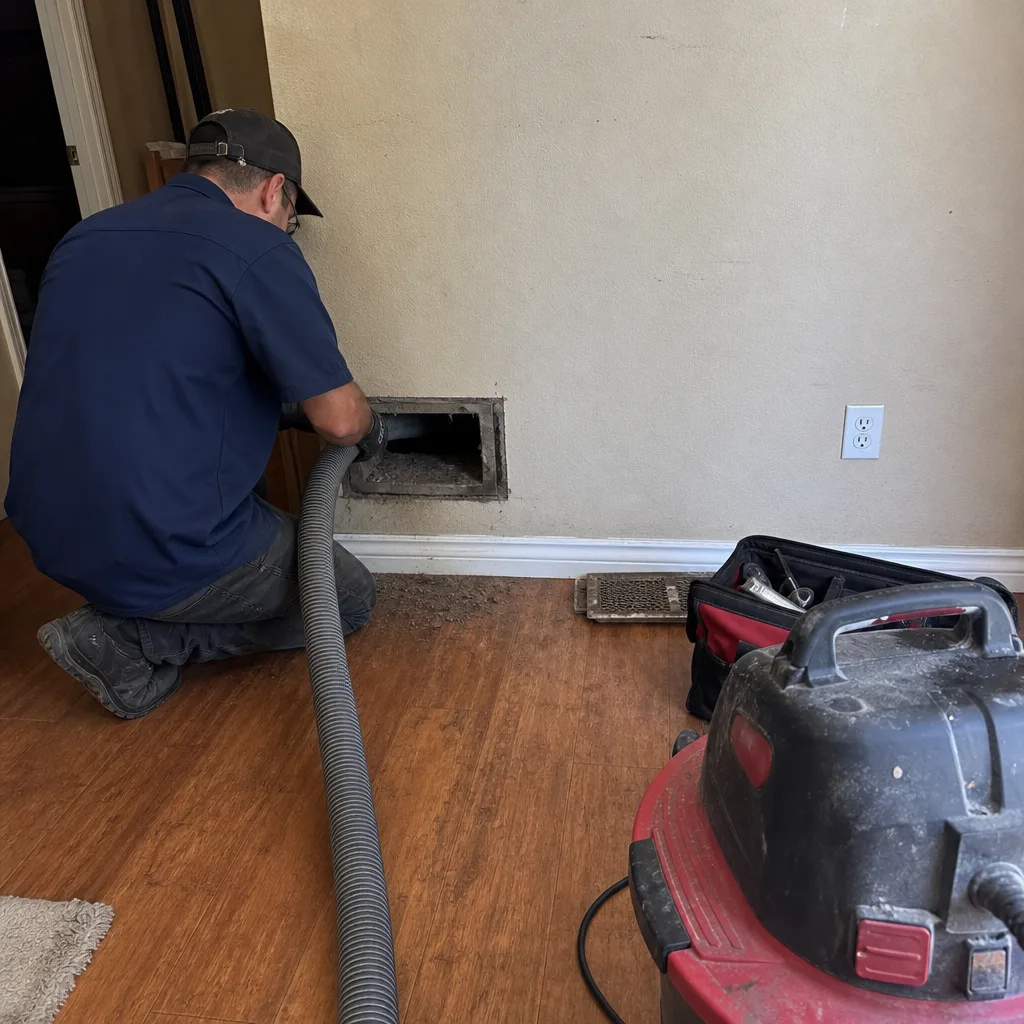 Before
 After
After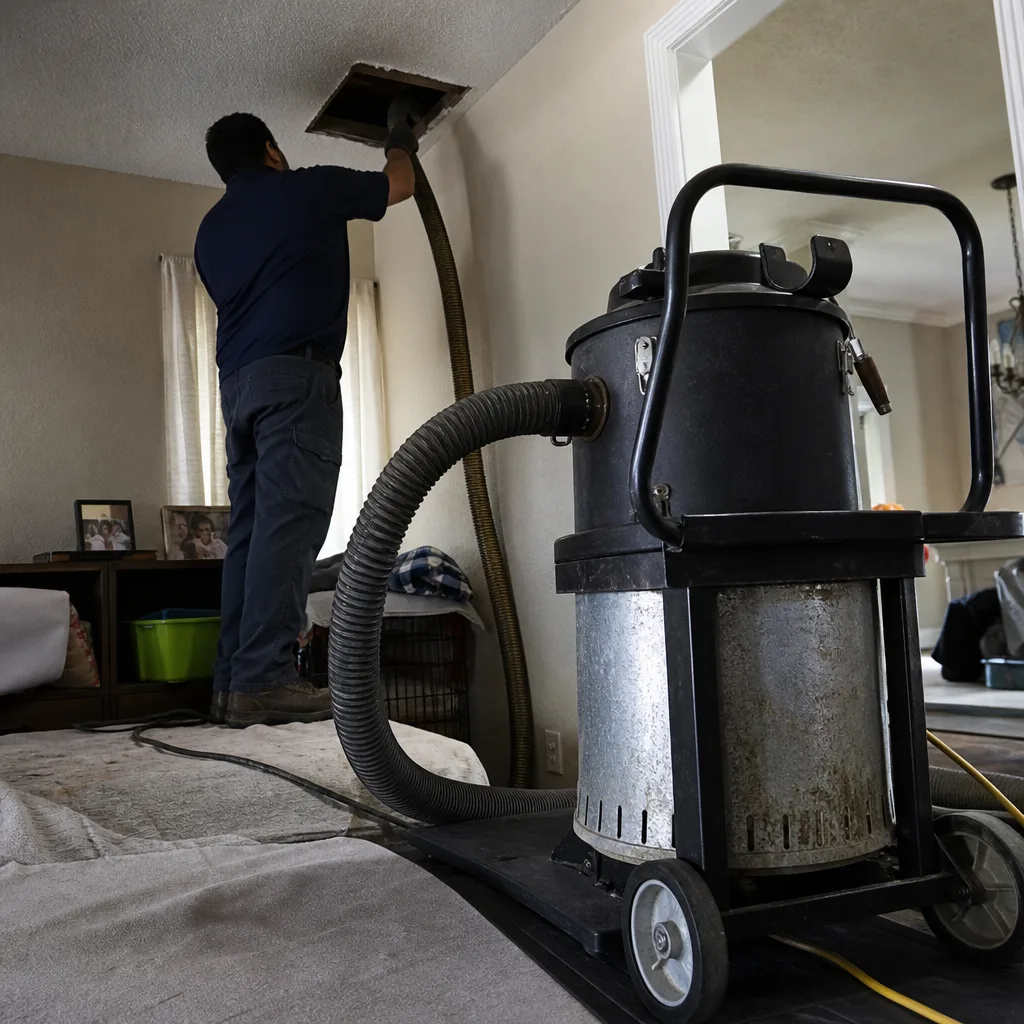 Before
 After
After