
Last updated October 15, 2026
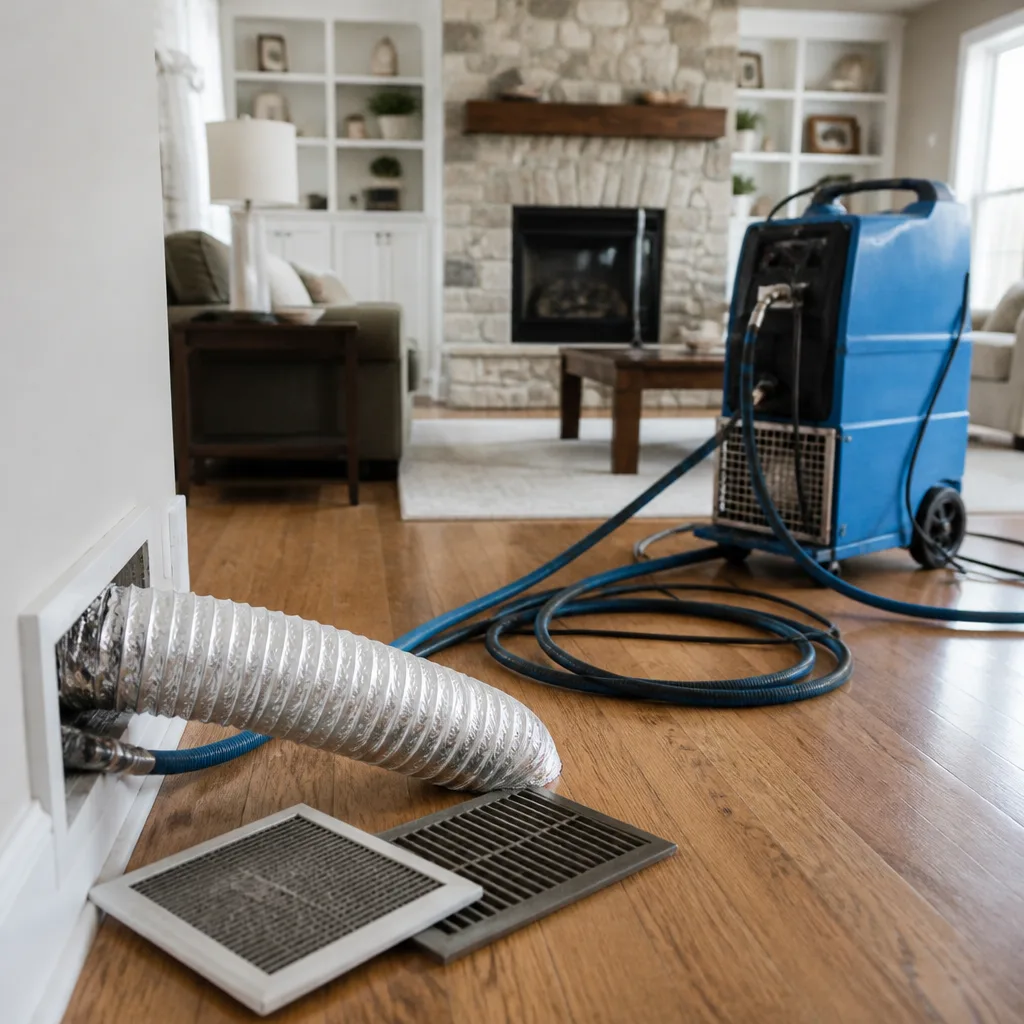 Whole-home duct cleaning
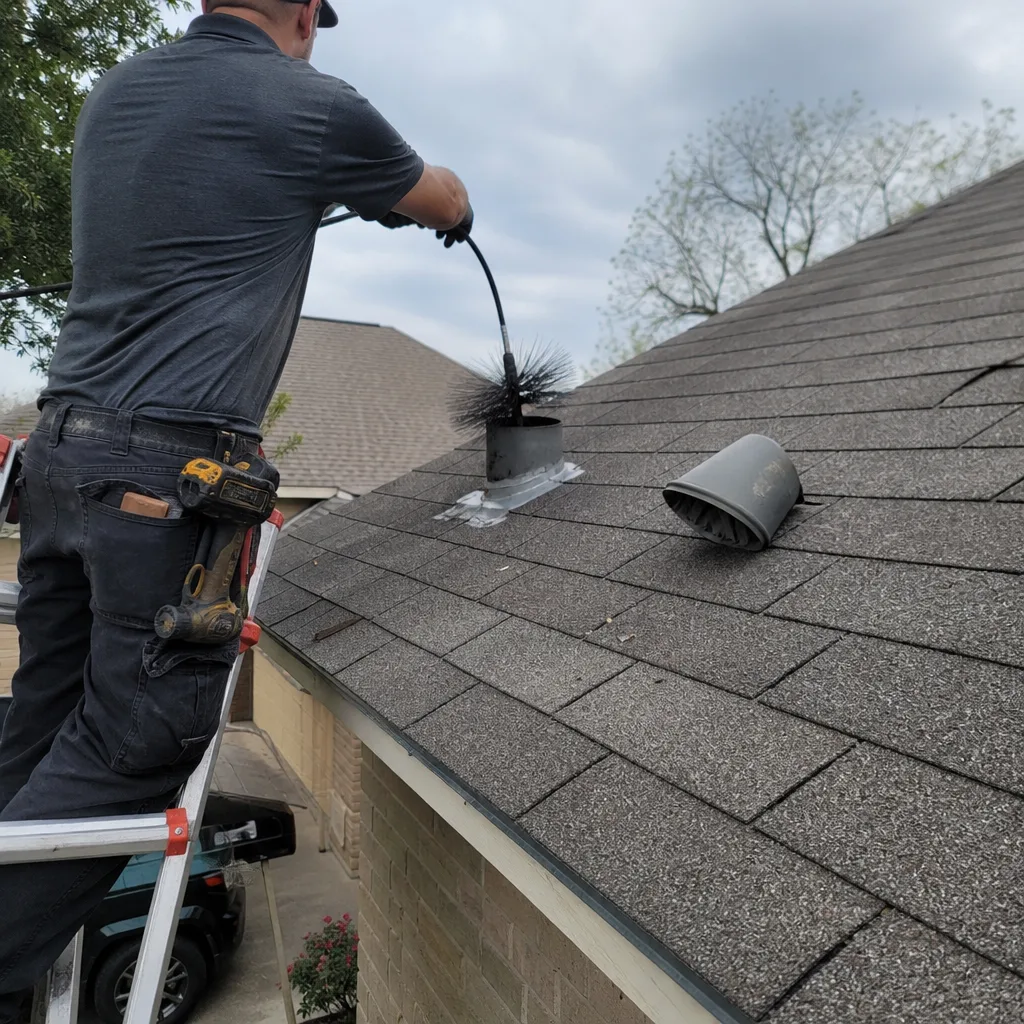
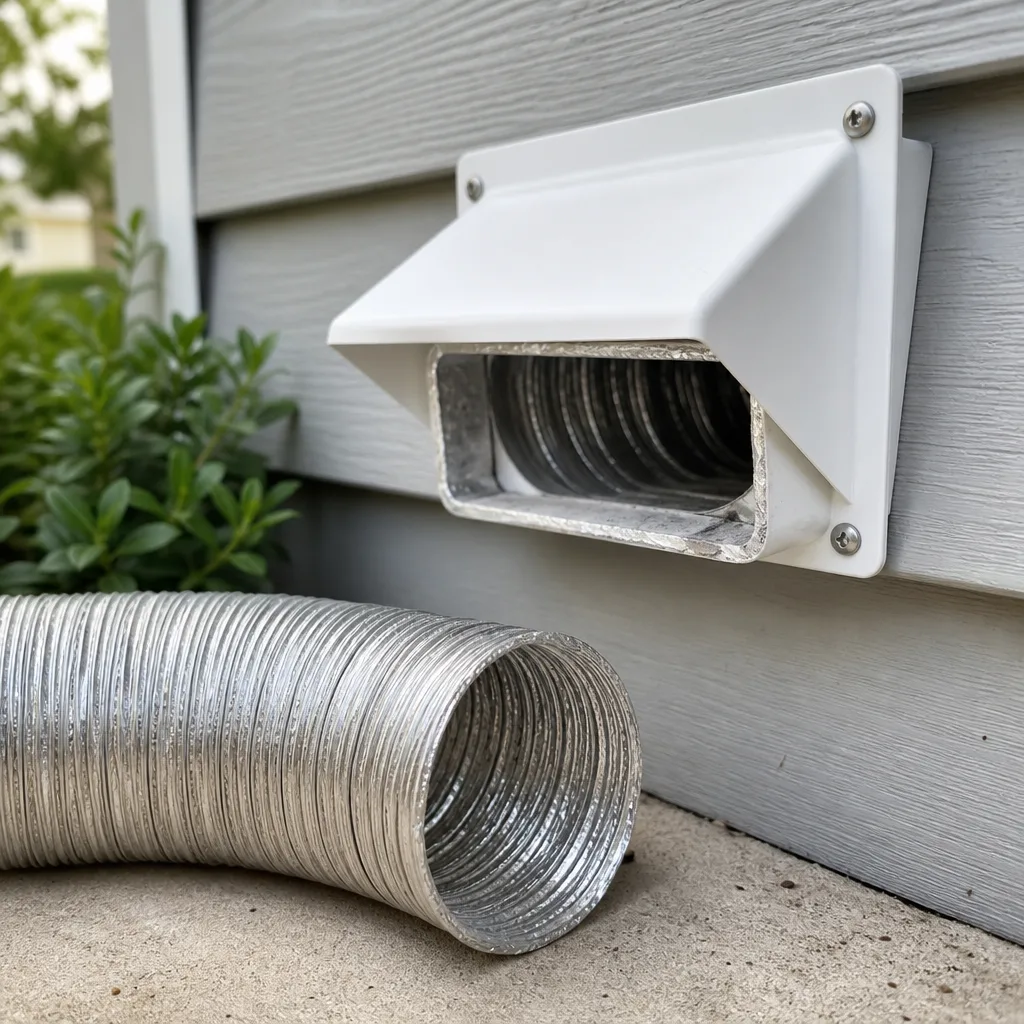 Dryer vent cleaning
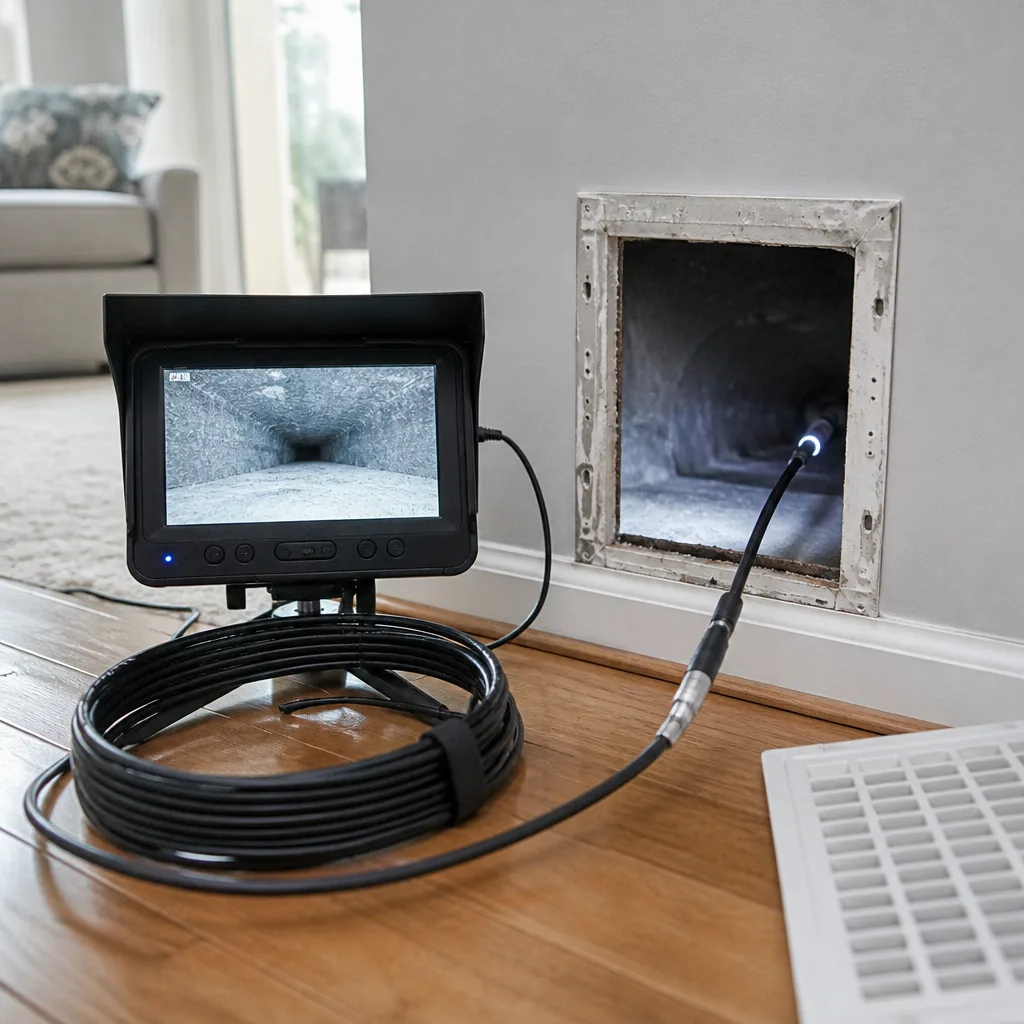 Camera inspection
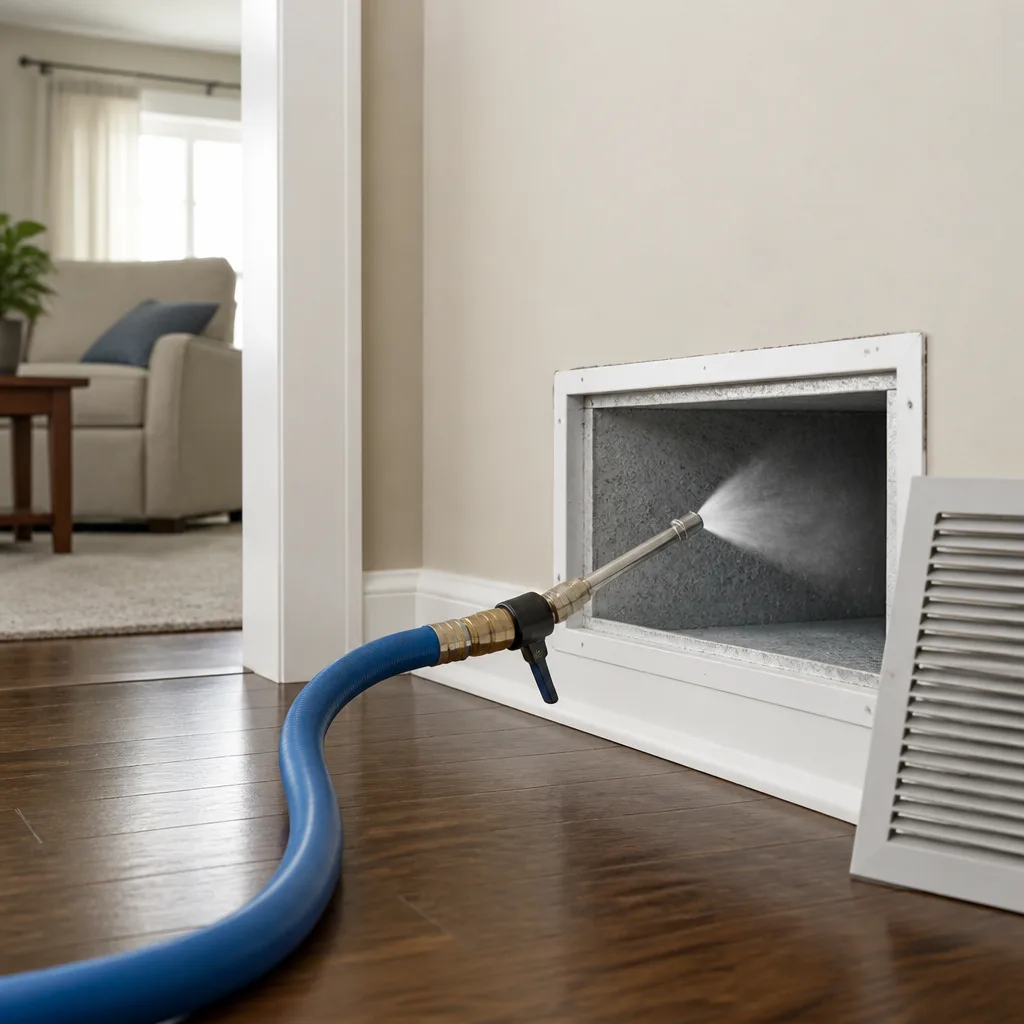 Sanitizing & deodorizing
Whole-system duct and dryer vent check with before-and-after photos - you see exactly what came out of your vents
That "$99 whole-house special" is a bait ad - the real number appears once they are in your hallway, or the "clean" is a shop-vac at the register. We photograph the inside of your ducts before and after instead.
The Complete Guide to Air Duct Cleaning in Fort Worth
The EPA does not recommend routine annual duct cleaning. Read that again, because most Fort Worth HVAC marketing implies exactly the opposite. That gap between what the science says and what the sales pitch claims is costing homeowners across Tarrant County real money, and it’s the reason we put this guide together. You’re about to learn how our Air Duct Cleaning services actually work, what it should cost in Fort Worth, when it genuinely needs to happen, and how to tell the difference between a company that cleans ducts and one that just blows air through them and hands you a bill. By the time you finish reading, you’ll know exactly what questions to ask before anyone opens your system.
Styles & brands we work with
Quick Answer
Air duct cleaning in Fort Worth typically costs between $450 and $900 for a full system on a home under 2,500 square feet, takes roughly 4 to 6 hours with proper source-removal equipment, and is worth doing every 3 to 5 years in North Texas, not annually. The work should include cleaning supply and return ducts, registers, the blower motor, the evaporator coil, and the air handler using negative-air equipment and rotary brush systems, not just a vacuum hose stuck in a vent. If a company quotes you $99 whole-house cleaning, you’re being sold a teaser price that will not hold once the technician walks your system-something we cover in our DIY vs Professional Air Duct Cleaning: The Fort Worth Homeowner’s Decision Guide.
Table of Contents
- What Air Duct Cleaning Actually Does (and Doesn’t Do)
- Why Fort Worth Conditions Create a Different Contamination Pattern
- How Duct Material Changes the Job: Flex, Sheet Metal, and Fiberglass
- Source-Removal vs. Blow-and-Go: The Real Difference
- What Air Duct Cleaning Costs in Fort Worth
- How Often Should You Actually Clean Your Ducts?
- What a Written Price and Guarantee Should Look Like
- Common Mistakes to Avoid
- When to Call a Professional
- Frequently Asked Questions
- The Bottom Line
What Air Duct Cleaning Actually Does (and Doesn’t Do)
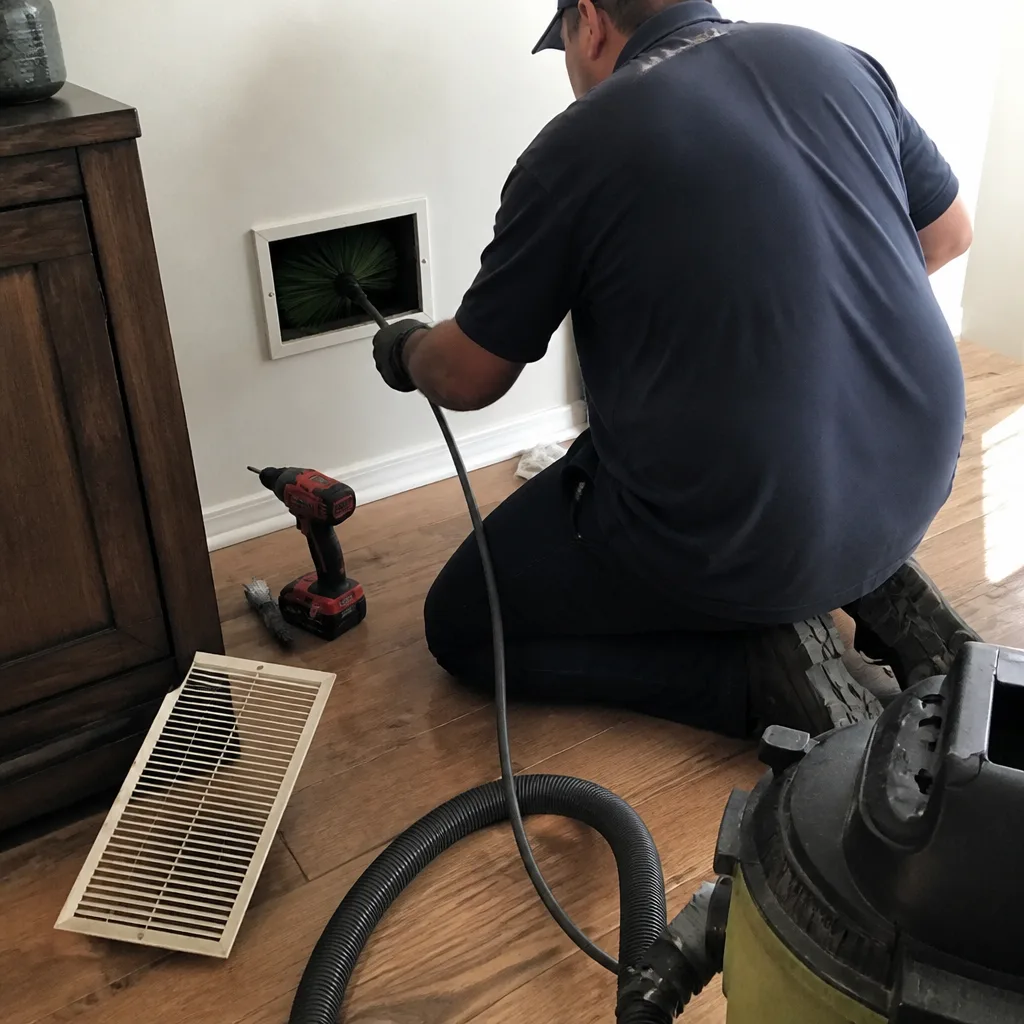
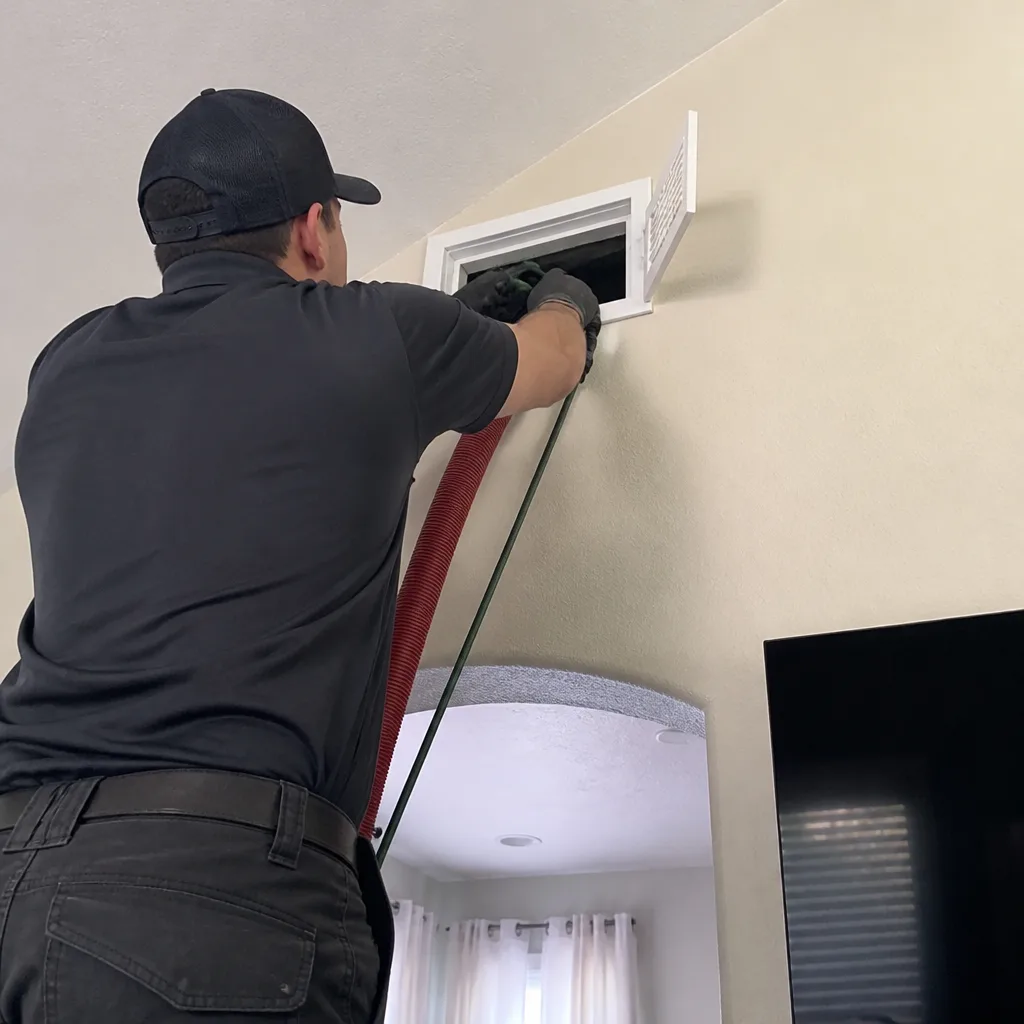
Air duct cleaning removes accumulated dust, debris, pollen, pet dander, and sometimes mold from the inside surfaces of your HVAC ductwork, the registers, the blower motor, the evaporator coil, and the air handler. Done correctly using the source-removal method, a vacuum device attached to the duct system creates negative pressure while agitation tools, such as rotary brush systems, dislodge debris so it’s pulled out rather than pushed around. We run Rotobrush rotary brush systems paired with negative-air machines on every cleaning in Fort Worth because that combination is what actually removes material from the duct walls, not just from the first three feet of visible vent.
What duct cleaning does not do: it does not change your home’s energy efficiency in any measurable way, it does not cure allergies or asthma on its own, and it does not eliminate the source of whatever is entering your ducts. If your return air filter is undersized, your ductwork has gaps drawing attic air, or your home has a moisture problem, cleaning the ducts without fixing those issues means the contamination returns within months. The EPA’s guidance on this is unusually blunt for a government document: duct cleaning has never been shown to prevent health problems, and neither the EPA nor NADCA has a standing recommendation for annual cleaning. NADCA, the trade association that sets cleaning standards, uses the phrase “as needed based on conditions,” not “every year.” The honest translation: you clean when there’s a specific, visible reason to clean, not because a postcard landed in your mailbox in March.
Each Hollis Air Duct Fort Worth location is independently owned and operated under The Garrison Standard. The Garrison Code our technicians work under covers how the job gets done: arrive inside the quoted window, price in writing before any work begins, complete the job by the book, and leave the site clean. That’s the operational side. The technical side is the source-removal method done with professional-grade equipment, the same tools commercial crews use on healthcare and office systems in Fort Worth.
Why Fort Worth Conditions Create a Different Contamination Pattern
Fort Worth is not Houston. It’s not Dallas. The contamination pattern inside your ductwork is shaped by clay soil, a long and aggressive pollen season, and humidity swings that other Texas metros simply don’t experience the same way. Understanding this matters because it changes both when you should clean and what the crew should be looking for.
First, the soil. Most of Fort Worth sits on the Eagle Ford formation, a clay-heavy sediment that produces a fine, chalky dust that is nothing like the sandy soil you find farther south. That dust gets tracked into homes, ground into carpet fibers, and pulled into return ducts. It’s extremely fine, which means it travels deep into the duct system and coats surfaces evenly rather than settling near the registers. In our experience, homes in older Fort Worth neighborhoods like Ridglea and Wedgwood show a uniform gray film on duct walls that was not there the first year after construction. That’s Eagle Ford dust.
Second, the pollen load. Fort Worth’s oak, cedar, and ragweed seasons stretch from February through November most years. Cedar fever hits in January and February, oak follows in March and April, and ragweed runs through the fall. That’s nine to ten months of continuous pollen. A properly sealed duct system should not be pulling outdoor pollen in, but every gap, crack, and undersized filter door creates an entry point. What we find in Fort Worth ductwork is a layered contamination pattern: pollen bonded to the sticky residue left by previous pollen, with a topcoat of clay dust. It forms a mat that a simple vacuum pass will not remove.
Third, the humidity swings. Fort Worth’s spring humidity regularly runs 80% or higher, and air conditioning pulls that moisture through the evaporator coil. The coil stays wet for months. If the coil gets dirty, that wet surfaces becomes a capture point for dust, and over time, a biofilm can form. That’s not mold in the ducts, but it’s the beginning of conditions that can support it. The coil is part of any proper air duct cleaning in Fort Worth, which is why the scope of work should explicitly list it.
What all this means in practical terms: if a Fort Worth home has gone four or five years without a cleaning, the duct interiors will not look like the marketing photos of a light dusting. They’ll look like they’ve been through ten months of pollen season for five straight years, because they have.
How Duct Material Changes the Job: Flex, Sheet Metal, and Fiberglass
Duct material determines the correct cleaning method, the amount of time the job should take, and the risk profile if the wrong technique is used. This is where the price gap between companies starts to make sense: cleaning a sheet metal system in a 1960s Fort Worth ranch is a different job from cleaning flex duct in a 2015 Saginaw build.
Sheet Metal Ductwork
Sheet metal is the most common material in Fort Worth homes built before about 1985, particularly in established neighborhoods like Arlington Heights, Berkeley Place, and Ryan Place. It’s also the most durable and the most straightforward to clean. Rotary brush systems work effectively on the hard interior surface, and negative-air collection removes what the brush loosens. Sheet metal can tolerate aggressive agitation, which means a competent crew can restore it to near-bare metal. The cautions are age-related: old sheet metal can have failing tape seams and internal corrosion, and the crew should be looking for those issues as they work.
Flex Duct
Flex duct, the flexible insulated tubing used in most Fort Worth construction since the 1990s, is a completely different material with completely different constraints. The inner liner is thin plastic over a wire coil. It can be torn by aggressive brushing, and once it’s torn, it pulls attic air into your conditioned space. A proper flex duct cleaning uses lower-torque agitation and more careful tooling, which takes longer. Flex duct is also more likely to develop sagging, kinks, and crushed sections that no cleaning will fix, which is a check a thorough crew should perform during the job.
Fiberglass-Lined Ducts
Fiberglass-lined systems appear in some Fort Worth commercial buildings and a small percentage of residential installations. NADCA’s position is that fiberglass lining should be cleaned only using methods approved by the North American Insulation Manufacturers Association, and in many cases, replacement of the lining is more practical than cleaning. If a crew gives you a flat price over the phone without asking what material your ducts are made of, that’s a red flag: they aren’t planning to adapt their method to the actual system in your home.
NADCA’s standard, ACR 2021, covers material-specific cleaning requirements. A crew that cannot tell you how they’ll adapt their method to flex versus sheet metal is not doing NADCA-standard work regardless of what their website says. The right company will ask you about your home’s age and duct material before quoting, because the job is materially different.
Source-Removal vs. Blow-and-Go: The Real Difference
The single largest variable in duct cleaning pricing is which of two fundamentally different jobs you’re actually buying. Understanding this distinction is the difference between a service worth $600 and one worth $100 even at $100.
A blow-and-go, sometimes called a surface cleaning, works like this: the technician opens a few registers, runs a vacuum hose or a compressed-air wand into the visible duct runs, sweeps what’s reachable, and hands you a receipt. The equipment is typically a shop vac with a long hose or a small portable vacuum. The entire job takes 45 to 90 minutes. What it removes is what was visible from the register openings. What it leaves is everything else: the coating on the duct walls beyond the first few feet, the debris in the trunk lines, the buildup on the evaporator coil, and anything in the return side that wasn’t accessible from the living space.
A source-removal cleaning works differently. The crew connects a negative-air machine to the duct system, often at the plenum or a cut-in access point, creating continuous airflow that pulls loosened debris into a HEPA-filtered collection unit rather than letting it settle back into the ducts. Then they use powered agitation, which may be a rotary brush system or air whips depending on the duct material, to break the debris free from the interior surfaces. The registers are removed and cleaned, the return grilles are addressed, and the blower motor and evaporator coil are inspected and cleaned as part of the job. The work takes four to six hours, sometimes longer on larger homes. That’s the schedule, not a rushing excuse.
Blow-and-go is not inherently fraudulent if it’s priced honestly for the limited work being done. The problem is that many low-price duct cleaning offers in Fort Worth sell blow-and-go as full-system source-removal. A $199 whole-house coupon almost never covers source-removal, because the labor and equipment costs to do source-removal properly exceed $199 before the technician’s time is fully accounted for. When we run our job on a 2,000-square-foot Fort Worth home, we’re on site for the better part of a day, because source-removal takes that long if it’s done to the standard the equipment was designed for.
Both approaches will make the visible registers look cleaner. Only one changes what’s actually coating the inside of the ductwork.
What Air Duct Cleaning Costs in Fort Worth
Here are realistic whole-system price ranges for Fort Worth homes, based on home size and system configuration. These are the numbers you should use as your reference frame, not the coupon on a postcard:
- Homes under 1,500 sq ft: $350 to $550 for source-removal cleaning, one system
- Homes 1,500 to 2,500 sq ft: $450 to $750 for source-removal cleaning, one system
- Homes 2,500 to 4,000 sq ft: $600 to $950, often involving two systems or a long trunk layout
- Homes over 4,000 sq ft or with multiple HVAC systems: $900 to $1,400, priced per system
- Add-on dryer vent cleaning: $75 to $150 as a standalone service, often discounted when bundled with duct cleaning
- Add-on duct sealing in Fort Worth: typically $800 to $1,800 depending on accessibility and the length of duct runs
These ranges reflect source-removal work done with professional equipment: negative-air machines from brands like Abatement Technologies, rotary brush systems from Rotobrush, and HEPA filtration. The equipment costs real money, the training costs real money, and the time on site is not optional if the work is being done to standard.
If you’re quoted under $300 for a whole-house cleaning on a 2,000-square-foot Fort Worth home, ask directly what the scope includes. Specifically: does it include the evaporator coil, blower motor, all supply and return runs, and all registers? Is the technician on site for three hours or ninety minutes? Is the equipment a truck-mounted negative-air machine or a portable vacuum? The answers will tell you which of the two services described above you’re actually being sold. There is a place for honest, low-cost basic vent cleaning. There is no place for selling basic vent cleaning at a source-removal price, or selling source-removal at a price that cannot cover it.
Hollis Air Duct Fort Worth writes the price before we open a single register. That price doesn’t move at the door. No per-vent add-ons, no sudden discovery that the coil cleaning “wasn’t included” (the coil is always part of our cleanings), no upsell pressure while the system is open. It’s the same written-price discipline that our Fort Worth home page describes across all our services.
How Often Should You Actually Clean Your Ducts?
The honest answer, grounded in EPA and NADCA guidance rather than marketing calendars, is that most Fort Worth homes need duct cleaning somewhere between every three and seven years. The exact interval depends on conditions you can evaluate yourself. Here’s NADCA’s clearly stated triggers for a cleaning being warranted, in priority order:
- Visible mold growth inside the ducts or on the registers or grilles. If you can see it, a cleaning is needed, and the underlying moisture issue also needs to be identified and corrected.
- Vermin infestation in the ductwork: rodents, insects, or their droppings. This is not just a cleaning problem; it’s a sanitation problem.
- Excessive dust and debris visible being released from the registers into the living space, even after the filters have been changed.
- Post-construction or post-renovation contamination. Drywall dust, sawdust, and insulation particles pulled into the return side during a remodel are a legitimate reason for a one-time cleaning.
- New home with construction debris in the system. Builders do not clean ductwork, and new construction debris in the ducts is common in Fort Worth’s volume-built subdivisions like Alliance, Walsh, and Chisholm Trail Ranch.
The “every three to five years” rhythm that honest Fort Worth companies quote is a reasonable maintenance interval for homes with pets, consistent allergy symptoms, or the Eagle Ford clay dust pattern described earlier. A home with no pets, high-quality filtration, diligent filter changes, and newer well-sealed ducts may go six or seven years between cleanings without any measurable problem. A home with three dogs, a carpeted interior, an undersized filter grill, and five-year-old ducts in a construction-dust-heavy neighborhood may genuinely need it every three years.
The annual-cleaning pitch is marketing, not science. Neither the EPA nor NADCA recommends annual cleaning. When a Fort Worth company pushes an annual maintenance plan built around duct cleaning, ask them to cite the standard that supports the frequency. They cannot, because the standard does not exist.
Your dryer vent is a different schedule altogether. That should be inspected and cleaned every year because lint is a combustion hazard, and the Fort Worth fire statistics around laundry room calls are not something to make light of.
What a Written Price and Written Guarantee Should Look Like
Before any company sends a technician to your home, you should have a written document that includes the following, in this order. If the document doesn’t look like this, you’re not buying a defined service, you’re buying a visit:
- A fixed price for the full defined scope of work. Not an estimate. Not a range. A number.
- A scope section listing every component being cleaned: supply ducts, return ducts, registers, grilles, blower motor, evaporator coil, air handler. If “coil” is missing from the scope, the price is for a partial job.
- The method and equipment being used. “Negative air and rotary brush” means source-removal. “Compressed air” alone is a yellow flag. “We’ll see what it needs when we get there” is a red flag.
- The estimated time on site. Four to six hours for a full source-removal on a typical Fort Worth home. Ninety minutes is a different service.
- A written guarantee. Not “satisfaction guaranteed” in a marketing block. The actual terms: what is covered, for how long, and what the company does if something fails.
Our guarantee at Hollis Air Duct Fort Worth is the 365-Day Done Right Promise. It runs for a full year, in writing, on every job. If anything we cleaned fails within that year, we come back and make it right at no charge, including a free second visit if that’s what it takes. It’s not negotiated at the time of a complaint; it’s written into the price before we start. That’s The Garrison Standard applied to the guarantee side of the business.
Ask any company you’re considering what happens if the work fails in month eight. If the answer is a vague “we’d want to take care of you,” you don’t have a guarantee, you have a posture. A written guarantee changes the calculation for both you and the company, because it means the company has a financial interest in doing the job right the first time.
Common Mistakes to Avoid
- Buying the $99 special and expecting a $600 service. The math cannot work. A company cannot perform 4 to 6 hours of labor with professional equipment, pay a trained technician, and cover overhead for $99. What the $99 buys is a foot in the door and an upsell conversation.
- Cleaning ducts to fix an air quality problem without identifying the source. If your ducts are filling with dust because the return side is pulling from the attic, cleaning is a bandage. In Fort Worth homes, the most common sources are disconnected return ducts, failed duct tape at joints, and undersized filter racks that bypass air around the filter.
- Using a company that won’t tell you what duct material you have. If the technician cannot identify your duct material from a quick look and explain how the method adapts to it, they do not have the training to be inside your system. Flex duct and sheet metal are not the same surface.
- Skipping the evaporator coil because it wasn’t in the scope. The coil is the wettest, dirtiest component in a Fort Worth HVAC system during our long cooling season. A duct cleaning that leaves the coil untouched is like cleaning a chimney but leaving the damper clogged.
- Trusting before-and-after photos from a different house. A reputable Fort Worth company will show you photos of your own ducts, before and after, taken during the job. We do this on every cleaning because it’s the only way you can verify the work without crawling into your own attic.
- Paying before the job is finished and verified. The sequence should be: written price, signed scope, work performed, walkthrough of before-and-after documentation, then payment. Anyone who wants payment before the work starts is not someone you want inside your system.
When to Call a Professional
You should have a professional Fort Worth duct cleaning company look at your system when you see visible mold growth on or inside registers, when you find rodent droppings or insect casings in the ductwork, when dust visibly discharges from registers during normal operation, or after a significant renovation that pulled drywall dust into the return side. You should also have the system inspected if you’ve owned the home for three or more years and have never had the ducts evaluated, particularly if the home predates 2000, when the Fort Worth housing stock commonly used sheet metal runs that have now been in service for two decades or more. Hollis Air Duct Fort Worth offers free estimates across Fort Worth, we answer the phone with a live person around the clock, and our technicians are background-checked and uniformed before they ever step into your home. Call (682) 255-2572 and we’ll price it in writing before any work begins.
Frequently Asked Questions
A full source-removal cleaning in Fort Worth costs $450 to $900 for most homes under 2,500 square feet, with smaller homes falling below that range and larger or multi-system homes rising above it. If you’re quoted under $300, you’re almost certainly being sold a partial cleaning or a blow-and-go that will not address the coil, blower, or deep duct surfaces. Call (682) 255-2572 for a written quote on your specific system, and you’ll have a fixed number before any work starts.
The gap is almost always the difference between source-removal and blow-and-go, not between a “discount” company and a “premium” company. A source-removal cleaning uses negative-air equipment and power agitation, takes four to six hours, and addresses the coil, blower, and full duct length. A blow-and-go takes under two hours, uses a portable vacuum, and reaches only what’s visible from the registers. Both are legitimate for what they are; the problem is when a blow-and-go is priced and sold as a full cleaning. Ask what equipment they run and how long they’ll be on site, and the price will start making sense.
You should receive before-and-after photos of your own ducts, taken during the job, showing the same register and the same duct section in both states. You should also see the debris the negative-air machine collected, either in the collection unit or in a bag-out photo. If a company offers neither of these, you have no way to verify the work short of climbing into the attic yourself. We photograph every duct run we clean and review the documentation with you before we leave the site.
Duct cleaning can reduce the amount of particulate being recirculated through your home, which some allergy sufferers notice, but it does not cure allergies and the EPA does not classify duct cleaning as a treatment for allergic disease. Fort Worth’s pollen problem is outdoor in origin; if your ducts are clean and sealed, indoor particulate drops meaningfully, but the pollen will return the moment your windows are open in April. Pair a duct cleaning with upgraded filtration from brands like Aprilaire or Honeywell, and you’ve addressed both the existing load and what enters next.
Every three to five years is the reasonable maintenance interval for most Fort Worth homes, based on NADCA guidance and the specific contamination patterns created by Eagle Ford clay dust and the long North Texas pollen season. Homes with pets, carpet, or consistently dirty filters should lean toward the three-year mark; homes with good filtration and no pets may go five or more years. Annual cleaning is not recommended by the EPA or NADCA and is a marketing frequency, not a technical one.
Duct cleaning removes the material that has accumulated on the inside surfaces of your ductwork; duct sealing closes the leaks that let attic air, dust, and humidity into the system. They’re complementary, not the same service, and a good cleaning crew will identify leaks during the cleaning because they can see the separation at joints and seams. Sealing is a more expensive service because it requires access to the duct runs and the application of a sealing material like mastic to every accessible joint. Call (682) 255-2572 and we’ll tell you whether sealing or cleaning, or both, is what your system actually needs.
The Bottom Line
Air duct cleaning in Fort Worth is worth doing when there’s a reason to do it: visible contamination, a renovation that filled the system with dust, years of accumulated pollen and clay dust, or a home you’ve owned for half a decade without ever looking inside the ducts. It is not worth doing annually, and it’s not worth paying premium prices for a blow-and-go masquerading as a deep clean. Get a written price, get a written guarantee, confirm the scope includes the coil and blower, and let the company’s equipment list tell you whether they can actually do the job. That’s the whole decision framework, and it’ll serve you better than any coupon ever will.
Written by Roy Castellanos, Owner at Hollis Air Duct Fort Worth, serving Fort Worth since 2004.
See the difference
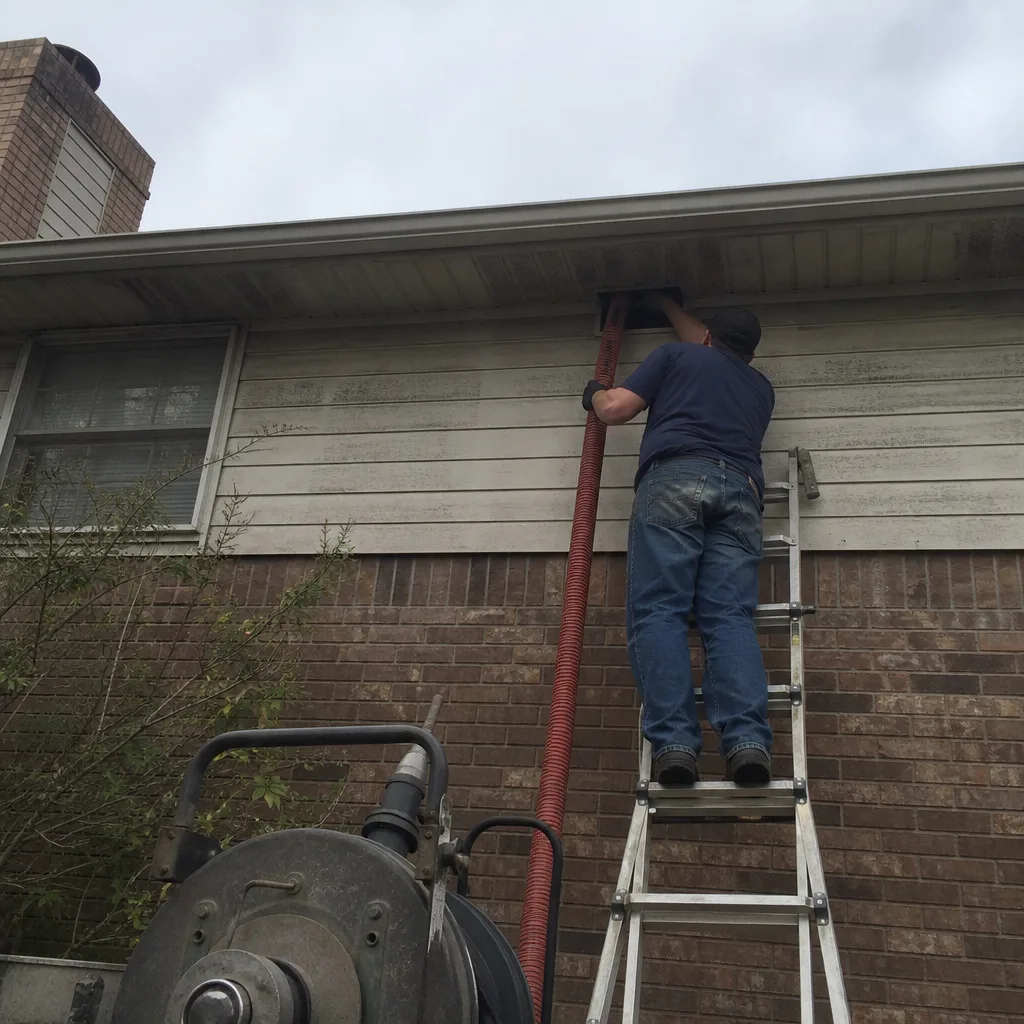 Before
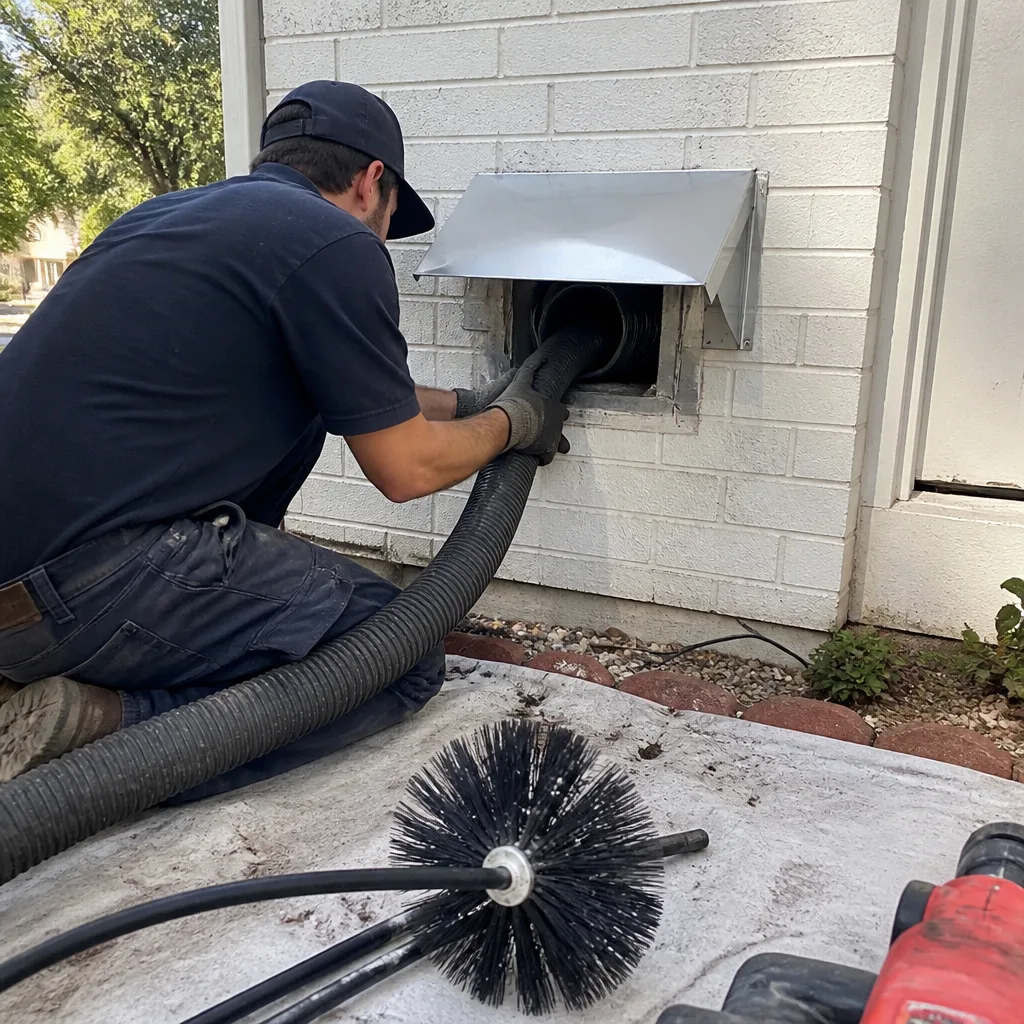 After
After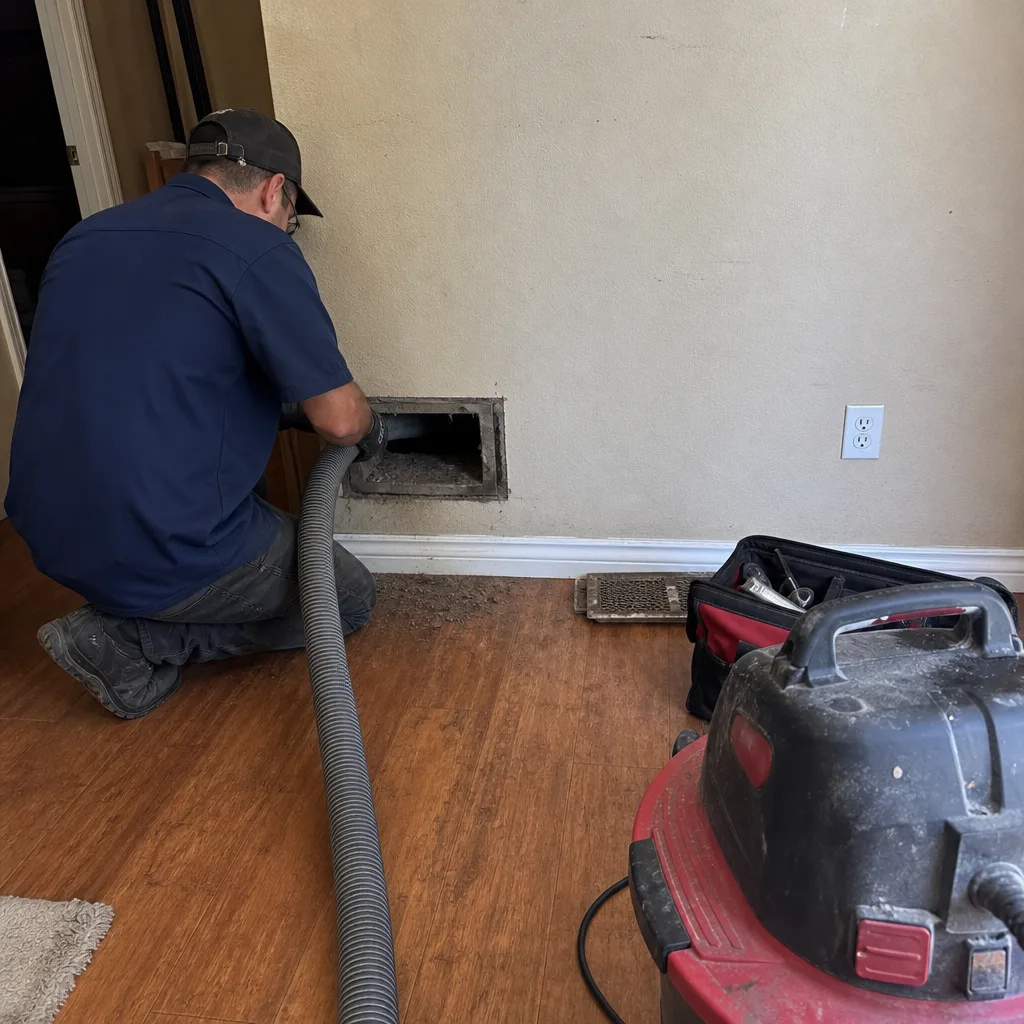 Before
 After
After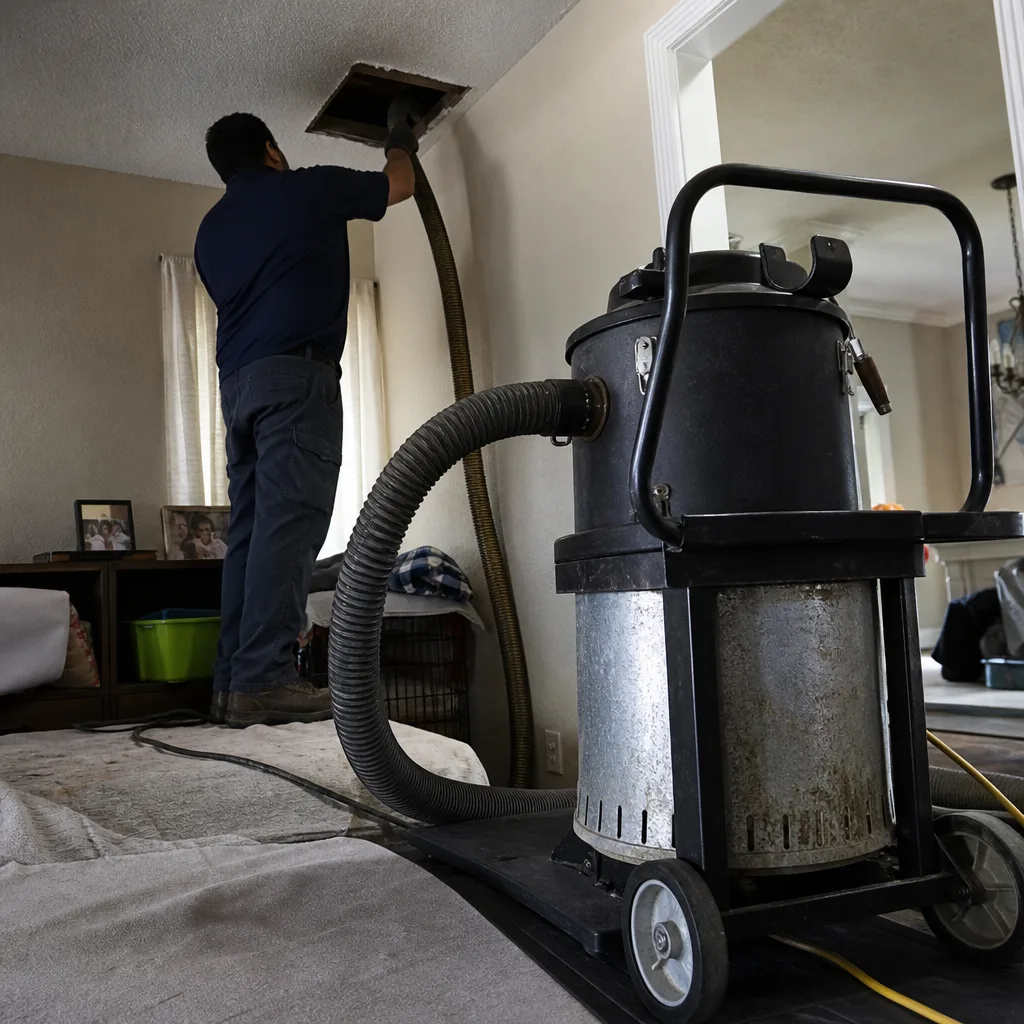 Before
 After
After