
Last updated October 15, 2026
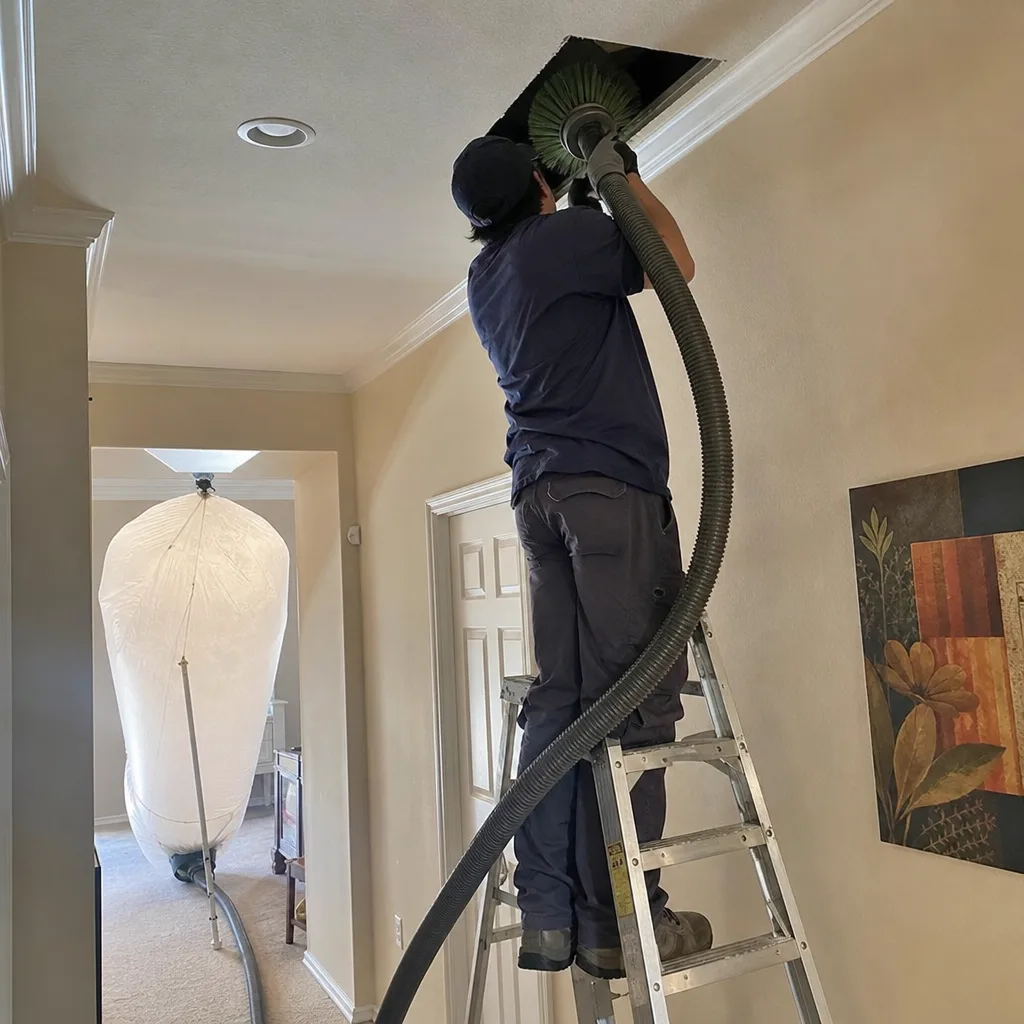
 Whole-home duct cleaning
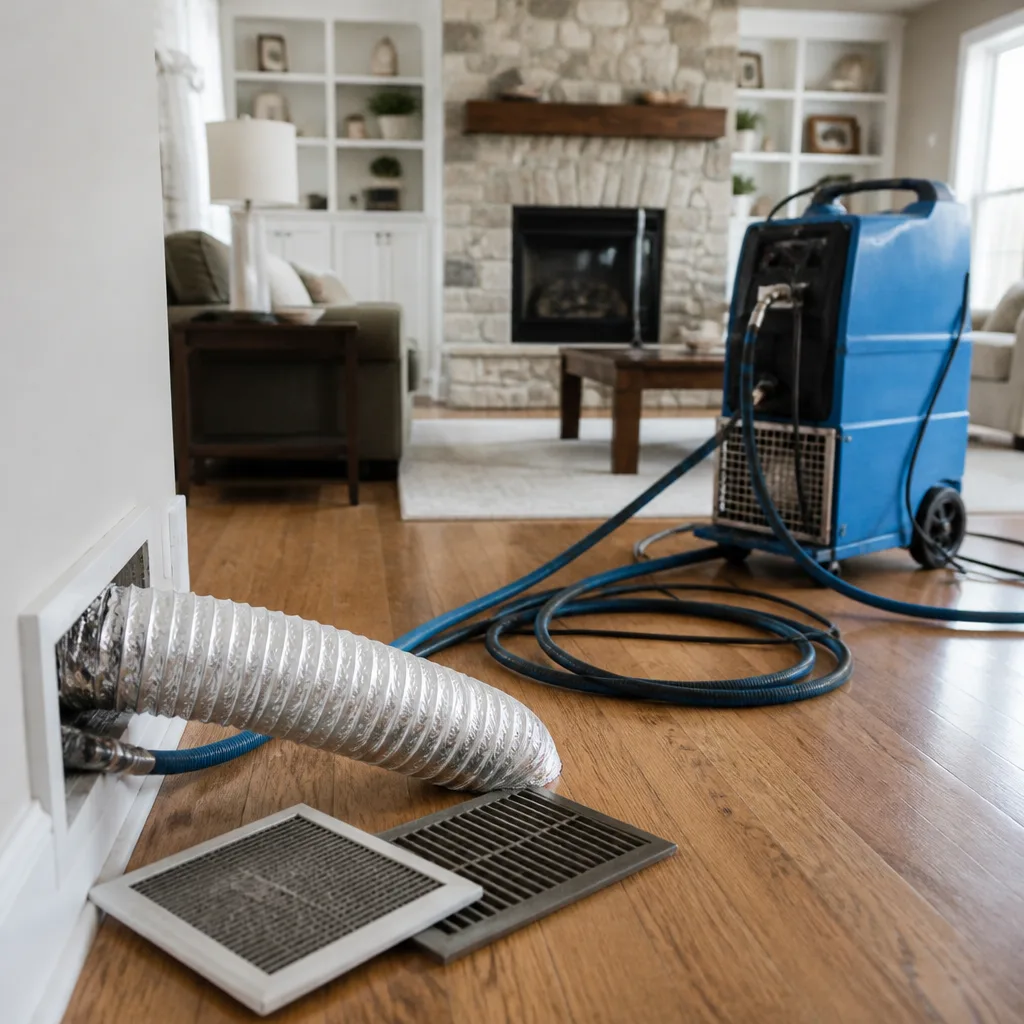
 Dryer vent cleaning
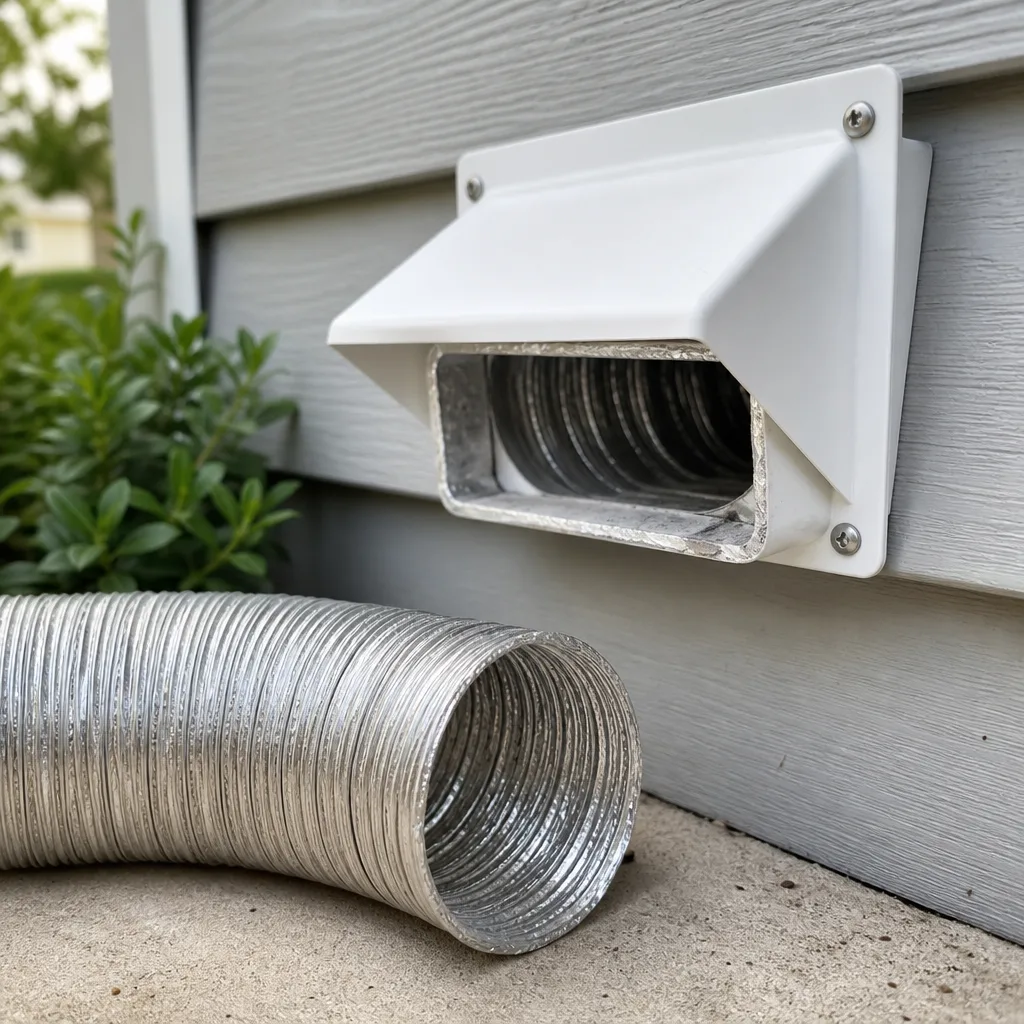
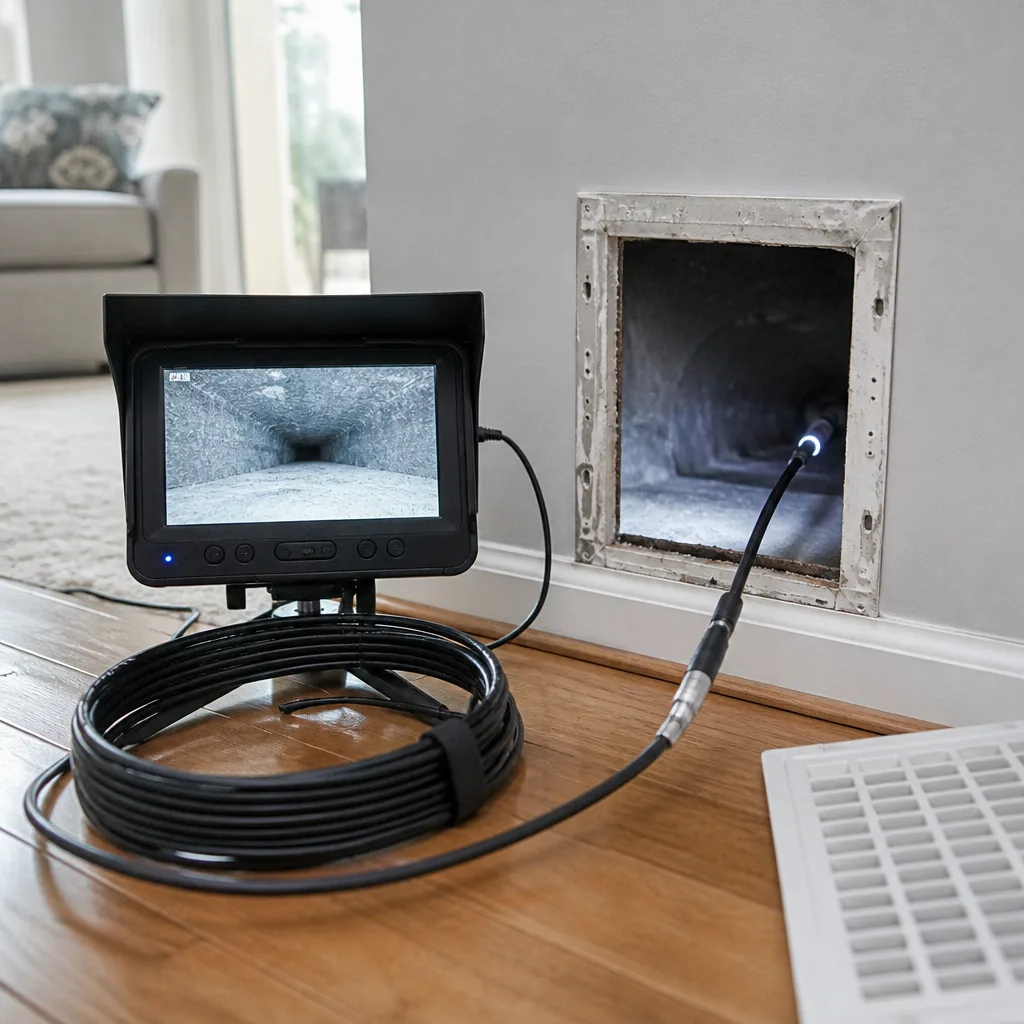 Camera inspection
 Sanitizing & deodorizing
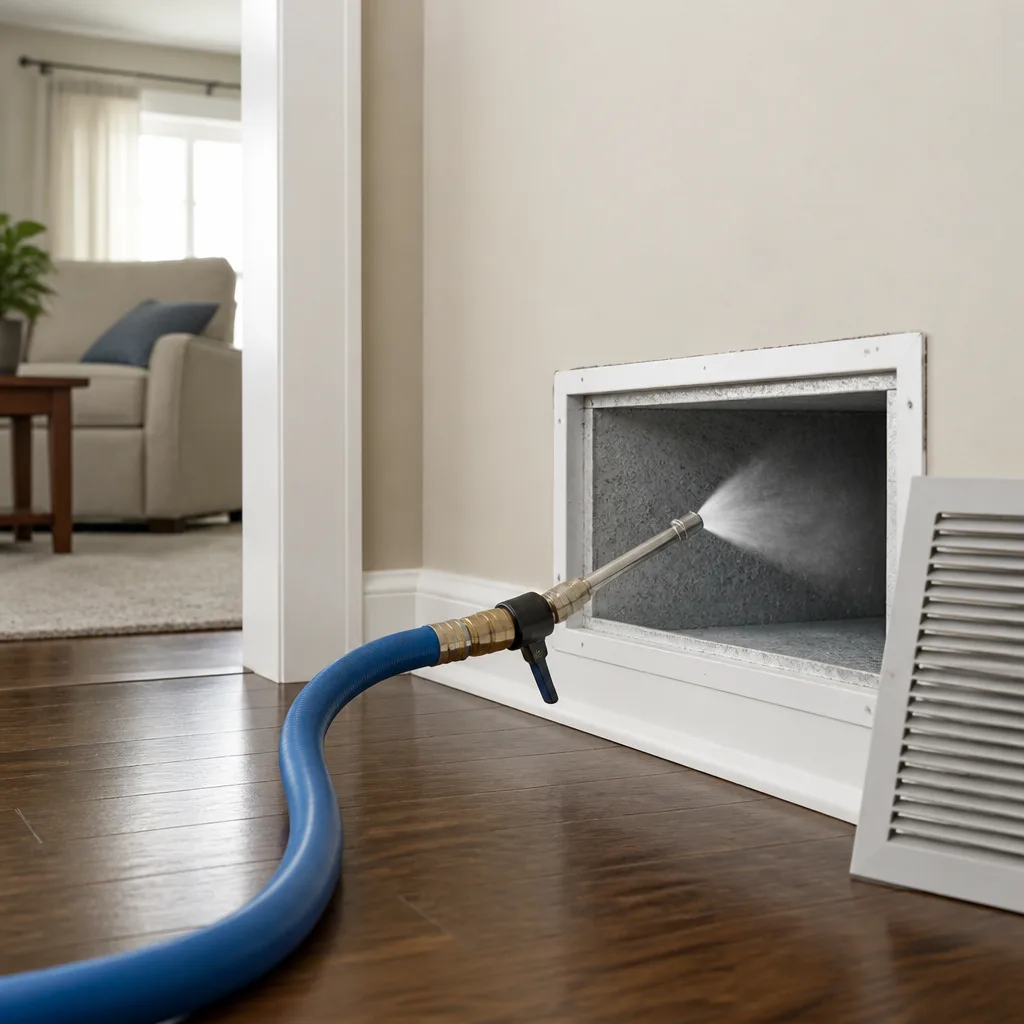
Whole-system duct and dryer vent check with before-and-after photos - you see exactly what came out of your vents
That "$99 whole-house special" is a bait ad - the real number appears once they are in your hallway, or the "clean" is a shop-vac at the register. We photograph the inside of your ducts before and after instead.
Air Duct Cleaning Maintenance Checklist for Fort Worth Homeowners
Most duct maintenance checklists you’ll find online are repackaged marketing. They list items only a contractor with a camera scope and a blower door can check, which conveniently means you always need to call someone. This one is different. It’s built around what you can actually see, smell, and measure without special tools. In Fort Worth, where cedar pollen blows in February and construction dust kicks up all summer, your ducts tell a story if you know how to read them. Here is the twelve-point checklist that tells you when your system’s condition is changing, before it becomes a problem you can smell in every room. For Air Duct Cleaning Warning Signs: A Fort Worth Homeowner’s Reference Guide, see our dedicated resource.
Quick Answer
A Fort Worth air duct maintenance checklist comes down to twelve observable indicators you can check yourself: filter condition and fit, register buildup color and texture, return grille dust patterns, supply register airflow strength, visible duct joint separation in accessible areas, musty or burning odors when the system cycles, dust settling rates on furniture, allergy symptom changes indoors versus outdoors, pest droppings near registers, flex duct sagging or kinking in attic runs, humidity shifts between rooms, and the date of your last professional inspection. You do not need special tools for any of these. A flashlight, a tissue, and a notebook will do.
Styles & brands we work with
Table of Contents
- Filter Inspection Cadence Tied to Fort Worth Seasons
- How to Inspect Register Covers and Return Grilles Yourself
- The Tissue Test: Spotting Supply Pressure Loss Without a Blower Door
- Duct Sealing Indicators You Can Spot From Inside the House
- The Odor Log: What Different Smells Actually Mean
- Record-Keeping Format That Gets You an Accurate Quote
- Common Mistakes to Avoid
- When to Call a Professional
- Frequently Asked Questions
Filter Inspection Cadence Tied to Fort Worth Seasons
In Fort Worth, a one-inch pleated filter should be checked monthly and typically replaced every 60 to 90 days. But the calendar is not your real guide, the season is. North Texas has four distinct air-quality seasons that change how fast a filter loads up.
February through April is cedar and oak pollen season. If you have a live oak or mountain cedar anywhere in your vicinity, a filter that normally lasts three months can load in six weeks. Check it every two weeks during this stretch. May through July brings construction dust and fine clay particulate that dries out and goes airborne. August through October is ragweed and grass pollen season, plus the dust that settles during hot, dry weeks. November through January is your lightest season for outdoor particulate, but indoor dust actually concentrates more because the house stays closed up and the system runs constantly.
Here is the simple cadence that works for most Fort Worth homes:
- February 1 through April 30: check every two weeks, replace when the pleats look dirty or the filter bows slightly inward under system pressure.
- May 1 through July 31: check monthly, replace at 60-day intervals or sooner if you live near new construction.
- August 1 through October 31: check monthly, replace at 60 to 90-day intervals depending on whether you’re running the system hard.
- November 1 through January 31: check monthly, but you may only need to replace once during this stretch if you run the heat and leave windows closed.
One more Fort Worth-specific point: homes near the Chisholm Trail Parkway corridor or the new developments in Walsh Ranch and Ventana see construction dust for years, not months. If you’re within half a mile of active grading, treat every season like spring and check your filter every two weeks. The filter is the first line of defense for both your ducts and your equipment.
How to Inspect Register Covers and Return Grilles Yourself
Your register covers and return grilles are the only parts of your duct system you can see without a camera. What collects on them tells you what’s moving through the hidden sections.
Start with a flashlight and a damp paper towel. Remove a supply register in a frequently used room. Look at three things:
- The color of the buildup. Gray, fibrous dust is normal household dust. It means the filter is doing its job. Dark gray or black buildup with a greasy texture tells you the system is pulling in air from a garage, attic, or crawl space, or that candles and cooking oils are entering the return air. Yellow-brown or tan powder is construction dust or clay particulate. All of these are things you can see yourself, and each points to a different fix.
- The texture of the buildup. If it’s dry and fluffy, it’s recent and light. If it’s caked and hard, it’s been there a while and has likely absorbed moisture at some point. Caked buildup in Fort Worth usually means the system ran for years without adequate filtration, or that a duct leak pulled humid attic air into the system during our long humid summers.
- The pattern on the grille. Dust concentrated on one side of a return grille with the other side near-clean suggests air is bypassing part of the filter, or the filter isn’t seated correctly. A perfectly even dust layer on a supply register suggests the air leaving the system is carrying dirt, which points to a filter failure or a breach upstream of the filter.
Wipe the register with the damp towel and note the color of what comes off. Do this every quarter. It takes five minutes, and it gives you a running record of what’s in your air. In our experience, we’ve seen homeowners in Arlington Heights and Ridglea Hills catch return-side leaks this way months before a problem would have shown up as a system failure.
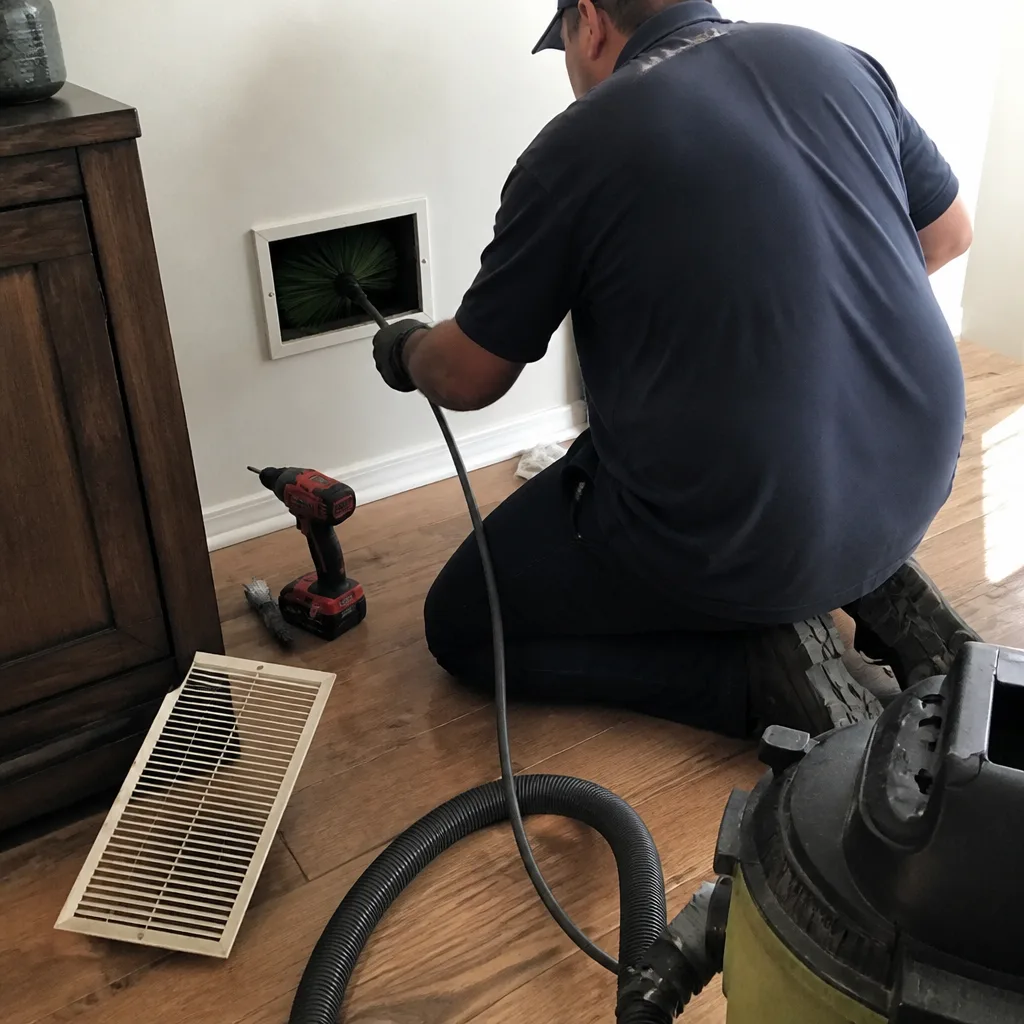
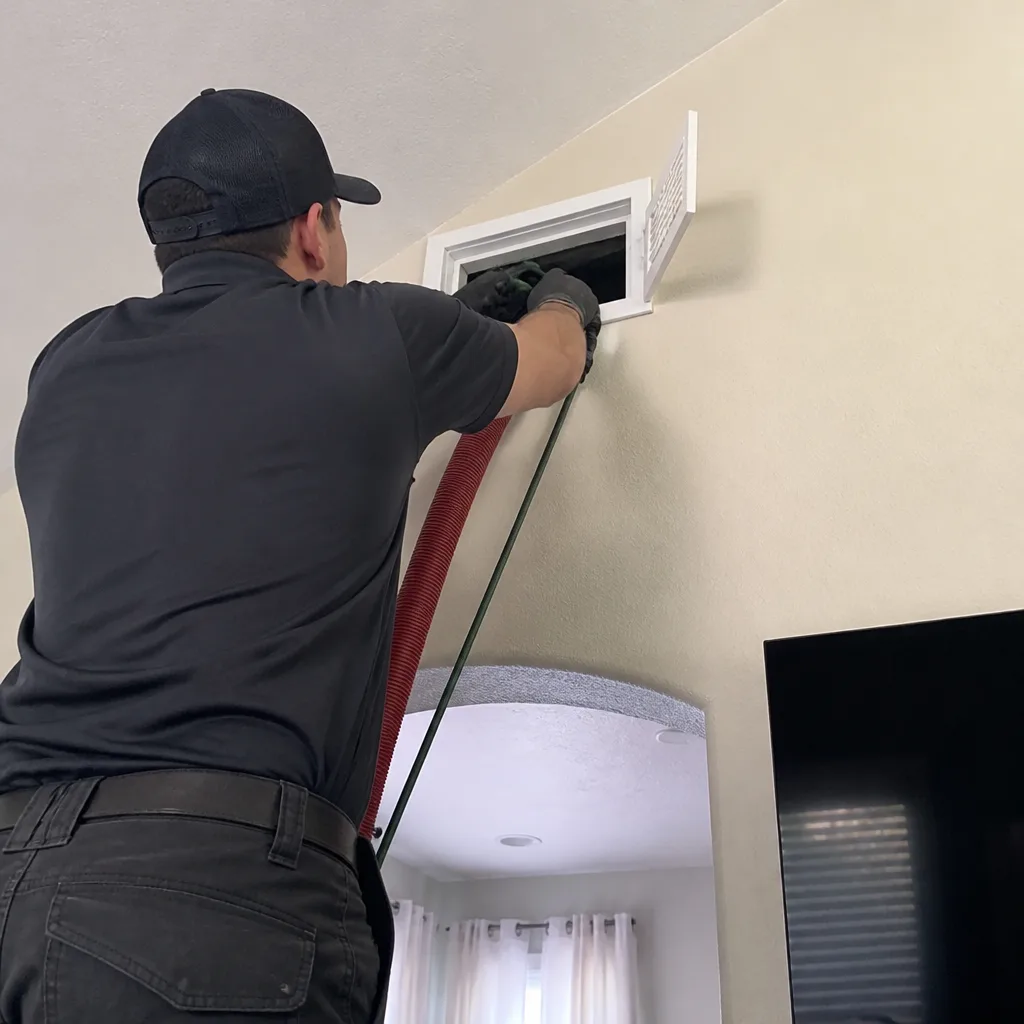
When you want a deeper look at what’s actually inside the duct runs, a professional inspection with a Rotobrush camera system shows you the sections you cannot reach. But the register check is your early warning system, and it’s free.
The Tissue Test: Spotting Supply Pressure Loss Without a Blower Door
Here’s how to check whether your ducts are leaking supply air without spending money on a blower door test. You need a single-ply tissue, the kind that floats if you drop it, or an incense stick if you prefer smoke.
- Set your thermostat fan to ON, not AUTO. You want the blower running constantly so airflow readings are stable.
- Hold a tissue six inches from a supply register in the room farthest from your air handler. A healthy system will push the tissue to roughly a 45-degree angle or better. If the tissue barely moves or hangs limp, that register is not getting full supply pressure.
- Repeat this in the room closest to the air handler, then in each room. Write down which registers feel strong and which feel weak.
- Compare the results. In a well-sealed system, every supply register should move the tissue to a similar angle. A weak register at the end of the longest run, paired with strong registers near the plenum, is the classic sign of a duct leak somewhere between the trunk line and that branch.
- If using incense, hold the lit stick near the register and watch the smoke. Strong, straight smoke means good pressure. Smoke that barely drifts or wafts around the grille means low pressure. Smoke pulled toward the register even with the system off means backdraft, which is its own problem.
This test is not a substitute for proper static pressure measurement, but it is a legitimate observational tool. It tells you whether your supply side is healthy enough to push conditioned air to the end of the line, and it costs nothing. Fort Worth homes built before the 1990s in neighborhoods like Crestwood and Berkeley Place often have unsealed metal duct joints that leak 20 to 30 percent of supply air into attic spaces. The tissue test is how you catch that before your July electric bill catches you.
Duct Sealing Indicators You Can Spot From Inside the House
Duct sealing is what fixes the leaks the tissue test reveals. It uses mastic, a thick paste applied to duct joints and seams, to close gaps that let conditioned air escape into unconditioned space. But before you call for duct sealing in Fort Worth, you should know whether you actually need it. Here are the indicators you can spot from inside your house:
- Temperature differences between rooms. If your living room is comfortable but the back bedroom stays ten degrees warmer in August, that’s not an insulation problem. That’s most often a supply leak in the branch run feeding that room. The air never arrives.
- Dust streaks on insulation. If you can safely see the top of your ducts in the attic, look for dark streaks radiating away from duct joints. That’s filtered air escaping under pressure and staining the insulation as it goes. This is the most direct visual proof of a duct leak, and it requires no tools.
- Whistling or sighing sounds from specific registers. A register that whistles when the system runs often means the branch is undersized, but a sighing sound that changes when the system shuts off can signal a large leak in that branch. Air equalizing through a hole makes noise.
- Higher humidity indoors than outdoors. Fort Worth summers are humid, but the inside of a well-sealed home should be drier than the yard. If your interior feels just as muggy as the patio, a return-side leak is likely pulling unconditioned attic air into the system.
- Your system runs longer than it used to. If the compressor cycles are noticeably longer than last year under the same outdoor conditions, the system may be working harder to cool air that’s leaking away before it reaches the rooms.
Duct sealing mastic is not a homeowner task. It requires access to full duct runs, often in tight attic spaces with limited visibility. But identifying the indicators is absolutely a homeowner task, and knowing what you’re looking at before you make a call means you get an accurate quote instead of a guess. If you’re unsure whether permits apply to your situation, read our guide on Air Duct Cleaning Permits, Codes & Inspections in TX: What You Need to Know.
The Odor Log: What Different Smells Actually Mean
Your nose is the most underrated diagnostic tool in home maintenance. The catch is that most people notice a smell, get used to it within a week, and stop paying attention. A simple odor log fixes that.
Keep a note on your phone. When the system cycles on, note what you smell in the first thirty seconds. That’s when airflow kicks up whatever has settled in the ducts since the last cycle. Here is what common smells point to:
- Musty or wet-sock smell when the system first kicks on: microbial growth in the ductwork or on the evaporator coil. In Fort Worth’s climate, this is the most common duct problem we see. High summer humidity plus cool duct interiors equals condensation, and condensation that never fully dries breeds odor.
- Burning or electrical smell that fades after a few minutes: dust burning off the heat exchanger or heat strips at the start of heating season. If it persists for more than one full cycle, shut the system down and get a technician out. That’s an equipment issue, not a duct issue.
- Stale, flat, or chalky smell: simple dust accumulation in the ducts. It’s not dangerous, but it means the system has been recirculating the same particulate for years. A professional air duct cleaning in Fort Worth that uses negative-air extraction will remove what your filter could not catch.
- Ammonia or urine smell localized to one room: rodent activity in that branch line or in the wall cavity around the register. Pest droppings near the register will usually confirm this. This is a health issue and a duct cleaning issue, in that order.
- Smoky or campfire smell that appears only when the system runs: usually a sign that the home had a previous owner who smoked, or that the ducts pulled in wildfire smoke during a dry season. The odor is trapped in the dust lining the duct walls.
Log the smell, the date, the room, and whether it fades or persists through the cycle. Three consecutive entries for the same room is a pattern worth acting on. One entry that never repeats is likely a one-off. The log turns your nose into a dataset.
Record-Keeping Format That Gets You an Accurate Quote
Here is what most homeowners don’t know: contractors guess. They have to. When a crew shows up and the ducts are inaccessible, the technician can only see what the camera shows, and the estimate reflects what they can verify in that moment. What a good company won’t do is charge you for a guess. But you can make the guess unnecessary.
Keep a simple duct inspection log. After each quarterly check, write down:
- Date and season. Fort Worth seasons matter because pollen season loads filters faster than winter.
- Filter change date and the filter’s condition at removal. Dirty, slightly dirty, or clean. This tells a contractor how well your return side is working.
- Register buildup noted. Color, texture, and which rooms. A pattern of damp, caked buildup on the west side of the house alone is diagnostic.
- Tissue test results. Which registers move the tissue and which don’t. Weak at the end of the line, strong at the trunk, consistently, for six months is a different problem than weak everywhere.
- Odor log entries. Date, room, smell, duration.
- Pest signs. Droppings, chew marks on flex duct, or nesting material near returns.
- Any renovation or construction work done near the home. Drywall dust from a remodel will coat a duct system. Contractors should know this.
When you call a company like Hollis for a quote, you can hand the technician a year of observations instead of a vague “I think it’s been a while.” That changes the estimate from a flat guess to a history-based quote. It also signals that you know your house, and crews respond to that.
Common Mistakes to Avoid
- Running the system with no filter. If the filter frame is warped and the filter doesn’t seat, you have a problem. A bypassed filter sends every ounce of Fort Worth pollen straight onto your coils.
- Using a filter with too high a MERV rating for your system. A MERV 13 filter in a system designed for MERV 8 restricts airflow and forces the blower to work harder. You’ll get less airflow, not cleaner air.
- Wiping register buildup without noting what it looked like. The clue is the color and texture. Wiping it away destroys the data.
- Ignoring a room that consistently runs hot or cold. In Fort Worth, a room that’s always ten degrees off from the rest of the house usually means a leaking branch run. Insulation won’t fix a supply leak.
- Treating air duct cleaning as a seasonal chore. Ducts don’t need cleaning on a schedule. They need cleaning when the observable indicators say they need cleaning. A clean system in a clean house can go five to seven years between professional cleanings. A system with a return leak near construction can need it in six months.
- Judging a duct cleaning quote by price alone. The cheapest quote in Fort Worth is usually a teaser rate that turns into a much larger invoice once the van is parked. Ask for a written price before work starts and a written guarantee that covers the work for a full year.
When to Call a Professional
Some things on this checklist point to a fix you can do yourself: swapping a filter, wiping a register, logging an odor. Others point to a job that needs professional tools and access. Call a professional when you see black or greasy buildup on multiple registers, when the tissue test shows weak airflow at the end of the line for two consecutive checks, when you smell a persistent musty odor that doesn’t fade, or when you find rodent droppings near the return grilles. A camera inspection with a Nikro negative-air machine or a Rotobrush system will show you exactly what’s in the runs you can’t see. Hollis Air Duct Fort Worth offers free estimates in Fort Worth. Call (682) 255-2572 and we’ll give you a written price before any work starts.
Frequently Asked Questions
Air duct cleaning in Fort Worth typically runs between $350 and $600 for a standard single-family home with one air handler and 10 to 15 registers, depending on the home’s size and the system’s condition. Homes with two systems, extra returns, or severe contamination can run $600 to $900. The price should be written down before the work starts, and it should not move at the door. Some companies quote a per-vent teaser price, then inflate the total once the technician arrives. A fixed system price agreed before work begins protects you from that. Call (682) 255-2572 for an exact quote. Estimates are free.
The cheapest quotes usually come from companies that plan to upsell you once they’re inside. They’ll quote a teaser rate, find “mold” or “major contamination” once they’re in the attic, and the final bill lands at double or triple the quoted number. Companies that charge a fair whole-system rate up front and put the price in writing don’t rely on that game. The other driver is equipment: professional-grade negative-air machines from Rotobrush and Nikro cost tens of thousands of dollars, and a crew running proper equipment can’t profitably clean a system for $99. If the price seems too good, the job probably isn’t real.
A legitimate air duct cleaning company will provide before and after photos of the inside of your ducts, taken with the same camera system they used for the inspection. The photos should show the same duct sections, and the difference should be visible. A negative-air cleaning with a rotary brush system removes the dust and debris, not just loosens it. If a company cannot show you before and after photos, that’s a red flag. The air duct cleaning process should include visual proof, not just a receipt.
Most Fort Worth homes need professional Air Duct Cleaning every 4 to 7 years, not every year. Homes with pets, smokers, recent renovations, or a return-side leak may need it more often. The honest answer is that the observable indicators on this checklist tell you when it’s time, not a calendar. If your registers stay clean after a wipe-down for months, your airflow is strong at every register, and your odor log is empty, your ducts are probably fine. If caked buildup returns within weeks of cleaning, you have a duct leak that needs sealing, not another cleaning.
It can, but only if the ducts are actually dirty and the system has a properly seated filter. Allergens in your ducts are already settled, they’re not circulating. What circulates is whatever the system kicks up during operation and whatever bypasses the filter. If your ducts are lined with years of pollen dust and your filter bypasses, cleaning the ducts and sealing the filter frame can make a measurable difference. If your ducts are clean and you’re still sneezing, the problem is your filter rating or leaky returns pulling in attic air. A dryer vent cleaning is a separate job, but if you’re addressing indoor air quality, it’s worth doing both while the crew is out.
You cannot reach more than a few inches past the register with any tool you’re likely to own. Duct runs extend 10 to 30 feet through walls and attics with multiple turns. Proper cleaning requires a rotary brush and negative-air extraction to pull loosened debris out of the system rather than blowing it through the house. What you can do yourself is everything on this checklist: filter changes, register wipe-downs, airflow tests, odor logs, and an honest assessment of whether the time has come. That’s the maintenance. The cleaning itself is a professional job with professional tools.
The Bottom Line
Air duct maintenance in Fort Worth is not about cleaning on a schedule. It’s about observing twelve indicators, logging what you find, and acting when the evidence says the system’s condition is changing. Check your filter by season, not by calendar. Inspect register buildup quarterly and note the color and texture. Run the tissue test twice a year to catch supply leaks before they show up on your electric bill. Keep an odor log and trust it. When the indicators point to a job beyond your reach, call a company that will put the price in writing before the work starts and back it with a 365-day guarantee. That’s the whole checklist.
Written by Roy Castellanos, Owner at Hollis Air Duct Fort Worth, serving Fort Worth since 2004.
See the difference
 Before
 After
After Before
 After
After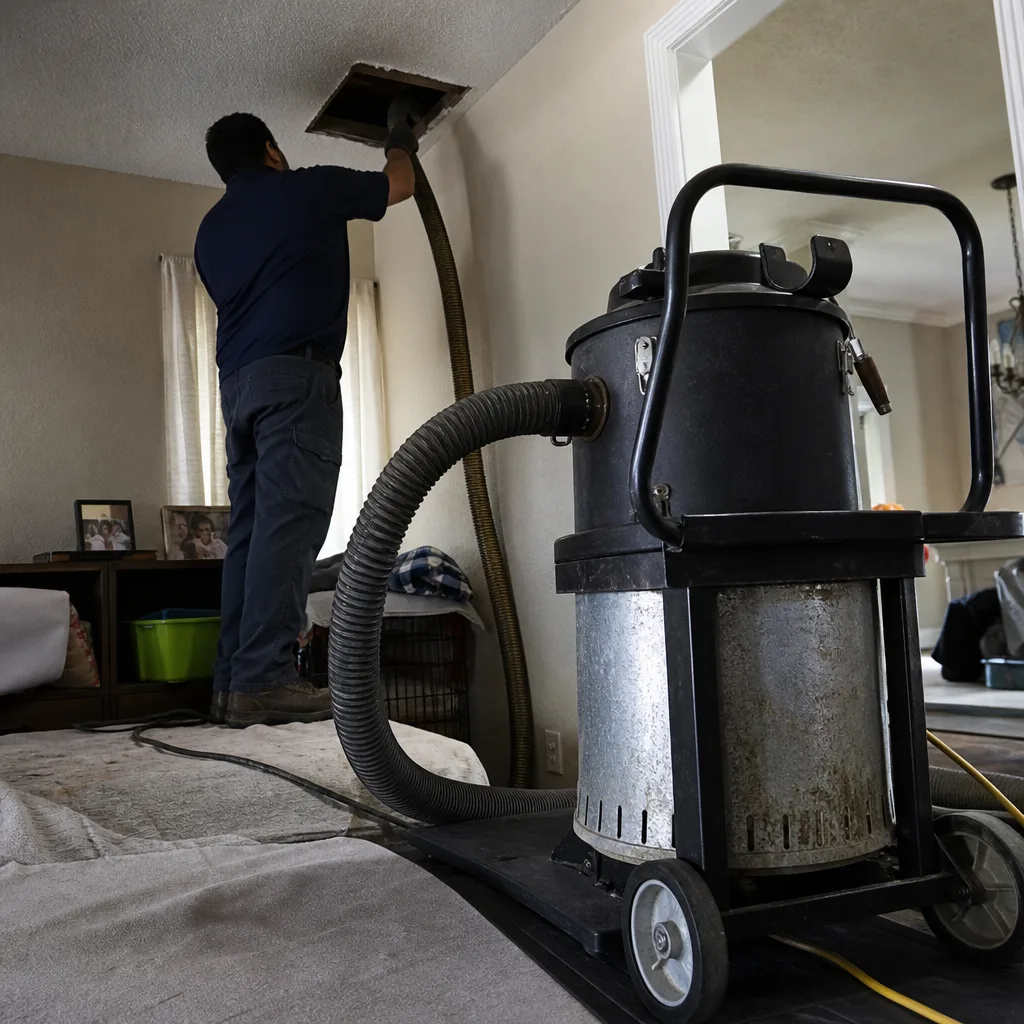 Before
 After
After