
Last updated October 15, 2026
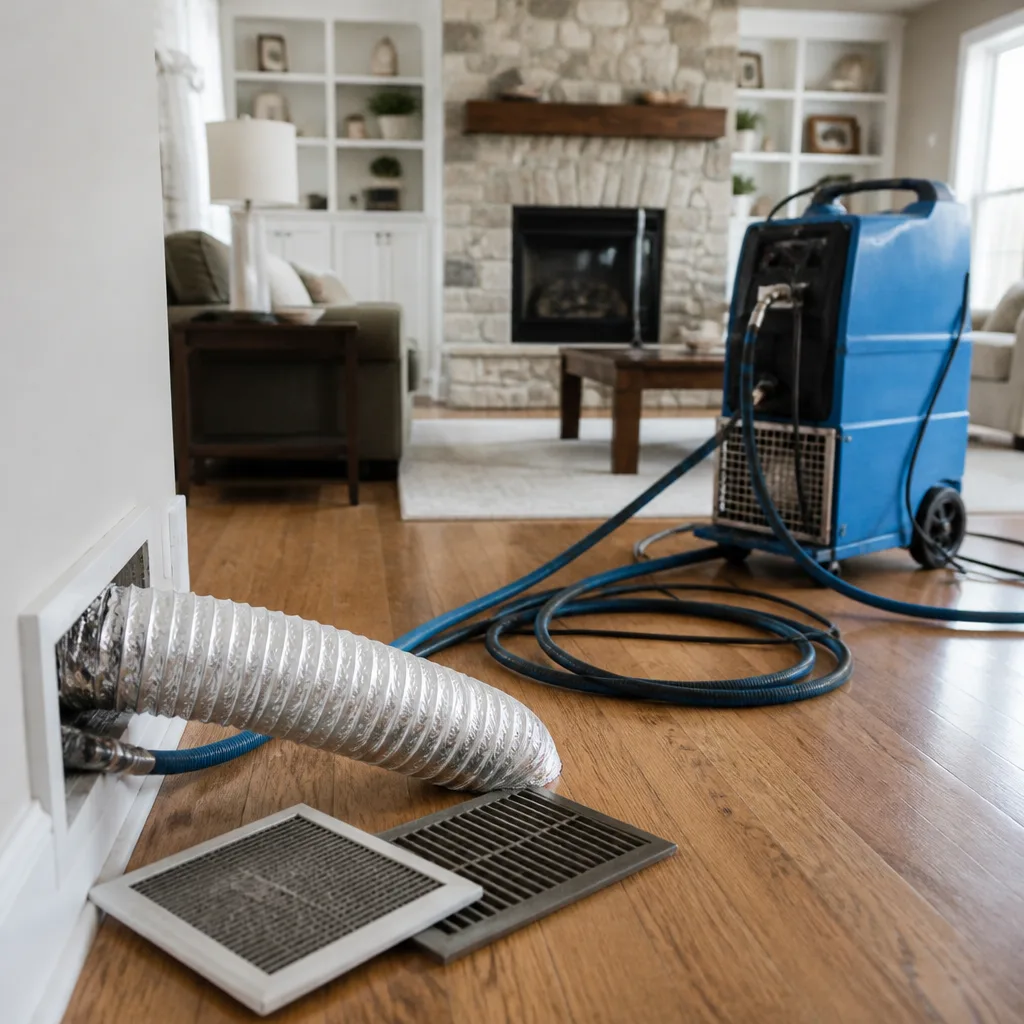 Whole-home duct cleaning
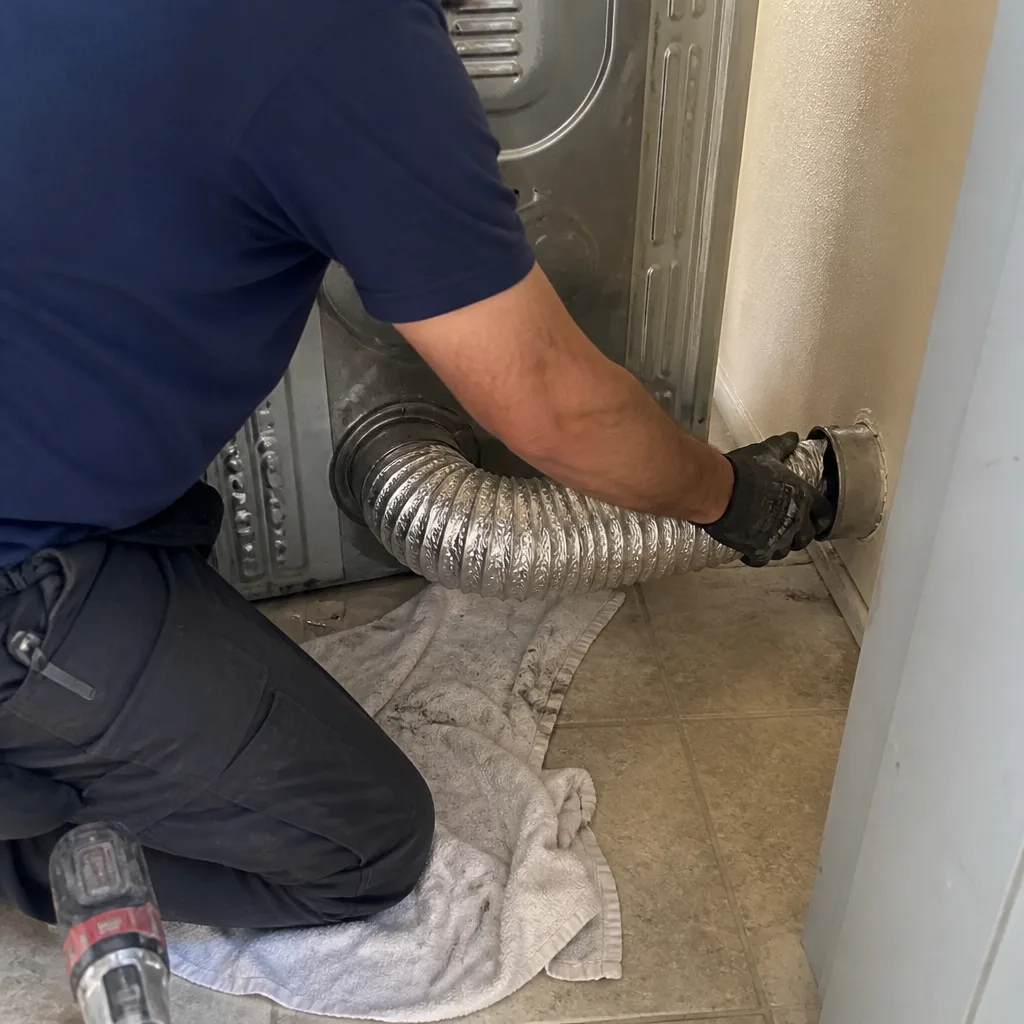
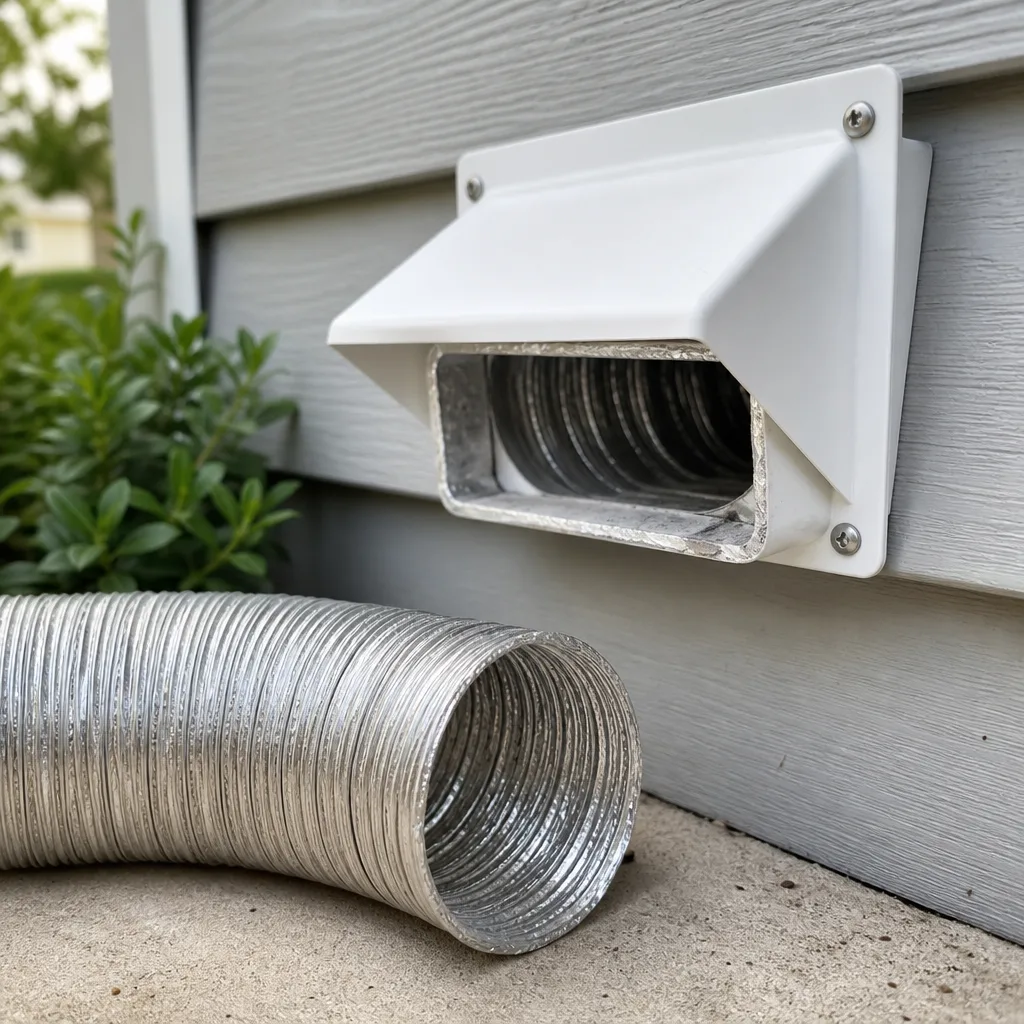 Dryer vent cleaning
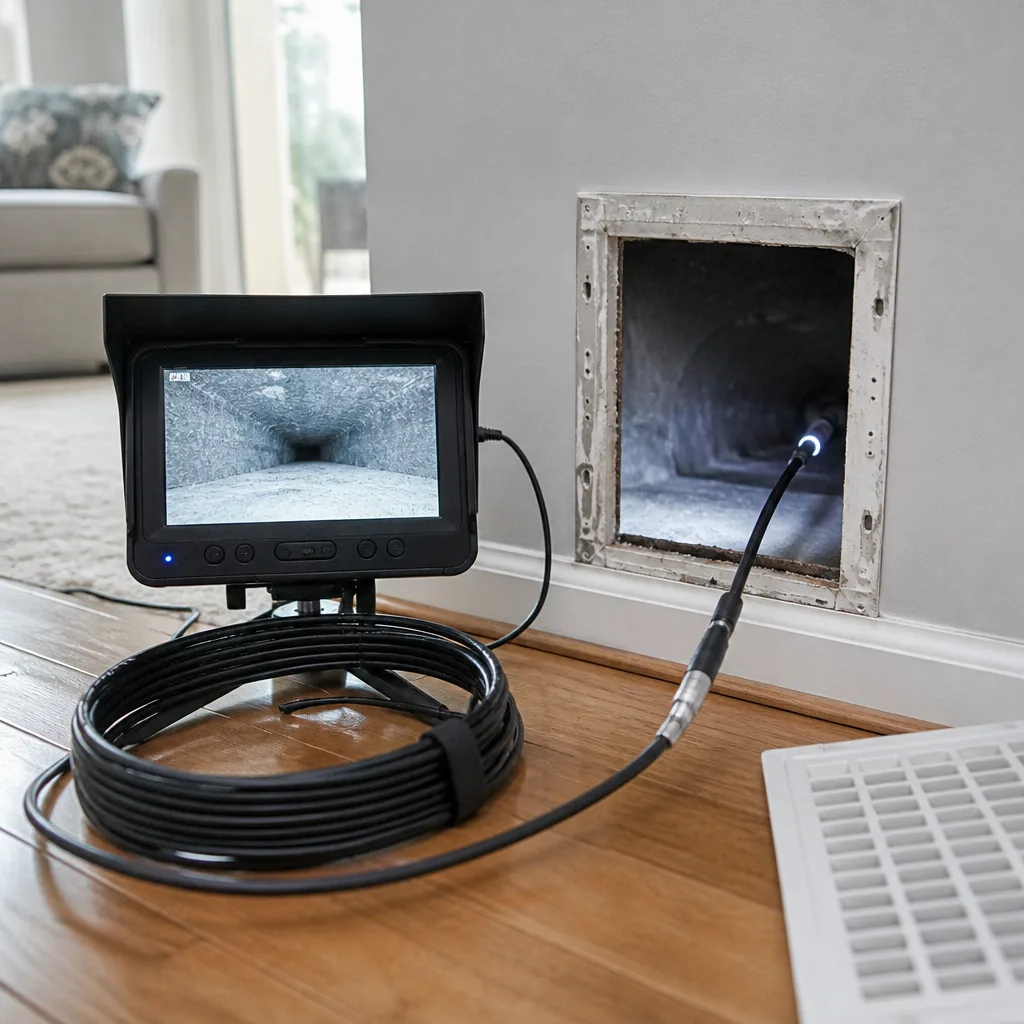 Camera inspection
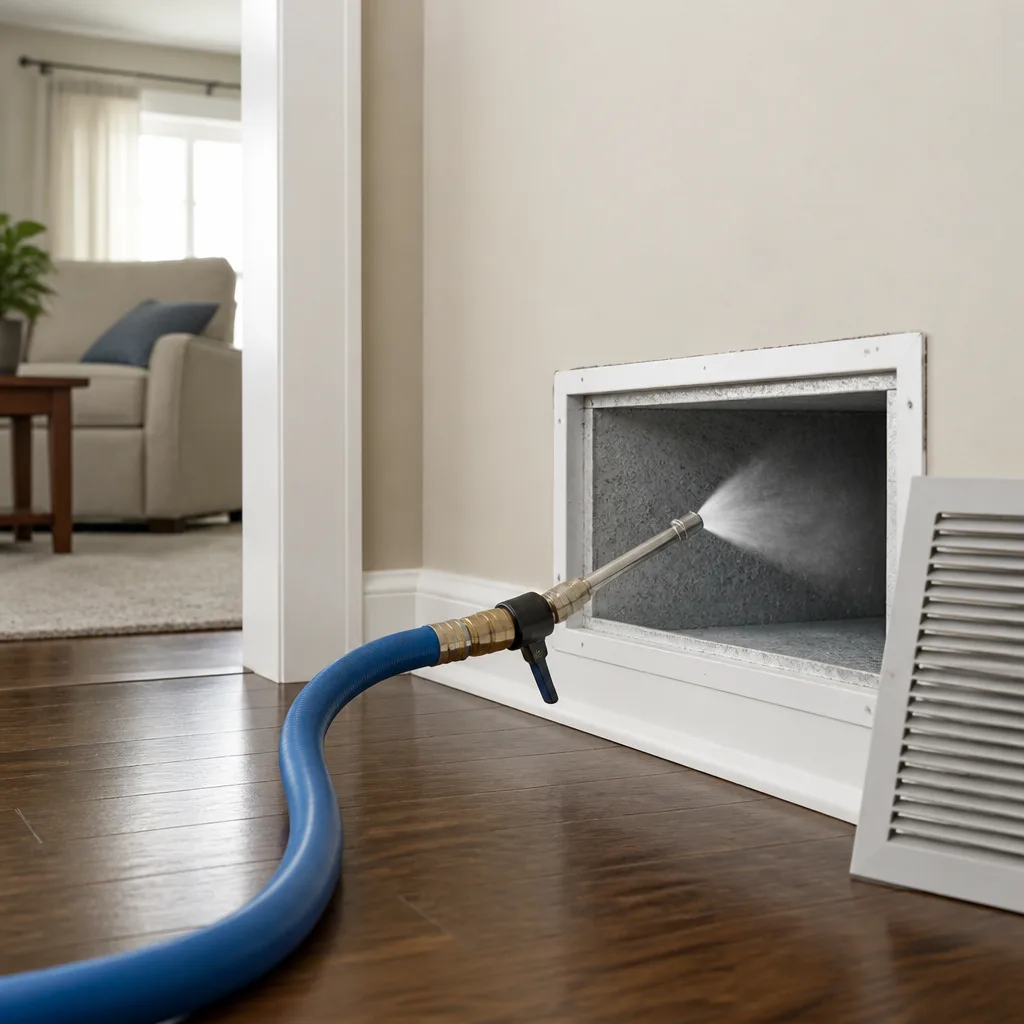 Sanitizing & deodorizing
Whole-system duct and dryer vent check with before-and-after photos - you see exactly what came out of your vents
That "$99 whole-house special" is a bait ad - the real number appears once they are in your hallway, or the "clean" is a shop-vac at the register. We photograph the inside of your ducts before and after instead.
Air Duct Cleaning Cost Breakdown: The Fort Worth Homeowner’s Reference for 2026
Here’s a number that surprises most Fort Worth homeowners: a $299 duct cleaning quote and an $800 quote can describe the exact same scope of work. Or they can describe completely different jobs where one crew spends 90 minutes on the system and the other spends five hours. The price tag means nothing until you know what it actually buys. This guide breaks down every cost component of Air Duct Cleaning in Fort Worth so you can compare quotes on equal terms, spot the padding, and understand exactly where your money goes.
Quick Answer
Air duct cleaning in Fort Worth typically costs between $350 and $700 for a whole-home system, with larger homes over 2,500 sq ft running $700 to $1,200, as detailed in our Air Duct Cleaning Maintenance Checklist for Fort Worth Homeowners. The final price depends on system size, vent count, accessibility, and whether legitimate add-ons like dryer vent cleaning are included. Any quote below $250 for a whole system is almost certainly a teaser price designed to balloon once the technician arrives.
Styles & brands we work with
Table of Contents
- What Actually Drives Air Duct Cleaning Costs in Fort Worth
- Line-Item Cost Breakdown: What You’re Paying For
- Square Footage vs. Vent Count: How Contractors Price the Job
- Fort Worth 2026 Market Rates by Home Size
- Add-Ons Worth the Money vs. Margin Padding
- Why a Written Price Is the Only Price That Matters
- Red Flags in a Fort Worth Duct Cleaning Quote
- What Happens During a Legitimate Duct Cleaning
What Actually Drives Air Duct Cleaning Costs in Fort Worth
Every legitimate air duct cleaning quote is built on the same cost drivers. When you understand these, a quote stops being a mystery number and becomes a list of decisions someone made about your home. In Fort Worth specifically, two local factors push costs in predictable directions: the age of housing stock and the fact that many systems are in attics exposed to triple-digit summer heat.
Access is the single biggest variable. A single-story ranch in Wedgwood with the air handler in a ground-level closet is fast and straightforward. A two-story home in Mira Vista or a mid-century build in Ridglea with attic-mounted ductwork, low clearance, and blown-in insulation covering the trunk lines takes significantly longer. Crews charge for the time, and time is access. The second driver is system configuration: the number of supply registers, return grilles, and the total linear feet of ductwork. A 1,800 sq ft home with 10 registers is a different job than a 1,800 sq ft home with 16. More registers means more time on each one, more negative-pressure setup time, and more wear on equipment.
Equipment quality matters more than most homeowners realize. Professional-grade tools from Rotobrush and Nikro cost tens of thousands of dollars and require maintenance, training, and replacement parts. A crew running a portable shop vac and a drill-attached brush can quote $99 because their overhead is nearly zero. They also cannot achieve the airflow and agitation needed to clean ducts properly. In our experience cleaning systems across Fort Worth, the difference between a $250 job and a $550 job is usually not profit margin. It’s the difference between equipment that moves 2,000 CFM of air through the system and equipment that moves 400.
Finally, condition of the existing ductwork matters. A system that has never been cleaned in a 20-year-old home will have accumulated dust, construction debris, possibly pest droppings, and sometimes mold growth. None of these are visible until the system is opened. A contractor who prices the job in writing before seeing inside the ductwork is either building in a contingency or taking a risk. A contractor who prices it after inspecting is giving you a real number. The difference matters, and we’ll return to it.
Line-Item Cost Breakdown: What You’re Paying For
Most contractors present a single number. Here is what that number contains when the job is done properly. Each item is separately priceable, and knowing this lets you ask a quote to be itemized. A contractor who cannot or will not itemize is not necessarily bad, but an itemized quote is a signal of operational discipline.
| Cost Component | Typical Fort Worth Range | What It Covers |
|---|---|---|
| Setup and equipment staging | $50 – $100 | Negative-air machine placement, sealing off registers, running hoses |
| Supply trunk line cleaning | $75 – $150 | Rotary brush and negative-pressure cleaning of main supply ducts |
| Return trunk line cleaning | $50 – $100 | Same process on return side, often more accessible but dustier |
| Register-by-register branch line work | $10 – $25 per register | Individual supply runs from trunk to each room vent |
| Return grille cleaning | $10 – $20 per grille | Removal, brushing, and handheld vacuuming of return grilles |
| Air handler / plenum cleaning | $75 – $150 | Evaporator coil area, blower compartment, and plenum box access |
| System sanitation (if done properly) | $75 – $200 | EPA-registered antimicrobial fog or spray applied to cleaned surfaces |
These ranges reflect what we see across the Fort Worth market from contractors who use commercial negative-air equipment. The setup fee exists because a real negative-air machine weighs over 100 pounds and takes 20 to 30 minutes to stage correctly. It is not a junk fee. It is the cost of doing the job with equipment that actually pulls debris out of the system rather than blowing it around.
Register-by-register work is where quotes diverge most. Some contractors quote a flat price for “up to 10 vents” and charge extra per vent beyond that. Others price every vent individually from the start. The latter is more transparent, but the former is not automatically dishonest as long as the per-vent overage is stated in writing before work begins. Ask the question directly: “If I have 14 supply registers, does this price cover all 14, and if not, what is the charge for the extra four?” A contractor who hesitates to answer that question in writing is telling you something about how the job will actually go.
Square Footage vs. Vent Count: How Contractors Price the Job
There are two dominant pricing models in the duct cleaning trade, and they create different incentives. Understanding the difference is the single most useful thing you can do before calling for quotes.
Square footage pricing is a flat rate based on the home’s total heated and cooled area. A contractor might quote $0.20 to $0.35 per square foot, so a 2,000 sq ft home lands between $400 and $700. This model is predictable for the homeowner because the number is set before anyone walks through the door, and the contractor’s incentive is to do the job efficiently. The downside is that a 2,000 sq ft home with 8 registers and a 2,000 sq ft home with 16 registers get the same price, which means one of those homeowners is subsidizing the other. But for most people, the predictability outweighs that imprecision.
Vent-count pricing charges a base fee plus a per-vent charge. A typical structure might be $150 base plus $35 per supply vent and $25 per return. A home with 10 supplies and 2 returns would run $150 + $350 + $50 = $550. This model is precise, but it creates an obvious upsell mechanic: the more vents counted, the more revenue. That’s not inherently dishonest, but it means the final number is not knowable until a technician counts registers in person. Some contractors use this as a sales opportunity. Others use it as honest scoping.
The Fort Worth market is split roughly evenly between these models. Neither is a red flag on its own. What matters is that whichever model is used, the total price is written down before the work starts. A company that will not commit to a written number regardless of pricing model is the one to avoid.
Fort Worth 2026 Market Rates by Home Size
These are the ranges we see in the Fort Worth market for a legitimate whole-system cleaning using negative-air equipment, current as of early 2026. They assume normal accessibility and a system in typical condition for its age. Homes with unusual access challenges, severe contamination, or more than 20 registers will fall outside these ranges.
- Under 1,500 sq ft: $300 – $450. Smaller systems, fewer registers, less time. This size is common in the older neighborhoods of Southside, Fairmount, and Arlington Heights, where homes often have 6 to 10 registers total.
- 1,500 – 2,500 sq ft: $400 – $700. The majority of Fort Worth homes fall here. Homes in this range in places like Ridglea Hills or the mid-century tracts around TCU typically have 10 to 16 registers and two returns.
- Over 2,500 sq ft: $700 – $1,200. Larger homes in areas like Mira Vista, Montserrat, or the newer builds along Chisholm Trail Parkway often have zoned systems, multiple returns, and longer trunk runs. These systems take more time and more setup.
If you get a quote at the bottom of these ranges, ask what equipment will be used. A legitimate company running proper negative-air gear can price at $350 for a small home and still do good work. A company quoting $99 is not doing the same job. The equipment and labor required to clean an entire duct system properly cannot be delivered for $99 at any scale. That quote exists for one reason: to get a technician into your home where the upsell begins. The low number is a marketing expense, not a price.
Fort Worth also has a fair number of fly-by-night operators who work the summer months when AC systems are running hard and homeowners are noticing dust. They rent equipment or run homeowner-grade gear, take $150 cash for a “cleaning” that is really just register vacuuming, and are unreachable by August. A written price from an established local company like Hollis Air Duct Cleaning in Fort Worth is the antidote to that pattern.
Add-Ons Worth the Money vs. Margin Padding
Every duct cleaning company offers add-ons. Some are genuinely valuable. Others are margin padding dressed up as necessity. Here is how to tell the difference in a Fort Worth quote.
Worth it: dryer vent cleaning. If your dryer vent runs through an attic or a long interior wall, it has lint buildup that no home dryer is designed to push through effectively. Fort Worth summers mean dryers run constantly, and lint fires have no respect for home values in Ridglea or anywhere else. Adding dryer vent cleaning in Fort Worth to a duct cleaning appointment typically runs $75 to $150 and is money well spent if the vent has not been cleaned in two years or more.
Worth it: evaporator coil cleaning. The coil sits inside your air handler, upstream of your ductwork, and is the single most important component in the system. A dirty coil raises energy bills, reduces airflow, and grows mold in Fort Worth’s humid spring months. Adding coil cleaning to a duct job runs $75 to $200 depending on access and is one of the highest-value add-ons available.
Worth it, with conditions: duct sealing. If your ductwork has visible gaps, disconnected joints, or you can feel conditioned air escaping in the attic, duct sealing in Fort Worth pays for itself in energy savings faster than almost any other home improvement. Mastic-based sealing, done properly, is not an add-on as much as a separate trade. It runs $400 to $1,200 depending on system size and leak severity, and a legitimate duct cleaning company that also seals ducts will inspect and quote this separately, not slip it into a cleaning invoice.
Margin padding: antimicrobial foggers sold as standard. The most common upsell in the duct cleaning trade is a “sanitizing fog” or “antimicrobial mist” pitched as essential to “kill mold and bacteria.” Here is the truth: if ducts are properly cleaned with negative-air equipment, the antimicrobial fog adds little. If ducts have actual mold growth, fogging over it without first removing the mold is worse than useless because it leaves dead mold spores in the system. Legitimate sanitizing exists, but it is a targeted treatment after a confirmed problem, not a routine add-on. A $200 fogger on a routine cleaning is margin.
Margin padding: “deep cleaning” or “heavy contamination” surcharges invented on site. A written price means the price does not change once the tech opens a register and pronounces the system “worse than expected.” If the quote did not include a stated contingency for heavy buildup, the contractor eats the extra time. Not you.
Why a Written Price Is the Only Price That Matters
Everything in this guide leads to one principle: a price that is not written down is not a price. It is a sales strategy. In the air duct cleaning trade, the bait-and-switch pattern is so common that the Federal Trade Commission has issued warnings about duct cleaning scams, and the Texas Attorney General’s office has pursued similar cases, which is why understanding Air Duct Cleaning Permits, Codes & Inspections in TX: What You Need to Know matters. The pattern is always the same: a low teaser price brings the crew to the door, the crew “discovers” a problem, and the $99 job becomes a $900 job with a hard close standing in the hallway.
The protection is not to find a company that promises low prices. It is to find a company that puts the price in writing before the work begins, itemized if you ask for it, and honors that number once the system is open. At Hollis Air Duct Fort Worth, that is the rule, and it is one of the reasons the company was built on the Garrison Standard: arrive inside the quoted window, price in writing, complete the job by the book, leave the site clean. The 365-Day Done Right Promise backs that standard in writing. If the work fails within a year, the crew returns and makes it right at no charge, including a free second visit. No fine print, no pro-rated refund, no argument.
If a contractor tries to revise a written price after opening the system, you have two options. Say no and ask them to leave without further work, which you are entitled to do before agreeing to the new scope. Or ask for the revised scope in writing, with the specific condition that was not covered by the original price, and decide from there. Legitimate surprises do exist: a duct system full of raccoon waste or a coil so fouled it looks like carpet is a finding worth reporting. But a legitimate company reports it, documents it, and lets you decide with a written revision. A pressure artist starts pulling tools out and saying “we’re already here” as if that obligates you. It does not.
Red Flags in a Fort Worth Duct Cleaning Quote
These are the patterns we hear about from Fort Worth homeowners who call after a bad experience. Every one of them is avoidable if you know what to look for before anyone shows up.
- The quote is not tied to anything specific. A price given over the phone without asking how many registers you have, what square footage your home is, or where your air handler is located is a guess. Guesses move at the door. A real quote needs system information to be real.
- The company refuses to say what equipment it uses. If “we have all the equipment we need” is the answer to a direct question about negative-air machines and rotary brush systems, the company does not have the equipment. Professional duct cleaning in Fort Worth requires professional tools. This is not a trade where technique overcomes equipment.
- A per-vent count happens at the door and the price leaps. Counting vents is legitimate if the pricing model is per-vent. But if the price was quoted flat and then becomes per-vent once the tech arrives, that is a revised price, and revised prices need to be refused or re-scoped in writing.
- The company insists on an up-front deposit with no written scope. Deposits for scheduled work are normal in many trades. A deposit with no written scope of work is not. You should know exactly what the deposit buys and what the final price will be before any money changes hands.
- The quote is dramatically below market. Fort Worth market rates exist for a reason. A $99 whole-house duct cleaning cannot pay for labor, equipment, insurance, and fuel at any sustainable margin. That price exists to convert a phone call into a home visit. The home visit is the sales environment.
- No mention of a guarantee or warranty, or a vague “satisfaction guaranteed” with no terms. A one-line “we stand behind our work” is not a guarantee. A written promise that names the duration and the remedy is a guarantee. Hollis puts it in writing: 365 days, return visit included, no charge.
What Happens During a Legitimate Duct Cleaning
Knowing what a proper job looks like helps you evaluate whether you got what you paid for. A legitimate negative-air duct cleaning in a Fort Worth home follows a predictable sequence.
- Inspection and pricing confirmation. The technician walks the system, confirms the register count and access points, and confirms the written price. If something is discovered that was not covered, it is discussed before work begins, not after.
- System protection and setup. Registers are sealed or covered, and a negative-air machine is connected to the system. The machine creates suction that keeps dislodged debris from blowing back into the living space.
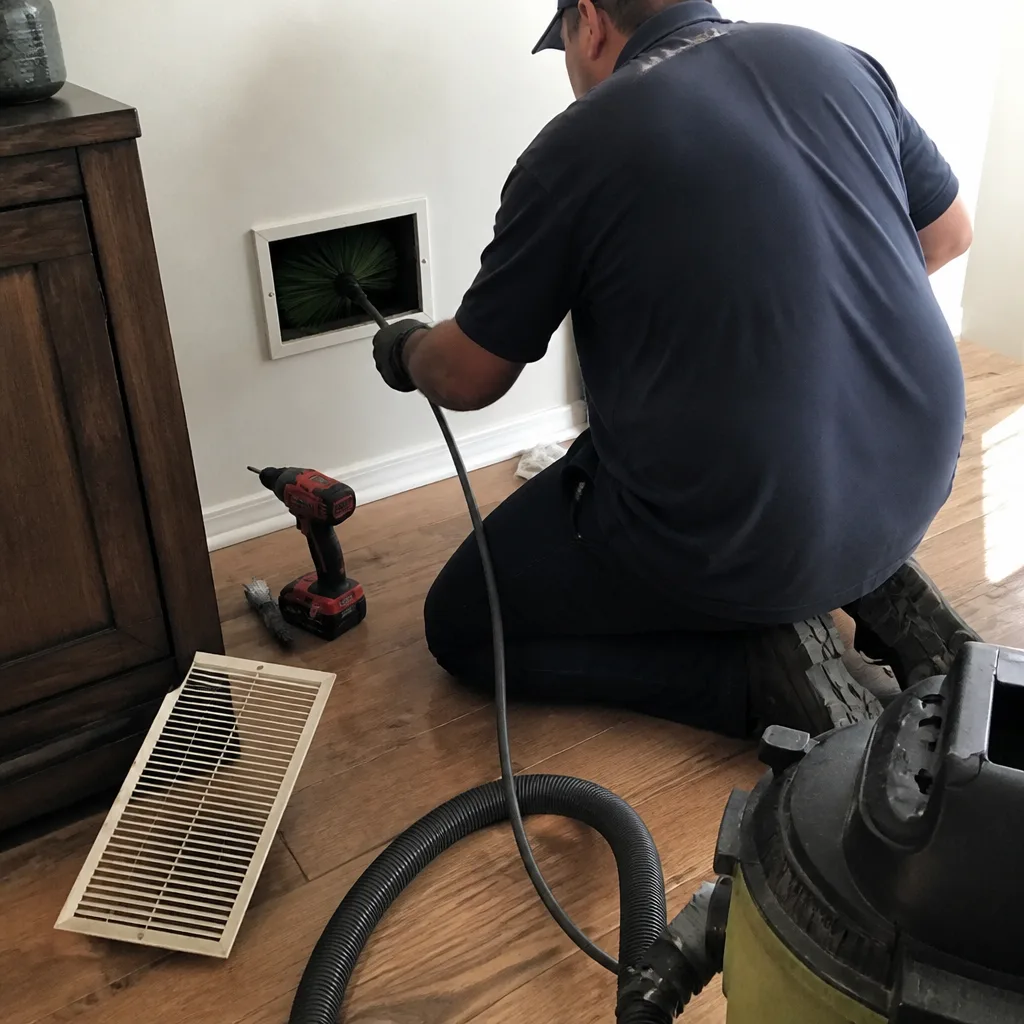
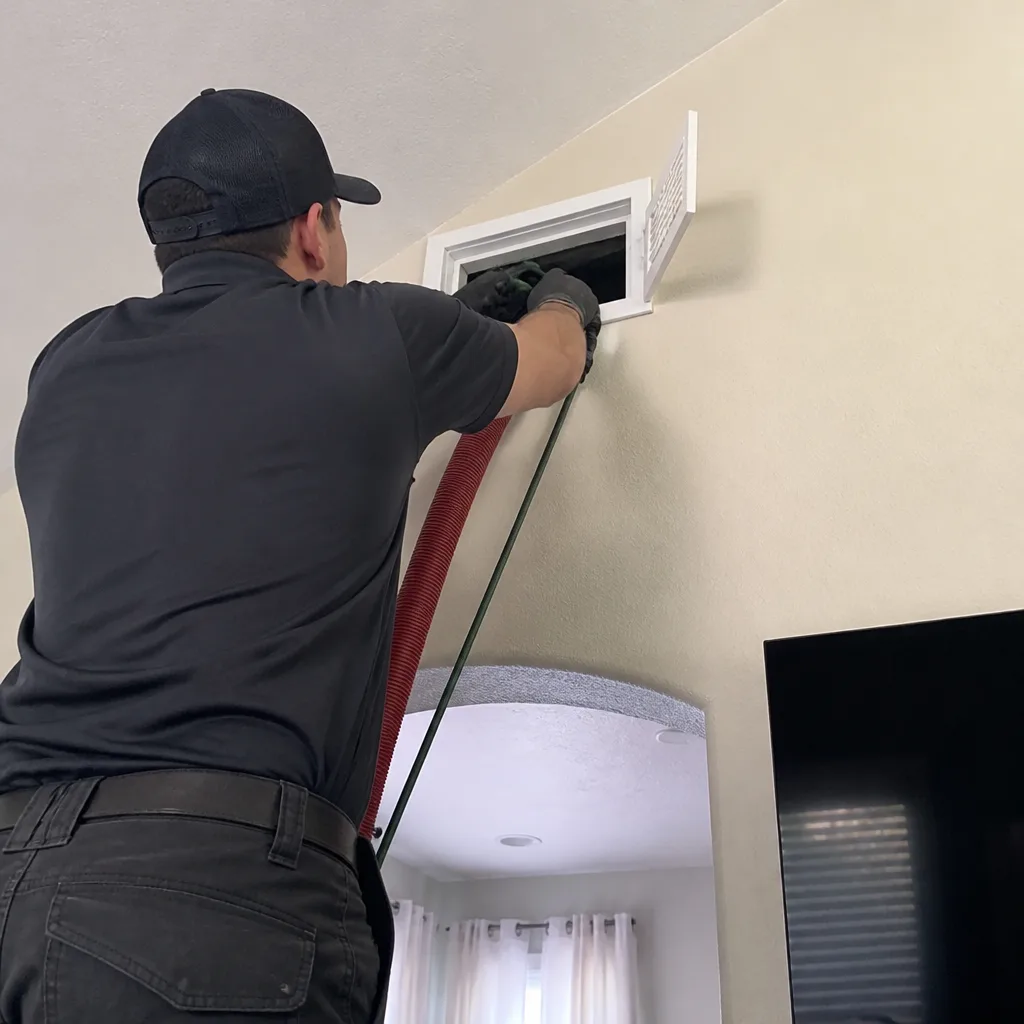
- Trunk line agitation and extraction. A rotary brush system from Rotobrush or similar equipment runs through the main supply and return trunks, beating debris loose while the negative-air machine pulls it out of the system.
- Branch line and register work. Each supply run is accessed, brushed, and vacuumed individually. Returns are removed, cleaned, and reinstalled.
- Air handler and plenum attention. The evaporator coil area and blower compartment are cleaned using specialized tools, and the plenum box is vacuumed.
- Final walkthrough and documentation. A disciplined crew shows you what came out of the system and walks the job site with you before leaving. The site is left clean, and the work is documented.
In our experience, a whole-home cleaning on a 2,000 sq ft Fort Worth house takes between 3 and 5 hours from setup to final walkthrough. Faster than 3 hours for a full system with 12 or more registers is a sign that steps got skipped. Slower is not necessarily better, but the time has to go somewhere: setup, agitation, extraction, and cleanup are all real work.
The equipment list matters. Nikro negative-air machines and Rotobrush rotary brush systems are commercial-grade tools used in larger commercial jobs and industrial settings. Filters from Honeywell and Aprilaire used in the process are the same products installed in high-end residential systems across the Metroplex. None of this is homeowner-grade equipment, and none of it fits in the back of a sedan. When a crew shows up in a marked van with a commercial machine that takes two people to move, that is the first visible proof of what your money bought.
Common Mistakes to Avoid
- Comparing quotes without comparing scope. A $300 quote for registers only and a $600 quote for full trunk, branch, plenum, and coil cleaning are not competing offers. They are different jobs. Ask each bidder to itemize the scope in writing before comparing numbers.
- Paying for a fogger sold as a necessity. Sanitizing treatments are legitimate in specific situations. They are not a standard part of duct cleaning. If a contractor cannot tell you what problem the fogger is addressing, decline it.
- Skipping the dryer vent because it isn’t “ductwork.” The dryer vent is the highest-fire-risk part of your home’s exhaust system. Fort Worth lint fires happen every year. A cleaned dryer vent is a cheap insurance policy.
- Assuming new homes don’t need cleaning. New construction leaves drywall dust, sawdust, and debris inside ductwork. A home built in the last three years in north Fort Worth or along Alliance corridor often has dirtier ducts than a 15-year-old home.
- Choosing by price alone. The cheapest legitimate quote and the most expensive quote in Fort Worth may deliver the same result. Or the cheapest may be a teaser and the most expensive may include add-ons you don’t need. Price is a data point, not a decision.
- Not getting the price in writing before the truck arrives. If it isn’t written, it doesn’t exist. No verbal agreement survives contact with a technician standing in your hallway.
- Ignoring the coil. Duct cleaning without coil inspection is half a job. The coil is the heart of the system. A dirty coil undoes most of the benefit of clean ducts within months.
See the difference
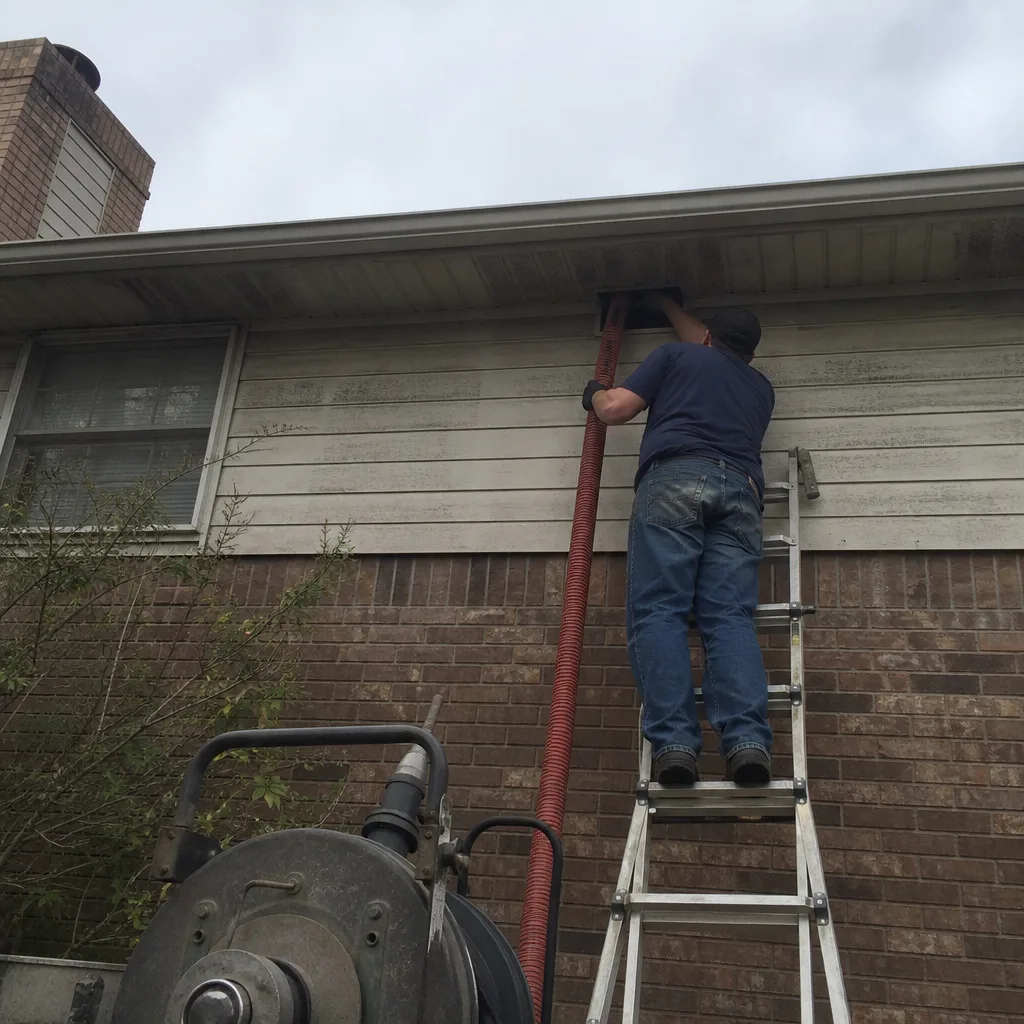 Before
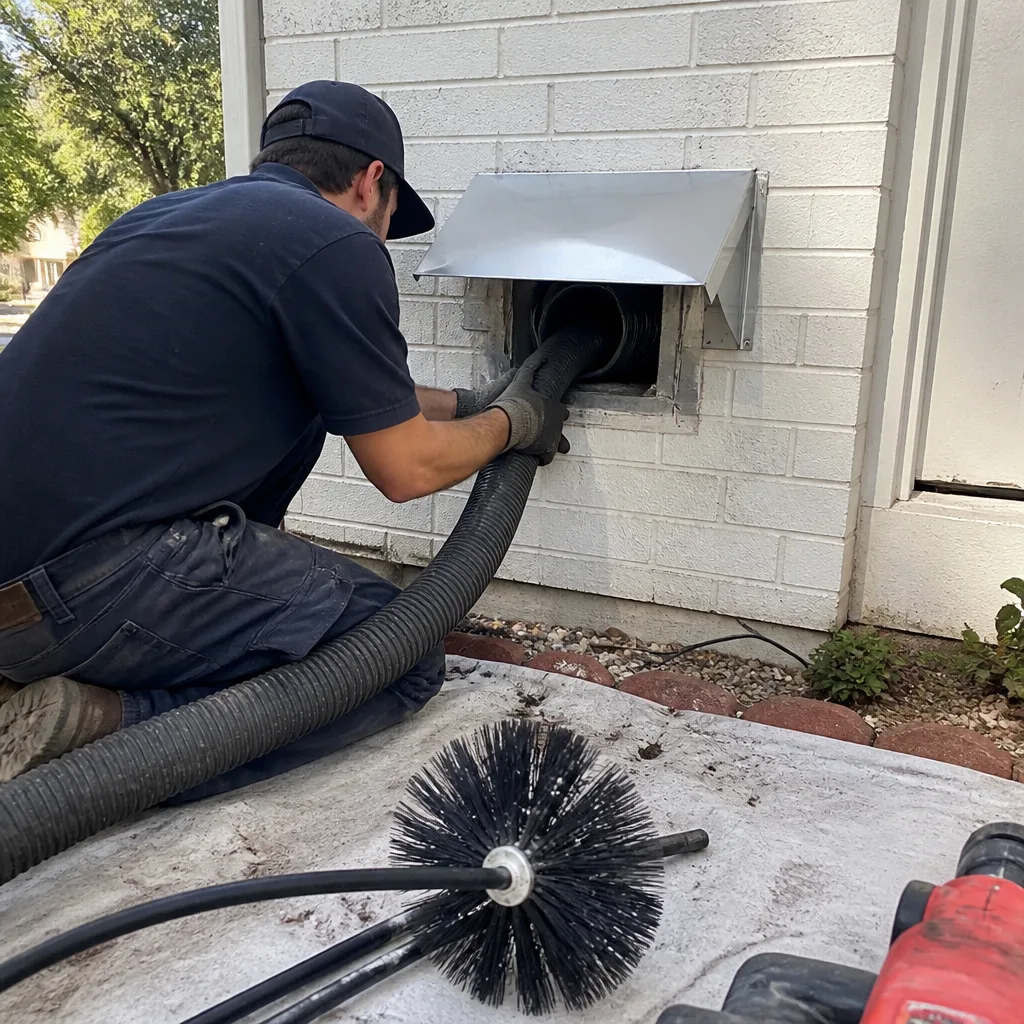 After
After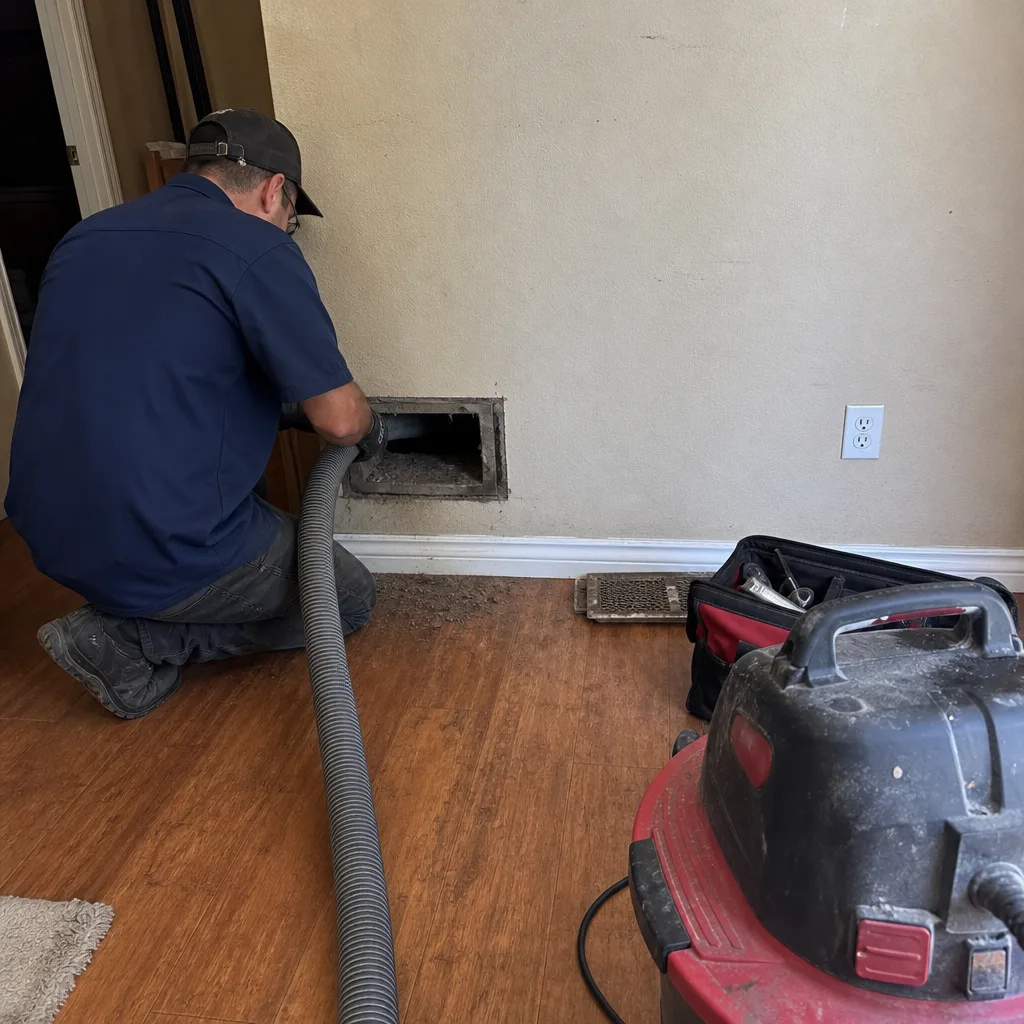 Before
 After
After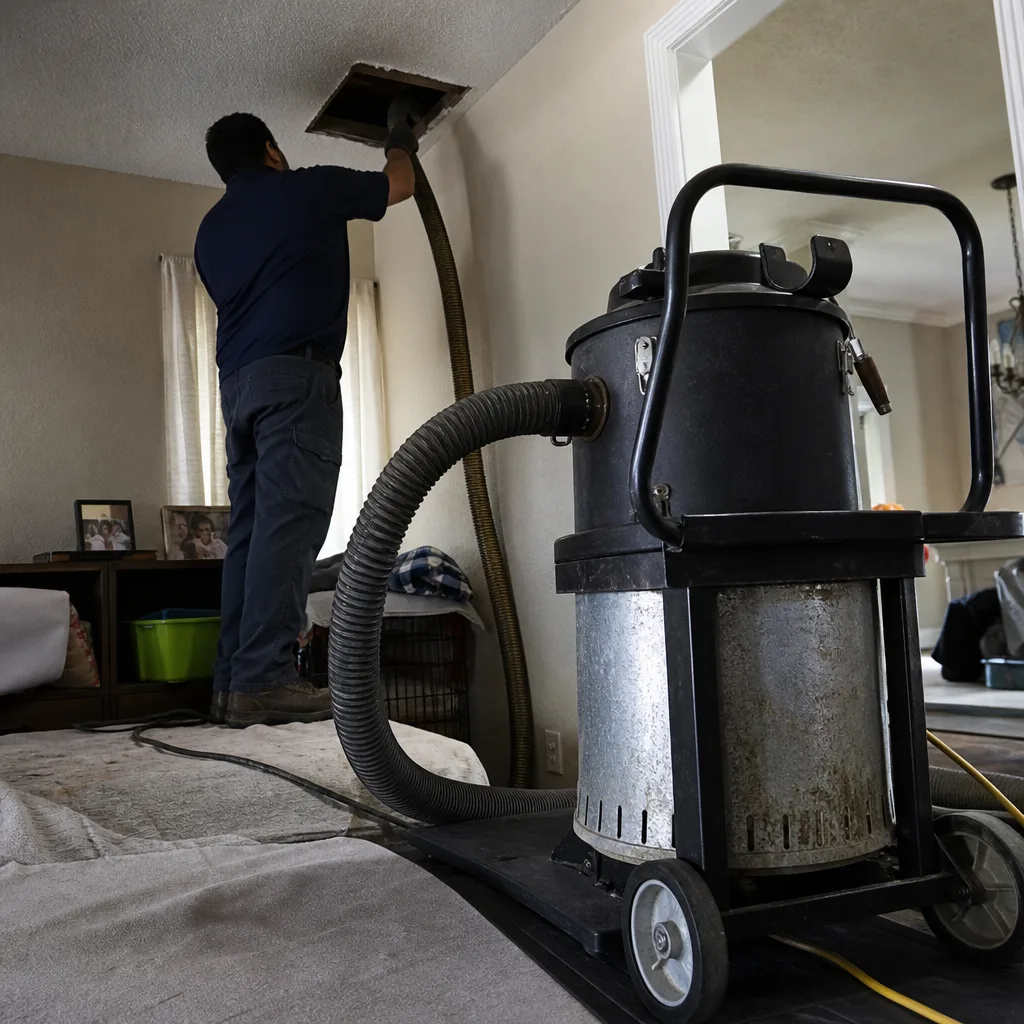 Before
 After
AfterFrequently Asked Questions
Air duct cleaning in Fort Worth costs between $350 and $700 for most homes, with larger homes over 2,500 sq ft running $700 to $1,200. The range reflects differences in register count, system accessibility, and whether legitimate add-ons like dryer vent cleaning are included. Get a written quote that itemizes the scope before comparing prices. Call (682) 255-2572 for an exact quote on your Fort Worth home, free of charge.
Cheap duct cleaning quotes in Fort Worth are almost always teaser prices designed to get a technician into your home for an upsell. A legitimate whole-system cleaning requires commercial negative-air equipment, trained labor, insurance, and time. The math cannot support a $99 whole-house price. The cheaper quote also may cover fewer components: registers only instead of full trunk lines, no return cleaning, no air handler work. Ask for an itemized scope in writing and compare line by line.
Most Fort Worth homes need duct cleaning every 3 to 5 years, according to NADCA guidelines. Homes with pets, smokers, recent renovation, or severe allergies may need it every 2 to 3 years. Homes with new high-efficiency filtration and no pets can stretch to 5 to 7 years. If you can see dust deposits on the inside of registers or smell dust when the system starts, it is time regardless of schedule. Call (682) 255-2572 and we can help you decide if cleaning is actually warranted.
A disciplined duct cleaning crew documents the work: before-and-after photos of the trunk lines, air handler, and coil, plus a walkthrough of what was removed. The 365-Day Done Right Promise from Hollis Air Duct Fort Worth puts the guarantee in writing: if the work fails within a year, we return and make it right at no charge, including a free second visit. Ask any contractor what documentation they provide and what happens if you are not satisfied after the crew leaves.
Duct cleaning removes accumulated dust, pet dander, and debris from the system so it stops recirculating through your home. Fort Worth’s high spring pollen counts and summer dust mean duct systems accumulate allergens faster here than in many climates. Cleaning alone is not a cure for allergies, but combined with proper filtration from brands like Honeywell or Aprilaire, it reduces the allergen load in the air you breathe. HVAC systems don’t create allergens; they distribute whatever is already in the system.
Improper cleaning can damage ductwork, especially older flex duct or poorly sealed joints. A legitimate company using the right equipment and trained technicians will not damage a system that is in reasonable condition. A company running a shop vac and a drill brush can tear flex duct. The repair costs from a damaged duct system will exceed the price of a proper cleaning. Ask what equipment will be used and confirm the company stands behind the work in writing before the job starts.
When to Call a Professional
You can see dust deposits inside the registers or smell dust when the system kicks on. The previous cleaning was more than five years ago. You moved into a home, new or old, and don’t know the system’s history. Someone in the home has unexplained allergy or respiratory symptoms that worsen indoors. The system was renovated or remodeled. Any of these are legitimate reasons to schedule an inspection. Hollis Air Duct Fort Worth offers free estimates in Fort Worth. Call (682) 255-2572 and a live person answers, 24 hours a day, every day of the year.
The Bottom Line
Air duct cleaning in Fort Worth is a trade where the price on the phone and the price at the door can be very different numbers. The protection is not to find the lowest bid. It is to understand exactly what the bid covers, get it in writing before work begins, and work with a company whose guarantee is also in writing. Pay the market rate, get the scope itemized, understand which add-ons matter and which are padding, and never accept a revised price without a written explanation. For more guides & resources, visit our blog. A fair price for a legitimate whole-system cleaning in Fort Worth is $350 to $700 for most homes. That is the number. The rest is discipline, documentation, and a company that stands behind its work.
Frequently Asked Questions
Written by Roy Castellanos, Owner at Hollis Air Duct Fort Worth, serving Fort Worth since 2004.