
Last updated October 15, 2026
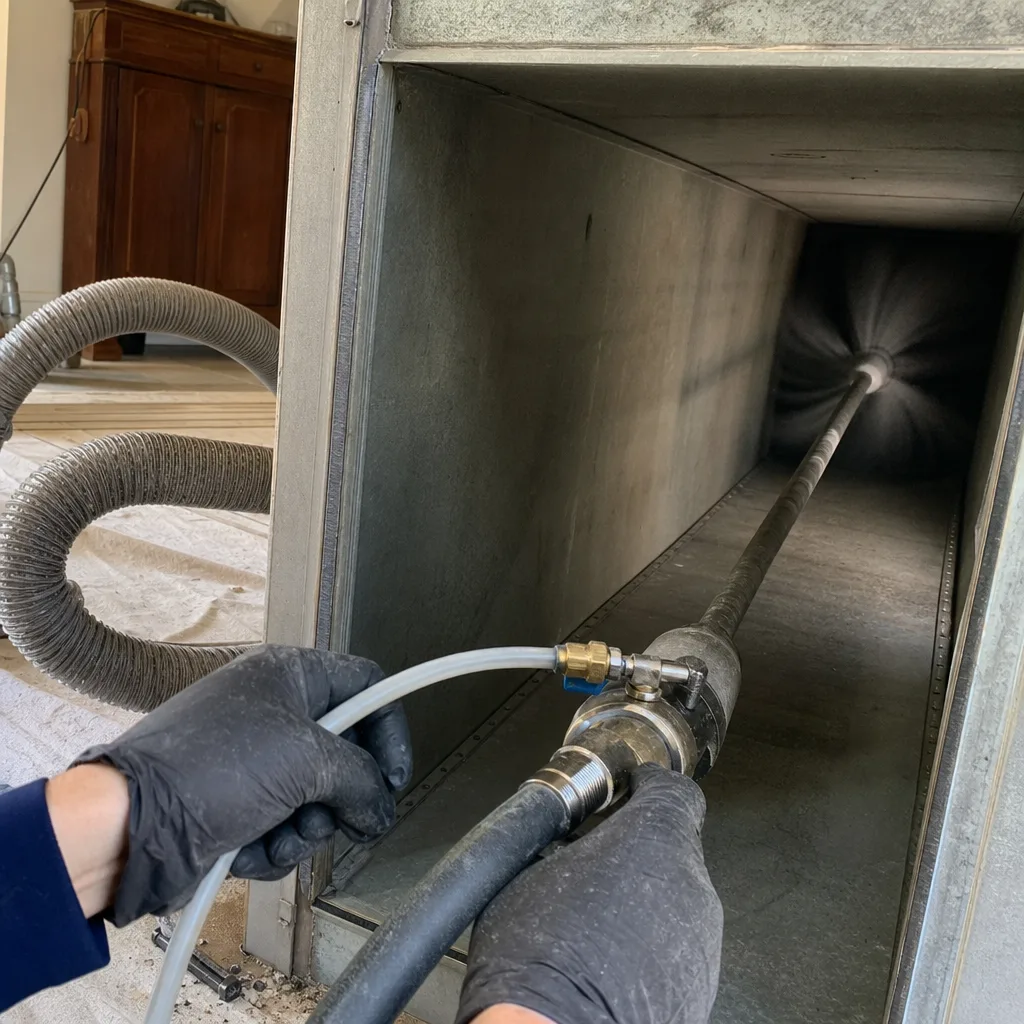
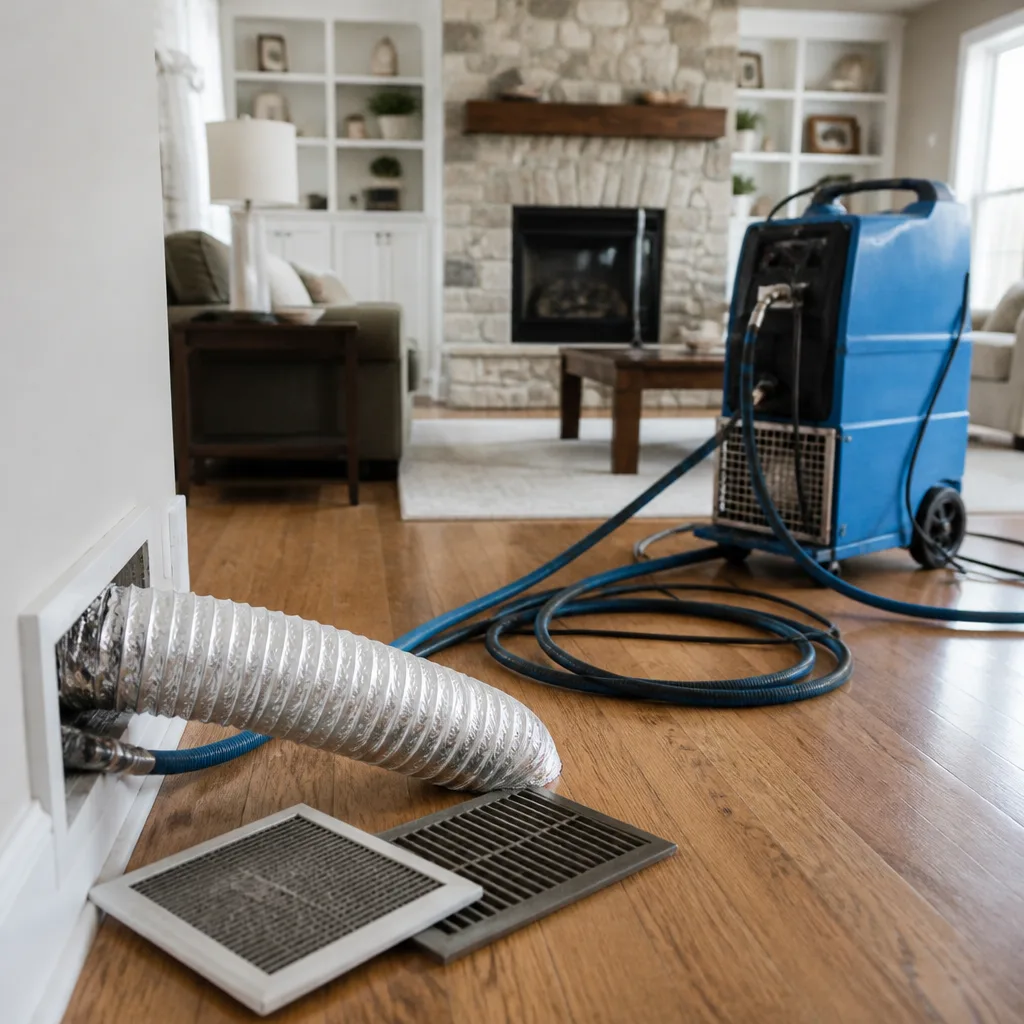 Whole-home duct cleaning
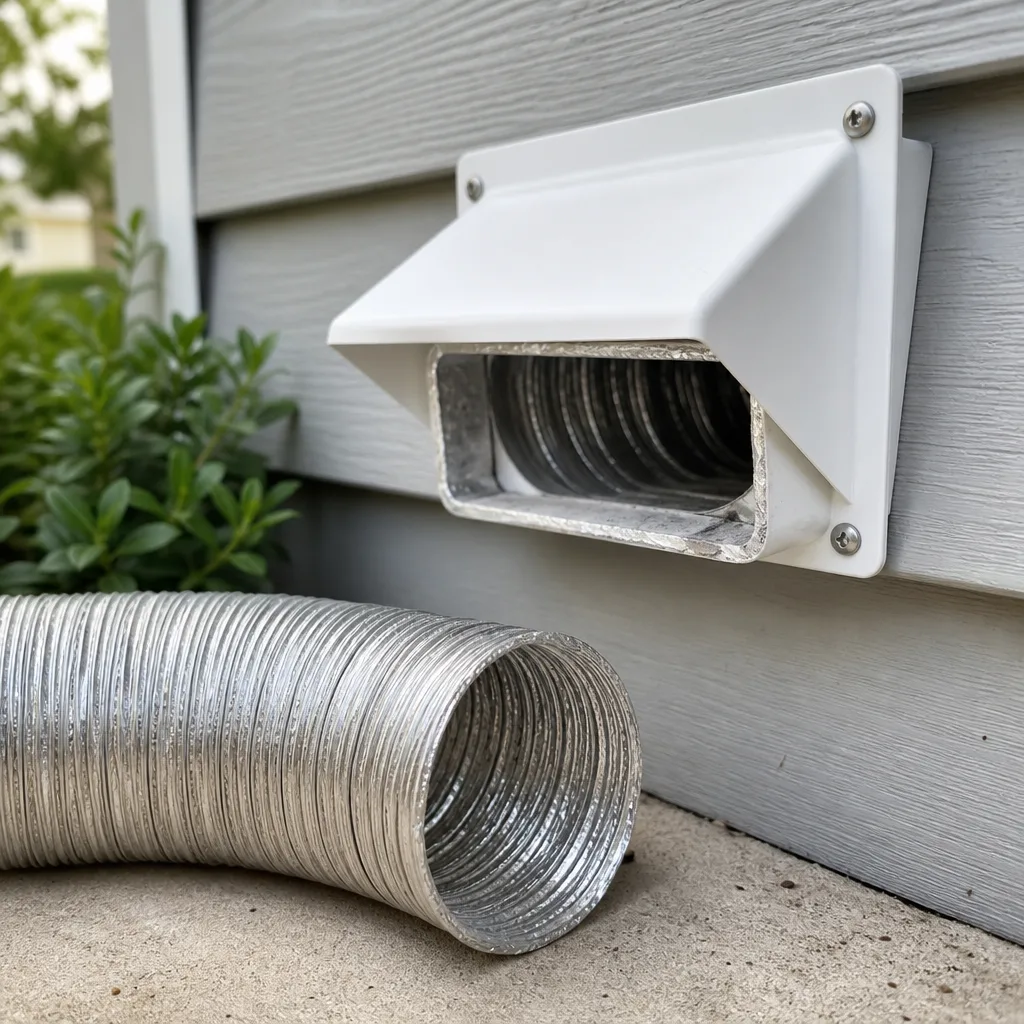 Dryer vent cleaning
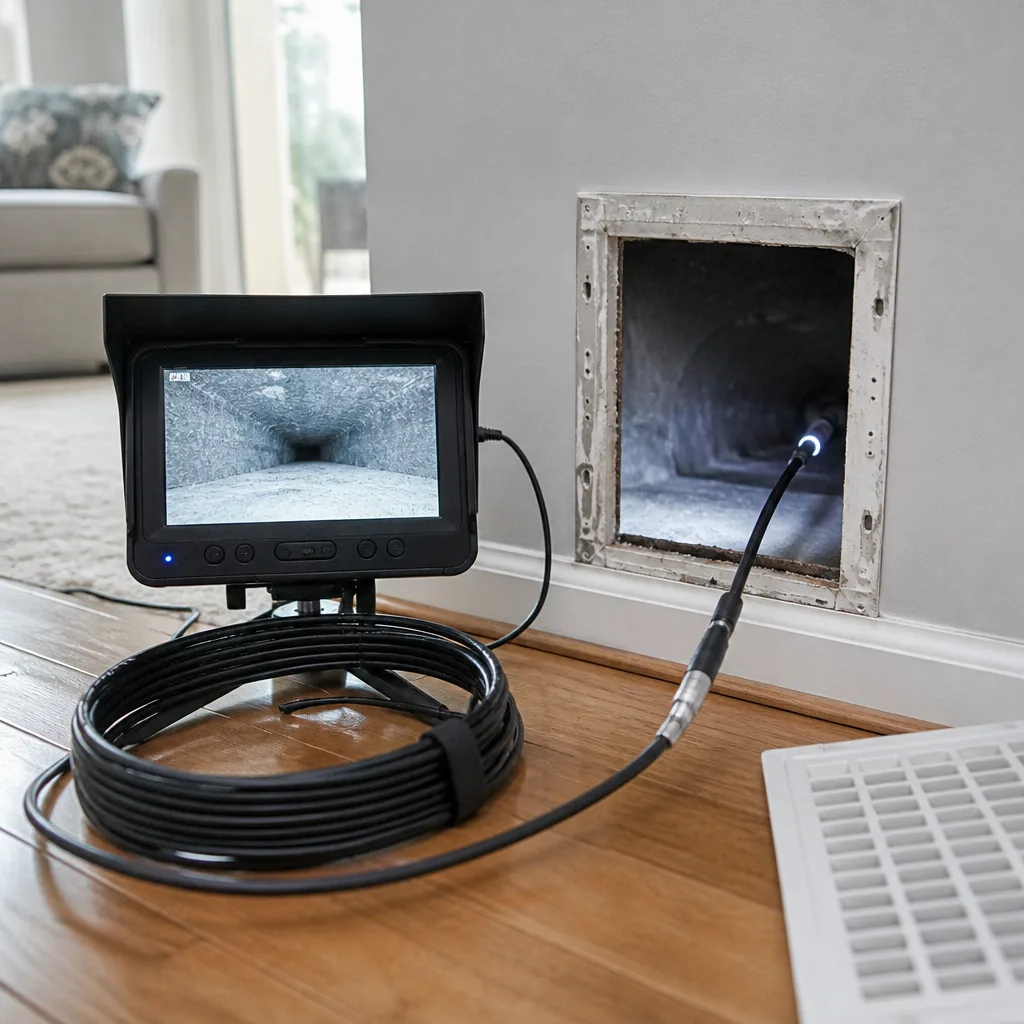 Camera inspection
 Sanitizing & deodorizing
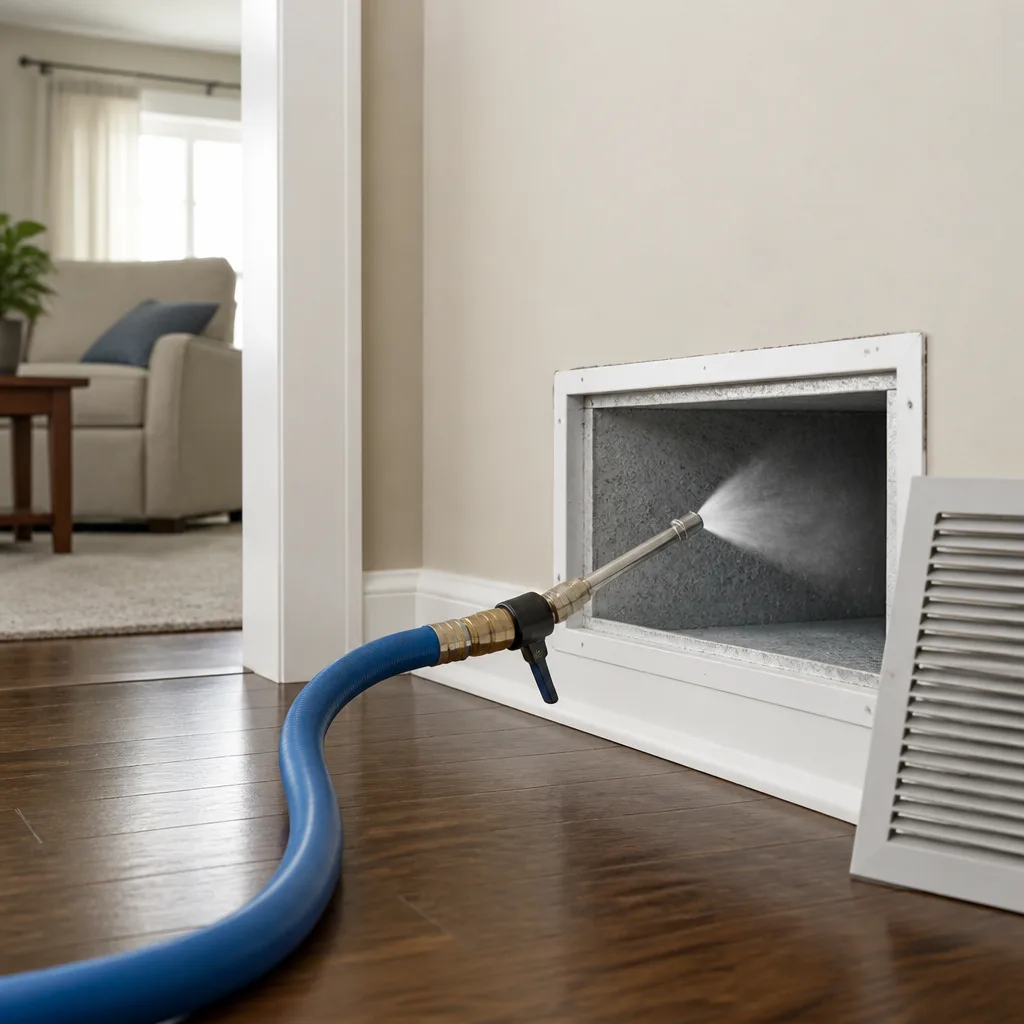
Whole-system duct and dryer vent check with before-and-after photos - you see exactly what came out of your vents
That "$99 whole-house special" is a bait ad - the real number appears once they are in your hallway, or the "clean" is a shop-vac at the register. We photograph the inside of your ducts before and after instead.
How to Hire a Air Duct Cleaning Contractor in Fort Worth: A Step-by-Step Guide
Here’s a number most Fort Worth homeowners never hear: a properly trained duct cleaning crew should spend three to five hours on an average single-family home. The $49 whole-house coupon that lands in your mailbox every spring pays for roughly twenty minutes of work, or less. That’s not a discount. That’s a business model built on getting a technician through your door so the real invoice can start climbing. This guide exists because Fort Worth gets hit harder than most cities. The metro keeps growing, new neighborhoods keep filling in, and out-of-area outfits run short-term lead campaigns here every season. By the time complaints surface, the van is three counties away. We’re going to walk you through a scripted vetting process that puts you in control of the conversation before anyone steps foot in your home.
Styles & brands we work with
Quick Answer
To hire an air duct cleaning contractor in Fort Worth, ask five specific questions before booking: will you provide a written price before opening any duct, what equipment do you use, are you NADCA certified or otherwise credentialed, what does your written guarantee cover, and how do you document the work. A legitimate contractor answers all five directly and in writing. A bait-and-switch outfit dodges the price question first because that’s the whole game.
Table of Contents
- The Bait-and-Switch Economics of Fort Worth Duct Cleaning
- Five Scripted Questions to Ask Before You Book
- NADCA Certification vs. State Licensing in Texas: What Each Actually Means
- Why Equipment Type Matters: Truck-Mounted vs. Portable Negative Pressure
- Red Flags During the Quote Process
- What a Written Guarantee Should Actually Cover
- The Seven-Step Vetting Process
- Common Mistakes to Avoid
- When to Call a Professional
- Frequently Asked Questions
- The Bottom Line
The Bait-and-Switch Economics of Fort Worth Duct Cleaning
The $49 whole-house duct cleaning coupon is the oldest bait-and-switch in the HVAC trade. Here’s how the math actually works. A two-man crew with professional equipment costs a legitimate company between $150 and $250 per hour to operate once you account for wages, fuel, equipment amortization, insurance, and training. A proper cleaning on a 2,000-square-foot Fort Worth home takes three to five hours. That puts honest pricing somewhere between $400 and $800 for a full system, depending on the number of units, accessibility, and how long it’s been since the last cleaning-see our Air Duct Cleaning Cost Breakdown: The Fort Worth Homeowner’s Reference for 2026 for a detailed breakdown.
So what does $49 buy? It buys a foot in the door. The technician arrives, pokes around for ten minutes, and “discovers” mold, or a “critical” duct repair, or a “required” sanitizing treatment. Suddenly the invoice is $1,200. If you refuse the upsell, the technician does a perfunctory vacuum of the first few vents and leaves. You paid $49 for nothing, and the company still made money because the coupon was never designed to deliver actual cleaning. It was designed to generate service calls.
Fort Worth’s growth makes this worse. The city added more than 100,000 residents between 2010 and 2020, and development has continued accelerating through the mid-2020s. New subdivisions in Alliance, Walsh, and along the Chisholm Trail corridor mean thousands of HVAC systems being installed every year. Each one is a future duct cleaning customer. Out-of-area companies run aggressive short-term campaigns, book as many jobs as possible in a two-week window, then move on. By the time homeowners realize the work was substandard, the company is gone, the phone number is disconnected, and the warranty is worthless.
A Fort Worth homeowner’s real advantage is that the legitimate local market exists and is established. Companies with physical addresses, live phone answers, and written guarantees have been operating here for decades. The vetting process we’re going to walk through is designed to separate those companies from the transient operators in about fifteen minutes of phone time.
Five Scripted Questions to Ask Before You Book
Write these down. Ask them in order. A legitimate contractor will answer all five without hesitation. An evasive one will try to skip, redirect, or rush past at least two of them. That’s your signal to end the call.
- “Will you give me a written price before you open any duct?” This is the single most important question. The answer must be an unqualified yes. Not “well, it depends on what we find” or “we can’t know until we get in there.” A trained technician can determine almost everything necessary for an accurate quote by asking about your square footage, number of returns, system type, and when it was last cleaned. If they insist on opening a vent cover before quoting, that’s pressure architecture. Walk away.
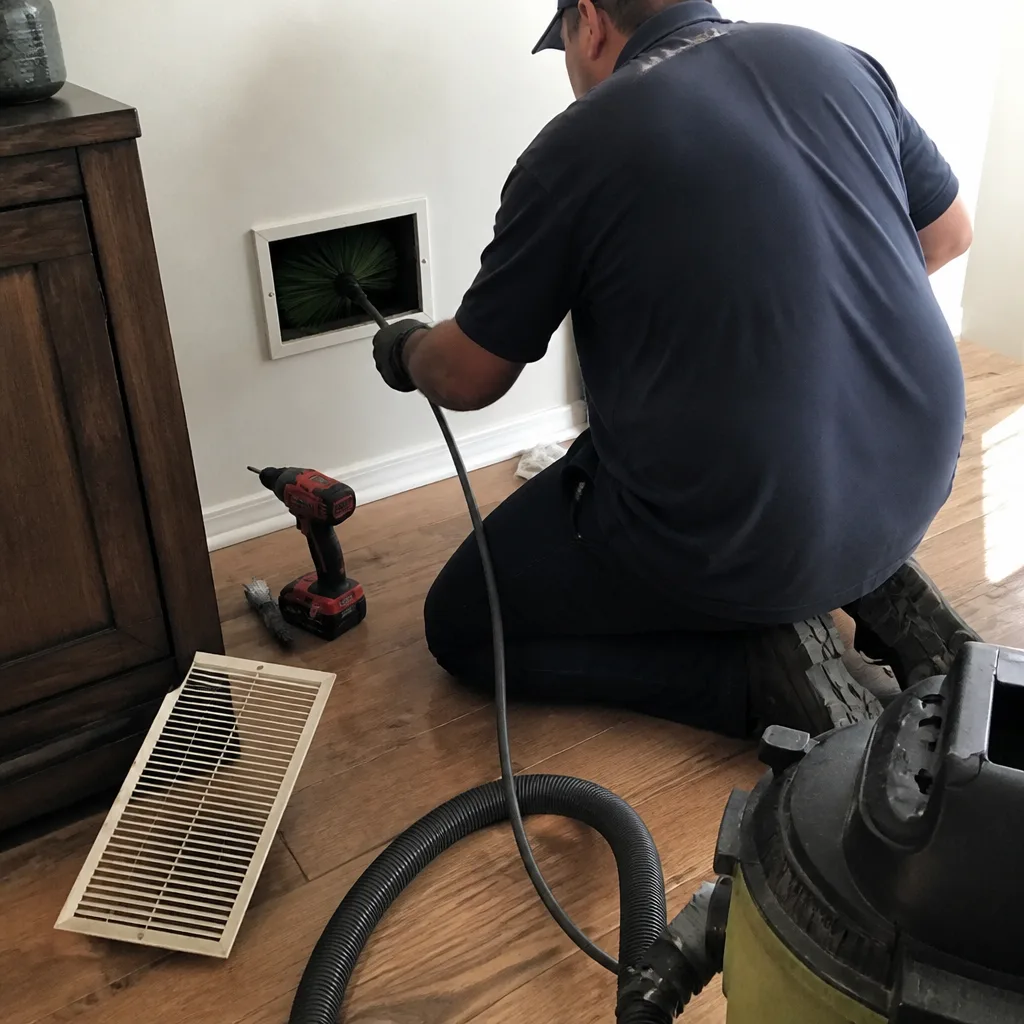
- “What equipment do you use?” The correct answer includes a negative air machine (a large vacuum unit that creates suction on the entire duct system while brushing loosens debris) and, ideally, a rotary brush system. If they describe a “powerful vacuum” that attaches to the vent and nothing else, that’s the $49 job wearing a costume. Ask the brand if you want to apply real pressure. Professional crews use equipment from manufacturers like Nikro and Abatement Technologies. A company that can name its equipment brand is a company that actually owns it.
- “Are you NADCA certified?” NADCA stands for the National Air Duct Cleaners Association. Certification means the company follows industry standards for source-removal cleaning, which is the only method that actually removes contaminants rather than redistributing them. Not every good company is NADCA certified, but every NADCA-certified company has at minimum demonstrated familiarity with the standards. Ask directly. Take note of how they answer.
- “What does your written guarantee cover?” A real guarantee names a timeframe, defines what triggers it, and explains what the company will do if you’re unsatisfied. “We guarantee your satisfaction” is not a guarantee. It’s a feeling. Push for specifics: How long? What happens if I find debris in a vent next month? Will you come back at no charge? If the answers are squishy, the company is squishy.
- “How do you document the work?” This is the question competitors don’t expect because it’s the one most homeowners never ask. A legitimate company will offer before-and-after photos of your actual ducts, taken during the job, showing the interior surfaces. If they act confused or say “you’ll see the difference in your air,” that’s not documentation. That’s a trust fall.
NADCA Certification vs. State Licensing in Texas: What Each Actually Means
Texas does not have a specific state license for air duct cleaners. This surprises a lot of homeowners because Texas licenses plenty of other trades: plumbers, electricians, HVAC technicians who handle refrigerants. Duct cleaning falls into a regulatory gap. The state requires a business to be properly registered and to carry insurance, but there is no “Texas Duct Cleaning License” that proves competency. Anyone with a vacuum cleaner, a magnetic door sign, and a registered business name can call themselves a duct cleaning company. That’s the uncomfortable truth.
This is why third-party certifications matter in the duct cleaning trade more than in most other home service categories. NADCA is the primary credential. To become NADCA certified, a company must employ at least one Air Systems Cleaning Specialist (ASCS) who has passed a proctored exam covering HVAC system components, contamination sources, cleaning methodology, and safety protocols. The certification must be maintained through continuing education. NADCA also publishes the industry standard: the ACR, or Assessment, Cleaning, and Restoration standard, which defines what source-removal cleaning means and how it should be performed. A company that follows the ACR standard is doing the work the way the industry itself says it should be done.
Should you automatically disqualify a non-NADCA company? Not necessarily. Some excellent local Fort Worth companies operate without NADCA certification and have decades of satisfied customers. But those companies should be able to explain their process in detail and answer every question in the scripted list above. If a company is not NADCA certified AND is vague about its equipment or process, that combination is a red flag.
There’s one more credential layer that matters less than NADCA but still provides signal: manufacturer certification. Some equipment manufacturers train and certify technicians on their specific machines. A crew that has gone through manufacturer training on a Nikro negative air machine or a Rotobrush rotary brush system has demonstrated hands-on competence with the tools they’ll be using in your home. It’s not a substitute for NADCA, but it reinforces that the company has invested in its people beyond buying a truck.
Why Equipment Type Matters: Truck-Mounted vs. Portable Negative Pressure
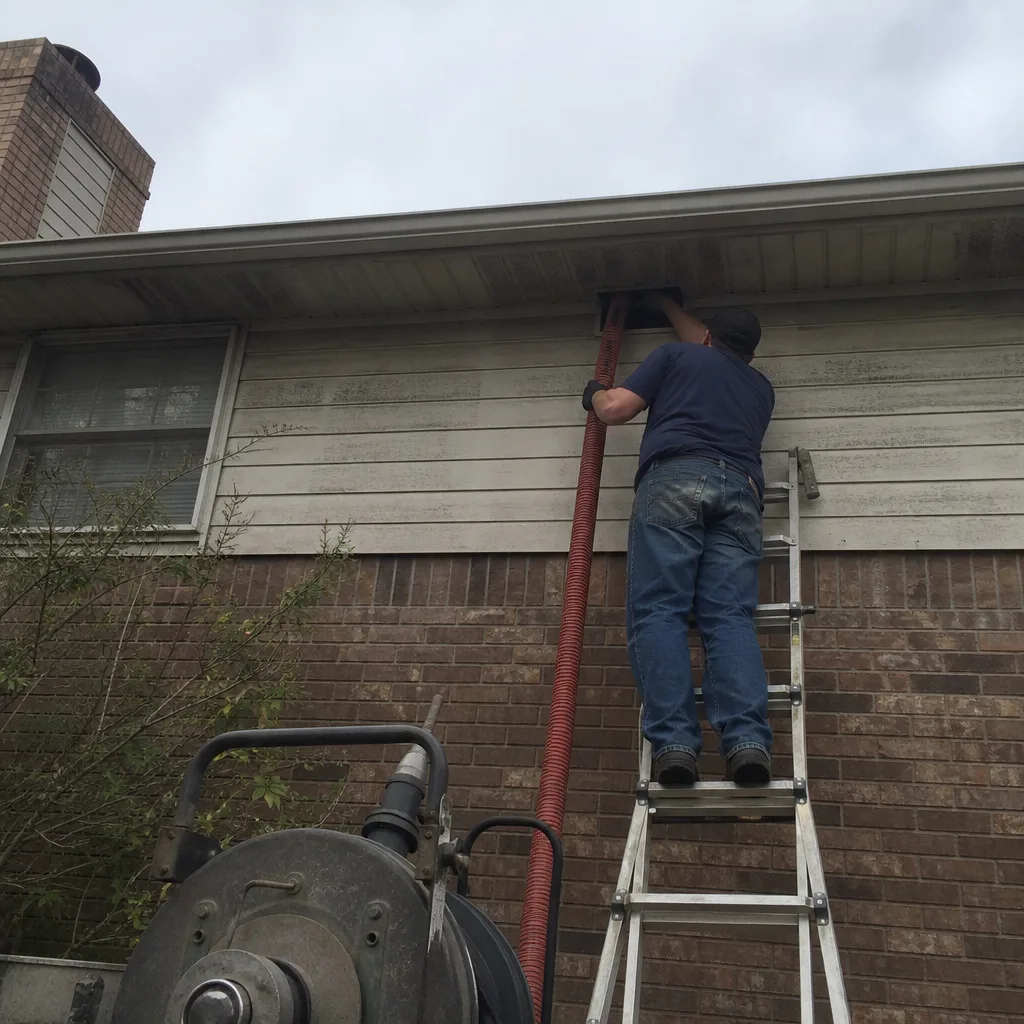
You don’t need to become an HVAC engineer to vet a duct cleaning company. But you do need to understand one distinction: compressing air inside your ducts is not the same as removing debris from them. The industry standard is called source-removal cleaning, and it has two components that must work together. A rotary brush or compressed air agitation loosens debris from duct walls. A negative air machine creates suction that pulls loosened debris out of the system entirely, routing it either to a truck-mounted collection unit or through HEPA filtration on a portable unit.
Truck-mounted systems are the heavy artillery. The vacuum unit lives in the van or truck, connected to your ductwork through a large-diameter hose. These systems generate strong, sustained suction. They can typically pull 10,000 to 15,000 CFM (cubic feet per minute) of air movement, which is what you want when a system hasn’t been cleaned in years and debris load is heavy. Fort Worth homes with decades-old duct runs in areas like Ridglea, Wedgwood, or the older sections of Arlington Heights often need this level of power because the accumulation is substantial.
Portable negative air machines sit inside your home and use HEPA filtration to capture debris as it’s pulled from the ducts. They generate less raw suction than truck-mounted units, typically in the 2,000 to 4,000 CFM range, but they’re more maneuverable and perfectly sufficient for newer systems or homes that have been maintained regularly. The key point: both approaches are legitimate if the equipment is professional-grade and the operator knows what they’re doing. What’s not legitimate is a “vacuum attachment” that hooks to the vent cover and cleans the first two feet of duct while blowing the rest of the debris further into the system.
Ask the company what they use and why. A competent technician can explain the distinction in plain English without launching into a sales pitch. Here at Hollis Air Duct Fort Worth, our documented equipment roster includes Rotobrush rotary brush systems and Nikro negative-air machines, paired with filtration products from Honeywell and Aprilaire where filtration upgrades are part of the scope. That’s the kind of specific, verifiable answer you’re looking for.
Red Flags During the Quote Process
A duct cleaning quote should feel boring. A few questions about your home, a clear explanation of scope, a written number. If it feels like a timeshare presentation, something is wrong. Here are the specific red flags that show up most often in Fort Worth homes:
- Vague scope language: “Full system cleaning” with no definition of what’s included. A legitimate quote specifies how many supply vents, how many returns, whether the air handler and coil will be accessed, and what happens with the main trunk line. If the scope is one sentence, the company is leaving room to negotiate later.
- Per-vent pricing with no cap: Some outfits quote a low base price “plus $15 per vent.” Your standard Fort Worth home has 10-20 vents. That’s an open-ended invoice. Demand a whole-system number or at minimum a firm cap on the vent count included.
- Upsell pressure before the inspection is complete: The technician hasn’t finished looking at your system and is already pitching mold remediation, sanitizing treatments, or “urgent” duct replacement. Legitimate companies complete the assessment first, then present findings with photographs. An urgent upsell before the diagnosis is finished is not a diagnosis. It’s a script.
- “Mold detected” without testing: Mold cannot be identified by sight alone. It requires lab testing. A company that points at discoloration and declares toxic mold is using fear as a sales tool. Ask for the lab results. If none exist, the surprise is manufactured.
- Demand for immediate decision: “This pricing is only good while I’m here.” A real company’s prices don’t expire in ninety seconds. Pressure is the oldest trick in the book because it works on polite people. Practice saying “I’ll review this and call you back.”
- No written anything: A legitimate contractor leaves you with paperwork: scope, price, schedule, and a copy of their guarantee. If nothing is in writing, nothing is enforceable.
What a Written Guarantee Should Actually Cover
Here’s the test: fold a verbal promise. It disappears. A written guarantee survives folding because it’s already on paper. The distinction isn’t just philosophical. Texas consumer protection law gives you leverage when terms are written, signed, and dated. A verbal “we’ll make it right” is worth roughly what it costs to say: nothing.
A legitimate written guarantee for air duct cleaning should specify three things with precision. First, the timeframe. What period does the guarantee cover? Thirty days is thin. Six months is reasonable. A full year is meaningful. Hollis Air Duct Fort Worth writes a 365-Day Done Right Promise into every job: if the work isn’t done right, we come back and make it right within that year, at no charge, including a free second visit. That’s a specific, verifiable commitment. Compare it against whatever language a competitor is offering and ask which one you’d rather hold in your hand six months from now.
Second, the scope. What exactly triggers the guarantee? If debris is still visibly present in a duct that was cleaned? If a vent cover is damaged during the job? If the technician left a mess? A guarantee that doesn’t define what “failure” means is a marketing sentence, not a guarantee. The Garrison Standard under which we operate spells out what “done right” means: arrive inside the quoted window, price in writing before work starts, complete the job by the book, and leave the site clean. If any of those fail, the guarantee applies.
Third, the remedy. What happens if you’re not satisfied? Will the company return? Will they refund? Will they re-clean at no charge? A written guarantee that doesn’t specify the remedy is asking you to trust them at exactly the moment that trust has already failed. Your answer should be printed on the page.
The Seven-Step Vetting Process
Here’s the full process, collapsed into a checklist you can run through on a single phone call and a few minutes of research. Use it every time you’re hiring for Air Duct Cleaning in Fort Worth.
- Screen the company’s local footprint. Do they have a Fort Worth address, or at least a verifiable North Texas presence? A P.O. box in another state is disqualifying. A company that has been operating under the same name in the same metro for more than a decade has a reputation to protect. Transient operators don’t.
- Call during off hours at least once. If you reach a live person at 8 p.m. on a Sunday, that’s an operational signal. It means the company has invested in real phone coverage, which is expensive. Outfits running volume campaigns often route to voicemail and call back when the list is fresh. Hollis Air Duct Fort Worth has phones answered by a live person 24 hours a day, seven days a week. Try calling a competitor after hours and see what happens.
- Run the five scripted questions. Written price before work starts, equipment type, NADCA status, written guarantee terms, documentation method. All five, in order, every time.
- Ask for a whole-system price range on the phone. For a typical Fort Worth single-family home with one system, expect a range of roughly $400 to $800 for professional source-removal cleaning. Homes with multiple units, older duct runs with heavy buildup, or additional services like Duct Sealing in Fort Worth will run higher. If someone quotes $99, you already know what that buys.
- Verify their equipment before the visit. Ask them to describe their process from start to finish. What machine creates negative pressure? What tools agitate the debris? How do they protect your home during the job? Specific answers indicate real operations.
- Read the guarantee before the technician arrives. Not after the work is done. Not when the invoice is presented. Before. If there’s no written guarantee to read, there’s no guarantee.
- Ask what happens if you’re not satisfied, in writing. This is the closing test. Write down their answer. Compare it to a written promise. If they won’t put it on paper, you have your answer.
Common Mistakes to Avoid
- Booking based on the lowest coupon price. The $49 special is a loss leader for an upsell engine. Legitimate duct cleaning in Fort Worth costs $400 to $800 for a whole system. Paying less than half that means you’re not buying duct cleaning.
- Not asking about the negative air machine. Without negative pressure at the point of cleaning, debris gets pushed further into the system rather than extracted. The machine is the single most important piece of equipment, and it’s the one the bargain outfits don’t own.
- Skipping the documentation question. Before-and-after photos of your actual ducts are industry standard. If the company can’t show you what your ducts looked like before and after, how do you know anything happened at all?
- Accepting per-vent pricing without a cap. Fort Worth homes vary in vent count depending on age and construction. Older homes in Fairmount or Mistletoe Heights might have different configurations than new construction in Walsh or Lake Worth. A cap protects you regardless.
- Trusting mold claims without lab testing. Discoloration is common in humid climates. Fort Worth’s summers pull significant moisture through HVAC systems. A visual “mold detection” without laboratory confirmation is a sales tactic, not a diagnosis.
- Not reading the guarantee until there’s a problem. By the time you need the guarantee, the work is already done and the invoice is already paid. Read the terms before you book. If the company can’t produce a written guarantee, that’s a disqualifying answer on its own.
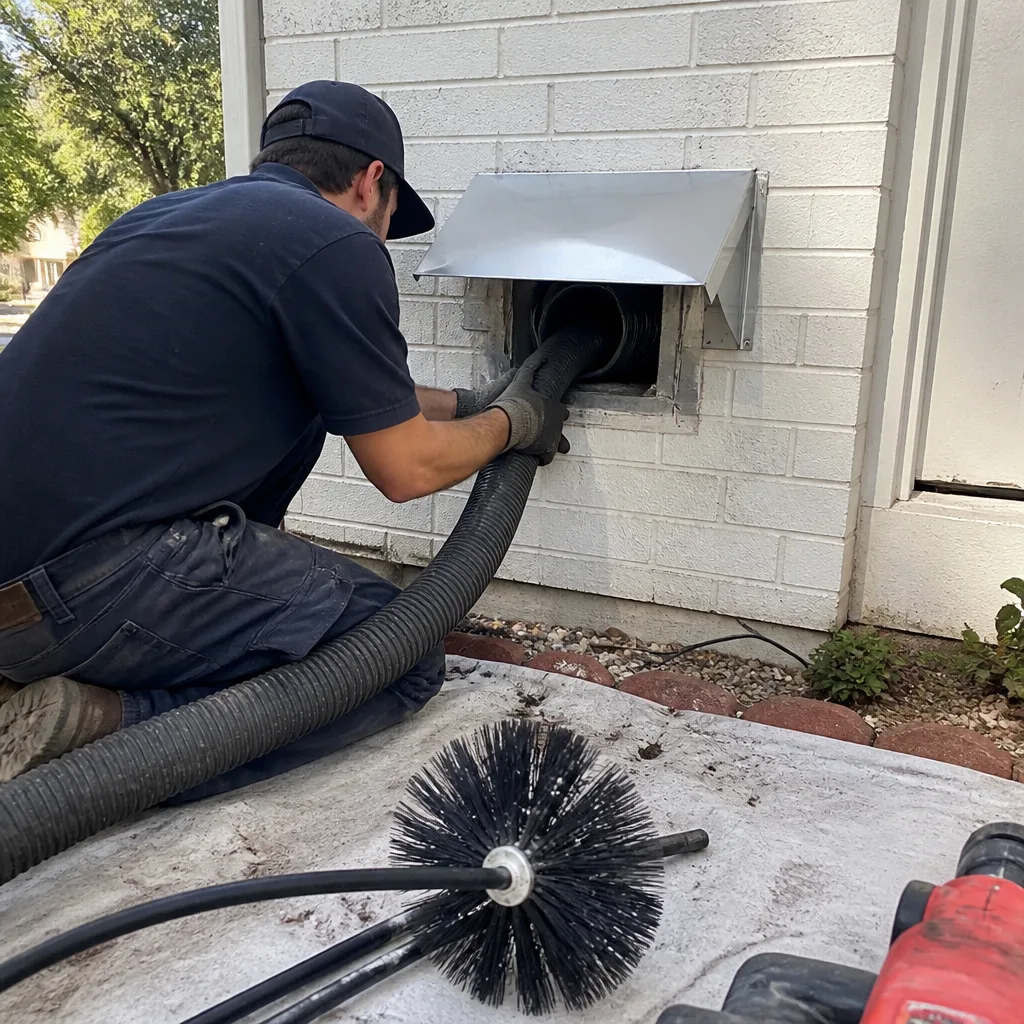
- Hiring for Dryer Vent Cleaning in Fort Worth from the same coupon mailer. Dryer vents are a different service with different tools and different stakes. A lint clogged vent is a fire hazard, not a dust issue. Hire for the specific service you need.
When to Call a Professional
Some jobs should never be DIY. Air duct cleaning is one of them. The tools required for source-removal cleaning cost thousands of dollars and require training to operate safely. Attempting to clean your own ducts with a shop vac and a bristle brush can damage flex duct, dislodge connections, or push debris deeper into the system. In older Fort Worth homes with rigid metal ductwork and decades of accumulated dust, the debris load can be significant. In newer homes with flex duct, the material is easily torn by aggressive amateur brushing. If you’re seeing visible dust buildup on vent covers, smelling musty air when the system runs, or noticing dust reappearing quickly after cleaning, call a professional. Hollis Air Duct Fort Worth serves the entire Fort Worth metro with written pricing before work starts. Call (682) 255-2572 for a free estimate and talk through your specific system with someone who can give you real numbers.
Frequently Asked Questions
Professional source-removal cleaning for a typical Fort Worth single-family home runs $400 to $800, depending on system size, number of units, accessibility, and debris load. Homes with multiple air handlers or heavily contaminated older ductwork can exceed that range. Any quote below $200 should be treated as a lead-generation coupon, not a realistic price for the work described. Call (682) 255-2572 for an exact quote on your home, in writing, before any work starts.
Because the work they’re describing is not the same work. A $99 quote covers a basic vacuum of vent openings, not source-removal cleaning of the entire duct system. The low price is designed to get a technician into your home where the real sales conversation begins. Legitimate companies quote the full scope upfront because there’s nothing to hide.
Request before-and-after photographs of your actual ducts, taken inside the system during the job. A legitimate company using professional equipment can document the interior surfaces of supply and return ducts before cleaning begins and after the job is complete. If they can’t or won’t provide this documentation, treat that as a red flag.
NADCA recommends cleaning every three to five years under normal conditions. Fort Worth homeowners with pets, recent renovations, smokers in the household, or allergy sensitivities may benefit from more frequent cleaning. Homes that have never been cleaned in a decade or more should expect heavier buildup and possibly a higher quote. Your next cleaning should be based on documented evidence of buildup, not a calendar reminder from a coupon mailer.
No. Texas does not issue a specific air duct cleaning license, which means certification is voluntary and therefore meaningful. NADCA certification demonstrates that a company has invested in training and follows the industry standard for source-removal cleaning. It’s not the only signal of quality, but it’s a strong one, especially when combined with specific equipment brands and a written guarantee.
Document everything you can: the original advertisement or coupon, any paperwork you received, photos of the work area, and notes from your conversations. Contact the company in writing and give them a specific opportunity to make it right. If they’re unresponsive or the work was truly substandard, you can file a complaint with the Better Business Bureau serving Fort Worth and the Texas Attorney General’s consumer protection division. For future work, run the seven-step vetting process above. And remember: a written guarantee from a local company gives you recourse a transient operator can’t provide.
The Bottom Line
Hiring an air duct cleaning contractor in Fort Worth is a process, not a transaction. The city’s growth attracts out-of-area operators running short-term campaigns built on bait-and-switch pricing. The protection is to script your questions: written price before any duct is opened, specific equipment type, NADCA status, written guarantee terms, and photo documentation. Legitimate answers are specific and verifiable. Evasive answers are the signal to end the call. A competent, accountable local company will welcome the questions because their business is built on answering them. And that’s exactly the contractor you want inside your home.
For Fort Worth homeowners ready to skip the games, Hollis Air Duct Fort Worth home services include air duct cleaning, dryer vent cleaning, and duct sealing. Our process runs on The Garrison Standard: arrive inside the quoted window, price in writing before work starts, complete the job by the book, and leave the site clean. Every job is covered by the 365-Day Done Right Promise. You’ll get specific answers to the five questions, documentation of the work, and a written guarantee that means something. Call (682) 255-2572 to talk through your system and get an exact quote. That’s the whole process, and it works.
Written by Roy Castellanos, Owner at Hollis Air Duct Fort Worth, serving Fort Worth since 2004.
See the difference
 Before
 After
After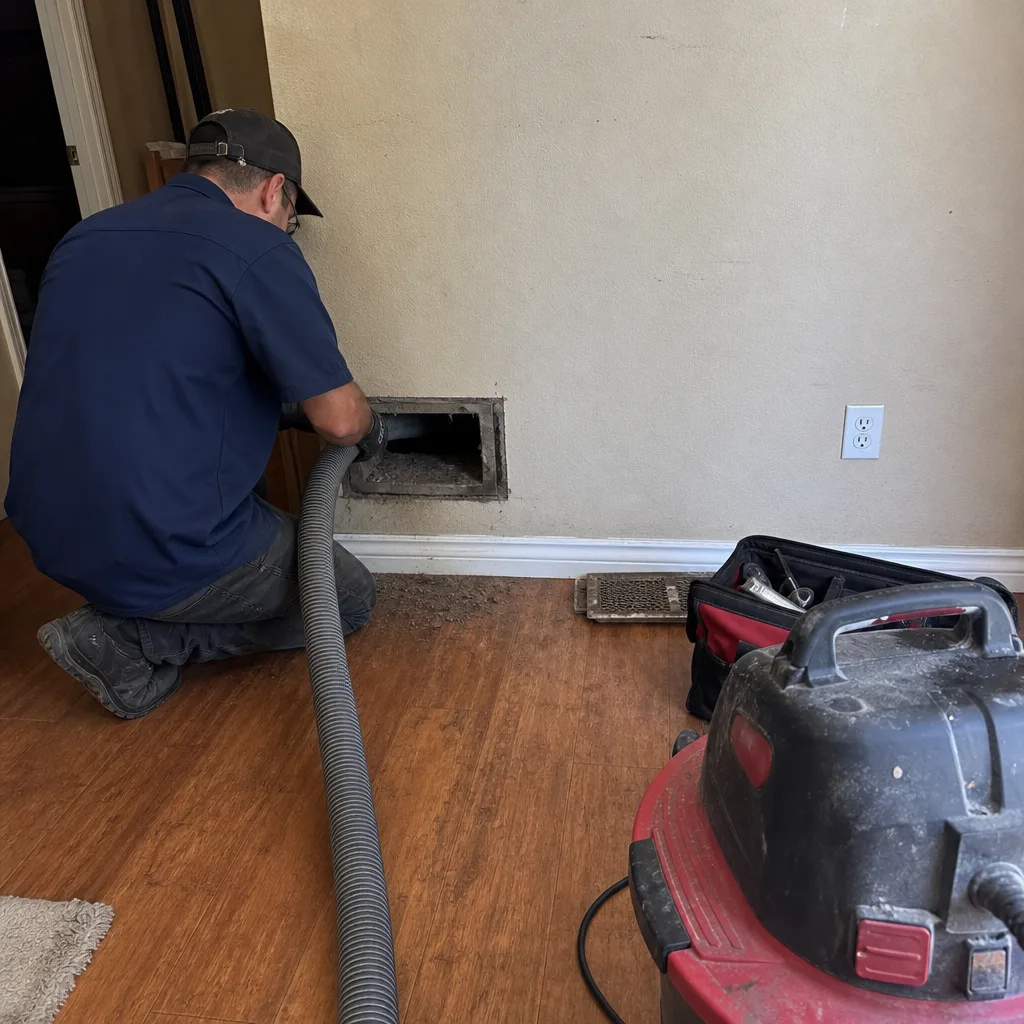 Before
 After
After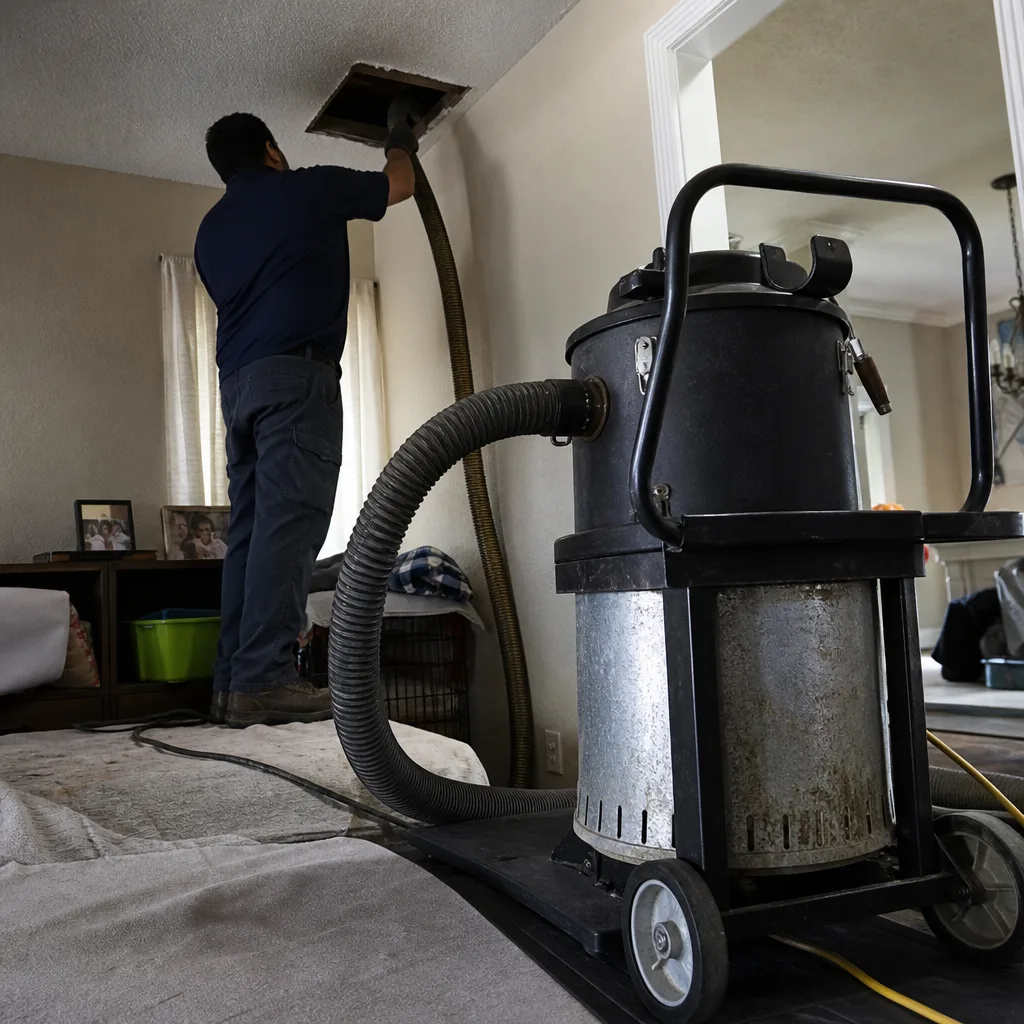 Before
 After
After